


 Mean Stack Development
 Vue JS Development
 Javascript Development
 React JS Development
 Angular JS Development
 Next JS development
 Java Development
 Python Development
 Django Development
 Cherrypy Development
 C# Development
 ASP.NET Development
 NodeJS Development
 Laravel Development
 CodeIgniter Development
 Zend Development
 Ruby on Rails Development
 CakePHP Development
 PHP Website Development
 Symfony Development
 Drupal Development
 Joomla Development
 Wordpress Development
 .NET Nuke Development
 Kentico
 Umbraco
 .NET MAUI Development
 Xamarin Application Development
 iOS Application Development
 Android Application Development
 Android Wear App Development
 Ionic Development
 iBeacon Application Development
 Universal Windows Platform (UWP)
 Kotlin Application Development
 Swift Application Development
 Flutter Application Development
 PWA Application Development
 Flutter Health Tech & Wearable App Development Company
 React Native Health Tech Wearable App Development
 Offshore Software Development
 Custom Application Development
 Front-End Development
 Full Stack Development
 AI & Machine Learning
 Custom CRM Solutions
 Flask Software Development
 Electron JS Development
 ChatGPT Development
 Telemedicine App Development
 Build Smart Telemedicine Platform
 Beauty & Salon App Solutions
 Hire Workato Experts
 Magento Development
 Magento 2.0 Development
 Magento Enterprise
 Shopping Cart Development
 Prestashop Development
 Shopify Development
 Open Cart Development
 WooCommerce Development
 BigCommerce Development
 NopCommerce Development
 Virto Commerce Development
 AspDotNetStorefront Development
 .NET Application Development
 Microsoft Dynamics CRM
 VB .NET Development
 Sharepoint Migration
 ASP.NET Core Development
 ASP.NET MVC Development
 AJAX Development
 Agile Development
 Microsoft Bot
 Microsoft Blazor
 Microsoft Azure Cognitive
 HTML 5
 UI/UX Design
 Graphic Design
 Adobe Photoshop
 XML Application Development
 Cloud Computing Solutions
 Azure Cloud App Development
 AWS Development
 Google Cloud Development
 Certified AWS IoT Services Developers
 DevOps Consulting & Development
 Kubernetes Consulting & Services
 SQL Programming Development
 MySQL Development
 MongoDB Development
 Big Data
 Robotic Process Automation
 Social Media Marketing
 Search Engine Optimization
 QA Testing
 Software Testing
 Software Security
 Maintenance And Support
 I.T. Consulting Services
 Business Intelligence
 YII Development
 Data Analysis
 Alexa Skills Development
 On Demand App for Mobile repairing services
 On Demand App for Car Service Booking
 On Demand App for Cleaning Services
 On Demand App for Pharmacy
 On Demand Dedicated Developers
 On Demand Lawyer App Development











 Nuki Smart Lock
 Salto Smart Lock
 TTlock Smart Lock
 NFC App Development
 Custom IOT Enabled Smart Lock
 Smart Locker Solutions
 Hospital Smart Lock Systems
 Hotel Smart Lock Systems
 Smart Home & Office Locks
 Smart Access for Schools & Colleges
 Unloc Smart Lock Integration
 Yale & August Smart Lock Integration
 Populife Smart Lock Integration
 Smart Lock Hardware Development
 Dairy IoT Solutions
 Agri IoT & AI Solutions
 Weather & Climate Solutions
 Water & Waste Management Solutions
 RaspBerry Pi
 Firmware Software Development
 ESP 32 Software Development
 Embedded Development
 Internet of Things
 Smart IoT Development
 IoT Sensor Integration & Development Solutions
 Smart IoT System Development for HVAC
 Tuya IoT App Development
 Particle IoT SDK
 IoT Development with AI
 Smart Pet GPS Tracker
 Dairy GPS Tracking Solutions
 GPS Fleet Management Software
 Car Rental & Subscription Solutions
 Car Buy & Sell Marketplace Development
 AI-Powered Car Wash App Development
 PCB Design & Fabrication
 IoT AC Automation
 AI–IoT Painting Solutions
 IoT Wearable Hardware & App Development
 HVAC Automation & AI Control Systems
 Smart Home IoT Engineering
 AI Embedded Systems
 AI Hardware Design Service
 Advanced IoT Hardware & Firmware Development
 Device Driver Development Services
 NXP i.MX RT Firmware & Hardware Services
 Microchip PIC & AVR Development
 Hire IoT Architects
 IoT Cloud & Infrastructure Solutions
 Infineon XMC / AURIX Development Services
 Matter & Thread IoT Services
 Native IoT Mobile App Development (BLE & Wi-Fi)
 Snapdragon IoT Firmware Development
 Renesas RA/RX Firmware Services
 Silicon Labs EFR32 Development Services
 Smart Wearable App Development
 Smart IoT Meters
 Smart Healthcare Wearable App Development
 Health Care Monitoring System
 Fitness Tracking App Development
 Smart Home Automation Apps
 nRF PCB Design
 ESP32 PCB Design
 Embedded Wearables Engineers
 Rental Property Management System
 Building Management System
 Smart Lighting Development
 Infineon Semiconductor Firmware Development Services
 Custom Camera Development: Hardware, Firmware & PCB Prototyping
 Smart Security Camera SDK
 Nordic Semiconductor SDK
 Infineon SDK
 Arduino SDK
 NFC Lock Integration
 Kerong Lock Integration
 IoT & AI Solutions for Manufacturing
 Smart Inventory & Logistics Solution
 Food & Beverage Industry Solutions
 Smart Hospitality Solutions
 Smart Property Management
 Custom Smart Home IOT SDK
 Smart IoT & AI in Healthcare
 AI-Powered Security Solutions
 Smart Home Safety & AI
 Veterinary Clinic Management (AI)
 Pet Care System (AI & IoT)
 Pet Training & Adoption (AI)
 Healthcare IoT Development
 Event Management Software
 Money Remittance App
 Money Lending App Development
 Utility and Bill Payment App
 IoT Mobile App Development (Flutter & React Native)
 AI & IoT Retail Solutions
 Smart EV App Development
 Smart Solar IoT & AI Solutions
 IoT-Based Energy Systems
 Smart Energy & Utilities Solutions
 6G Solutions
 IoT Security Solutions
 AI-Powered Lottery App Development
 AI-Sports Fitness Club Management
 Travel
 Real Estate
 Medical & Healthcare
 e-Learning
 Consumer Products
 Finance
 Automobile
 Media & Entertainment
 Billing Software
 Enterprise Resource Planning (ERP)
 Augumented & Virtual Reality
 Point of Sale(POS) Development
 Learning Management System
 EV Charging Solutions
 About Us
 Partners & Certifications
 Quality Assurance
 Our Clients & Testimonials
 Development Process
 Our Products
 Social Responsibility
 Work Ethics
 Vision & Mission
 Awards
 Live Project Demos
 Contact Us
 Case Studies
 Portfolio
 Blog
RTOS Firmware Development Services | FreeRTOS & Zephyr Experts
Wearable devices need to gather sensor information, ensure Bluetooth link, manage user interaction, and save energy at the same time. This is when the importance of Real-Time Operating Systems or RTOS emerges.
Adequate Infosoft offers services for RTOS firmware development for smart devices, embedded products, industrial machinery, wearables, home devices, robots, gateways, and IoT platforms.
We use FreeRTOS and Zephyr RTOS for creating and updating embedded firmware with an emphasis on punctuality, reliability, economy, ease of maintenance, and network safety.
We also use Embedded C/C++, ARM Cortex-M microcontrollers, ESP32 technology, BLE, Wi-Fi, cellular IoT, sensors, engines, cloud APIs, gateways, mobile applications, and the system of Over-the-air firmware updating.
No matter whether you are launching a new product or improving an old one, we can convert your requirements into trustworthy firmware solutions.
Let's Work Together!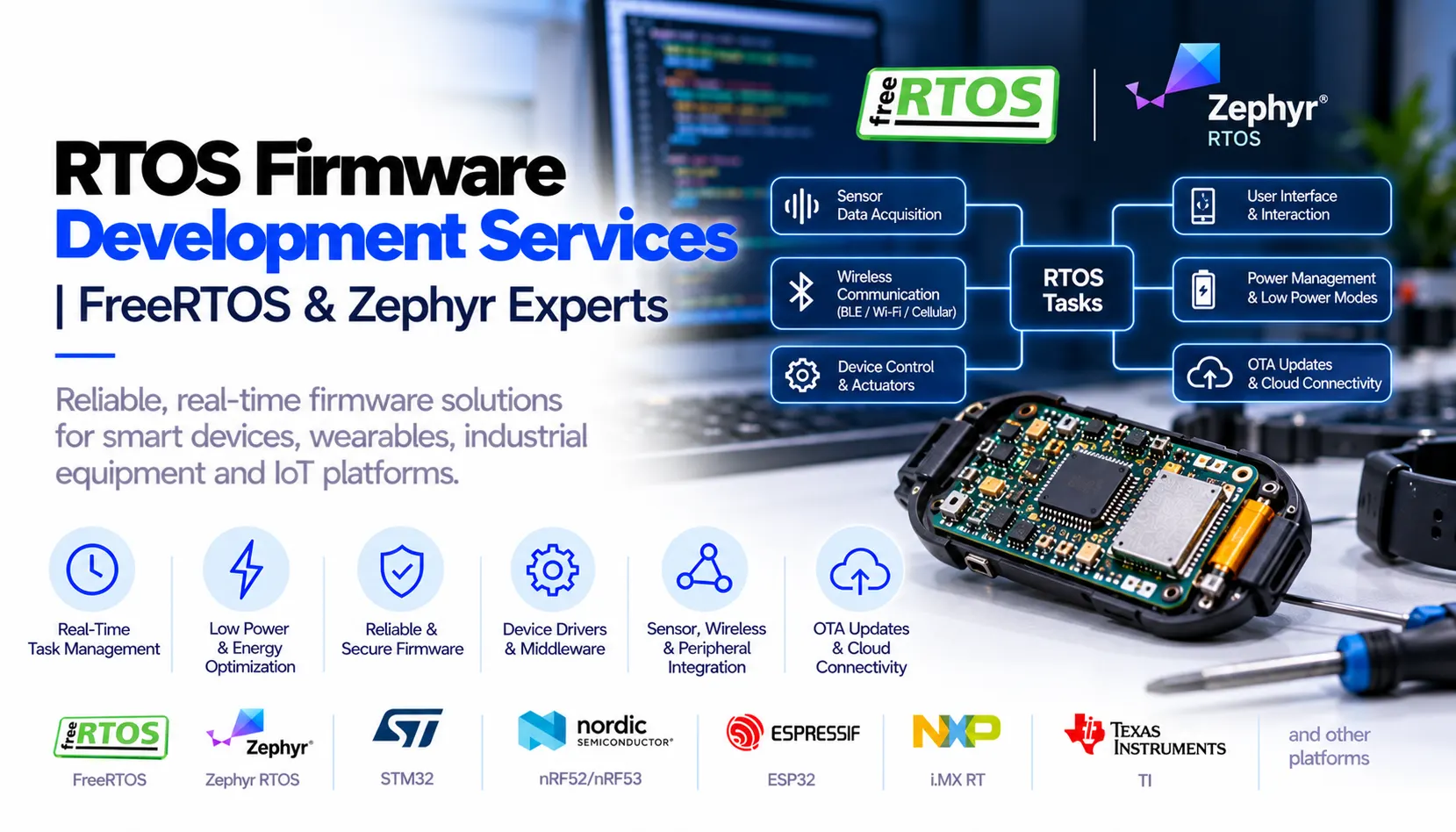
What Is RTOS Firmware Development?
An RTOS has the function of allowing an embedded device to handle multiple time-critical tasks in a systematic manner. In contrast to conventional operating systems an RTOS is specifically constructed for those applications where delays, timing errors or suspended processes can influence the performance of the device.
For example, a battery-powered IoT device may need to:
Read sensor values at a defined interval Process data without interrupting communication Send information over BLE, Wi-Fi, or cellular networks Respond quickly to button presses or alarms Enter low-power sleep modes Store device settings safely Receive secure firmware updates Recover correctly after reset, power loss, or network failure
RTOS firmware organizes these responsibilities in managed tasks and allows engineers to determine which process requires higher priority, to safeguard shared resources, eliminate timing issues, and create applications capable of growing alongside the product roadmap.
A properly engineered RTOS architecture will not only complicate code but make the product simpler to comprehend, test, maintain, and enhance.
Case Study: RTOS Modernisation for a Confidential Smart Security and Access-Control Client
The Requirement: Reliable Multi-Tasking for a Connected Device Platform
Adequate Infosoft supported a confidential smart security and access-control client developing connected locking and device-management solutions. The product ecosystem included mobile control, access credentials, gateway communication, device events, remote commands, and cloud-based user management.
As functionality expanded, the embedded firmware required a more structured approach to managing concurrent operations.
The equipment in this case had to react immediately to local lock commands while processing communication, status reporting, authorization events, and temporary disruptions in connection.
The major difficulty was ensuring reliable equipment operation without letting background processes interfere with crucial operations.
The customer also required a scalable basis for the future upgrades that would involve enhanced logging capabilities, remote troubleshooting, device synchronization, and firmware update management.
The RTOS-Based Engineering Approach
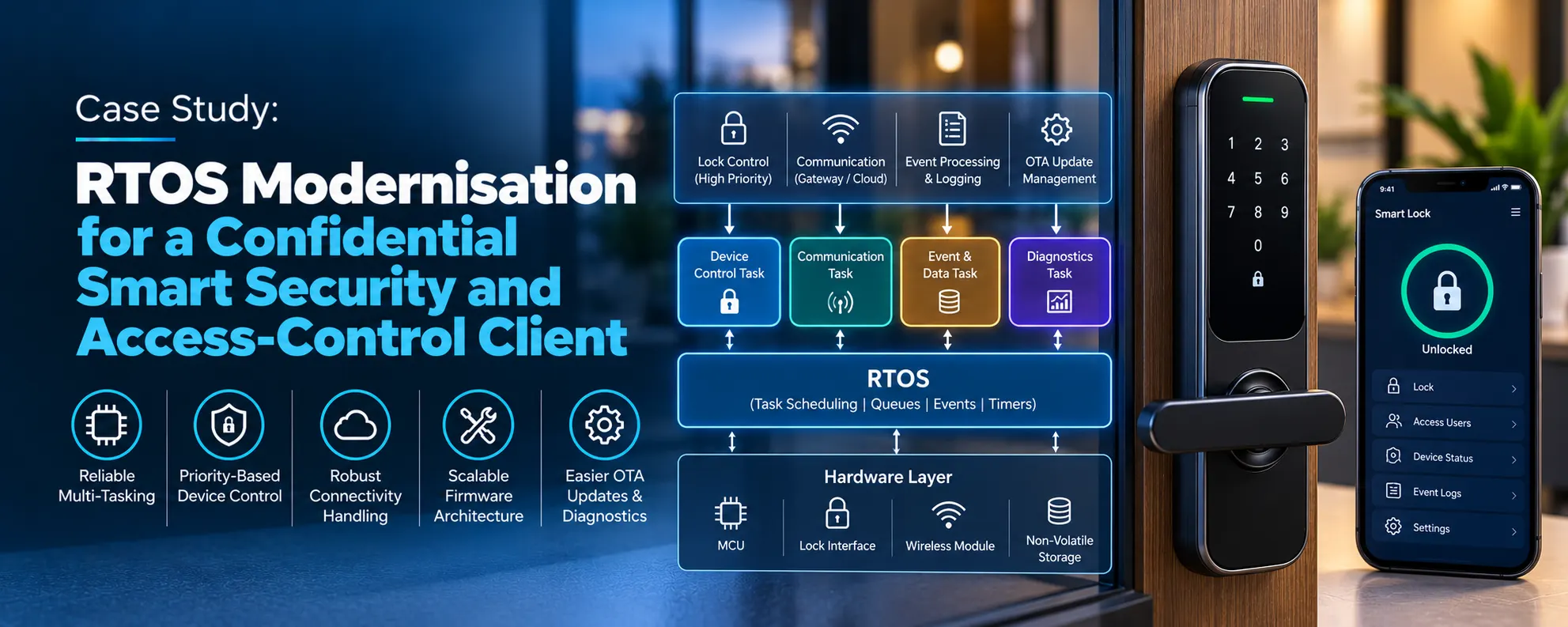
The team examined the workflows of the device processes and categorized them according to their time-sensitive roles in function. The framework was built around free-of-dependency tasks that are responsible for firmware, operational handling, event processing, stored settings, and system recovery.
The high-important activities related to the device controllers were segregated from the non-important communication activities.
This facilitated the understanding that cloud computing or gateway communication particles delayed local activities of access control and vital change of state.
The application of queues and events mechanisms allowed the information to go through and transfer it seamlessly depending on the distances of execution blocks.
The implementation also considered practical field conditions. Gateway connections could be unavailable, remote commands could arrive late, and devices could restart after a power interruption.
We designed state handling so that important device information could be restored safely and synchronised when connectivity became available again.
Firmware logging and diagnostic events were organised to make support investigations more efficient. Instead of relying only on one large operational flow, the engineering team could trace device-control events, communication behaviour, and recovery conditions separately.
Outcome: A More Maintainable Connected-Product Platform
The application of a RTOS approach enabled the client to implement a clear solution for future firmware development activities.
As a result, the operations of critical devices were prioritized, communication services were made easier to manage, and testing could be focused on both single tasks and a whole user journey.
Moreover, the new approach allowed for more efficient remote operations, simplified event handling, better preparation for OTA firmware updates, and reduced risks associated with the introduction of new features in devices.
Finally, it allowed developing a code structure that could be understood and maintained by future engineering teams.
Client identity and commercially sensitive implementation details are withheld under confidentiality obligations.
Our Proven RTOS Firmware Development Experience
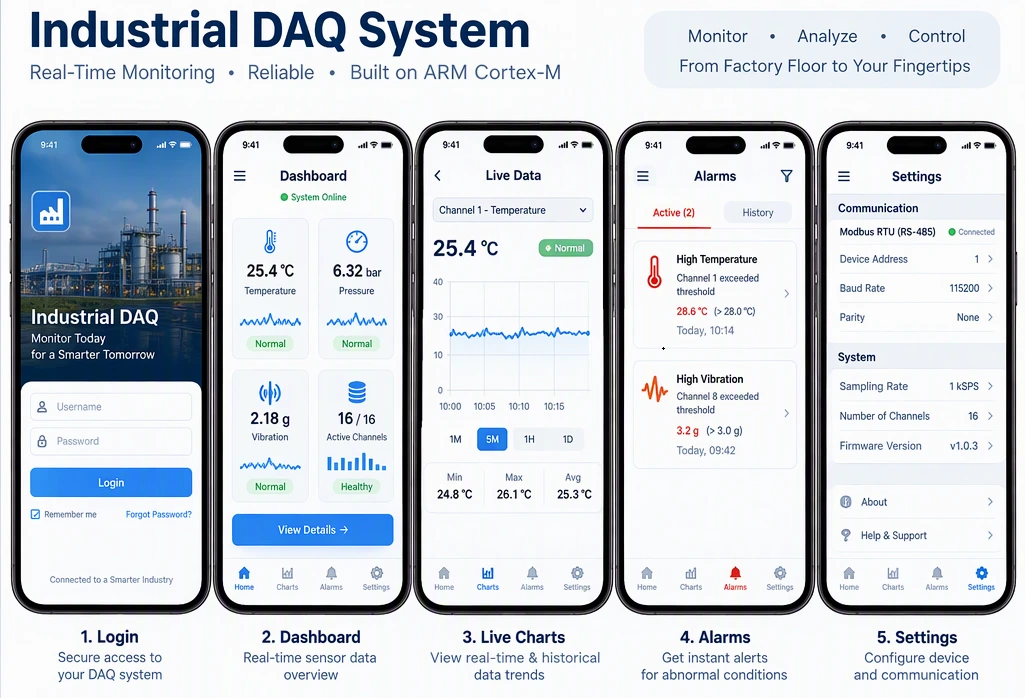
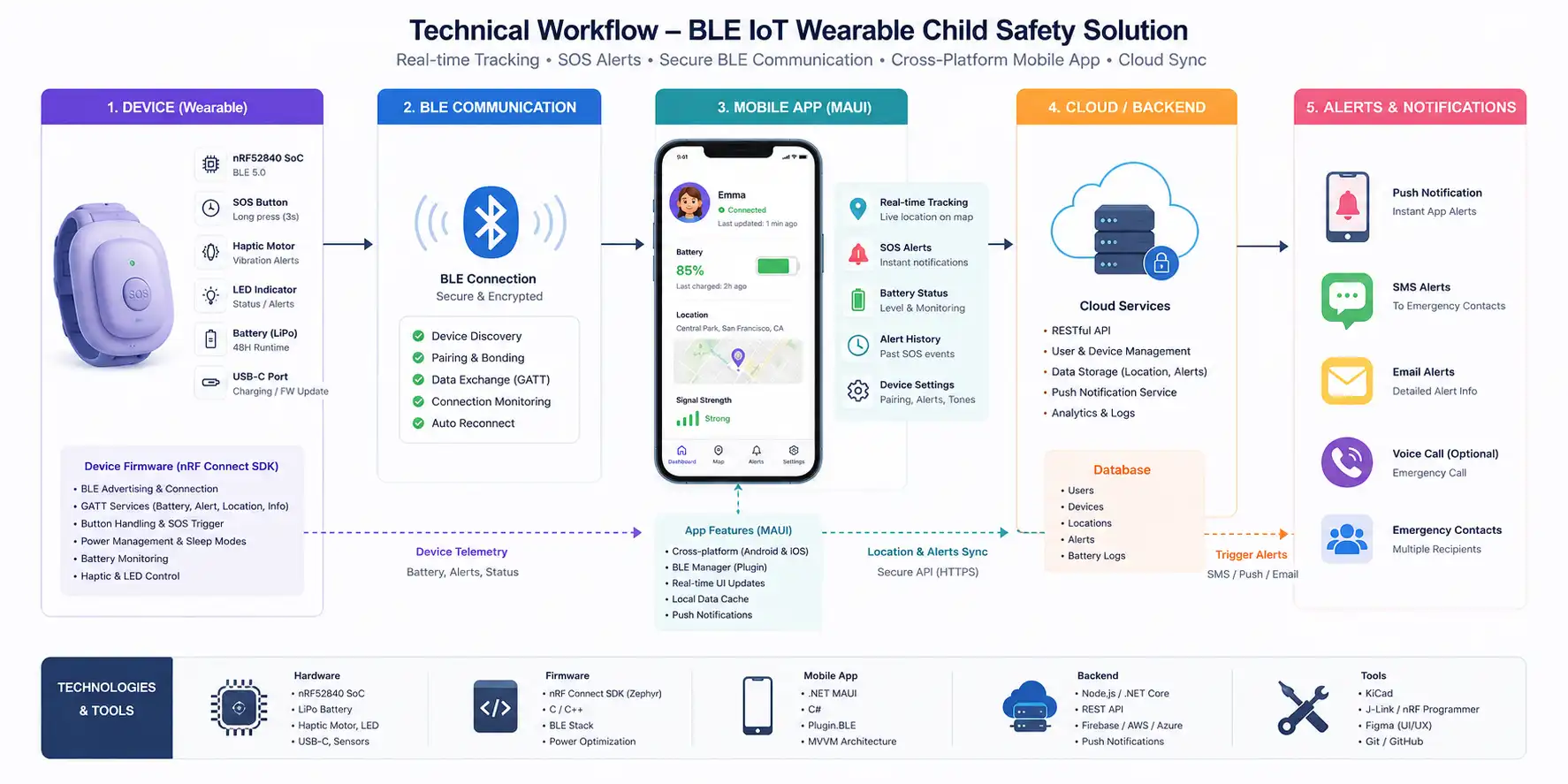
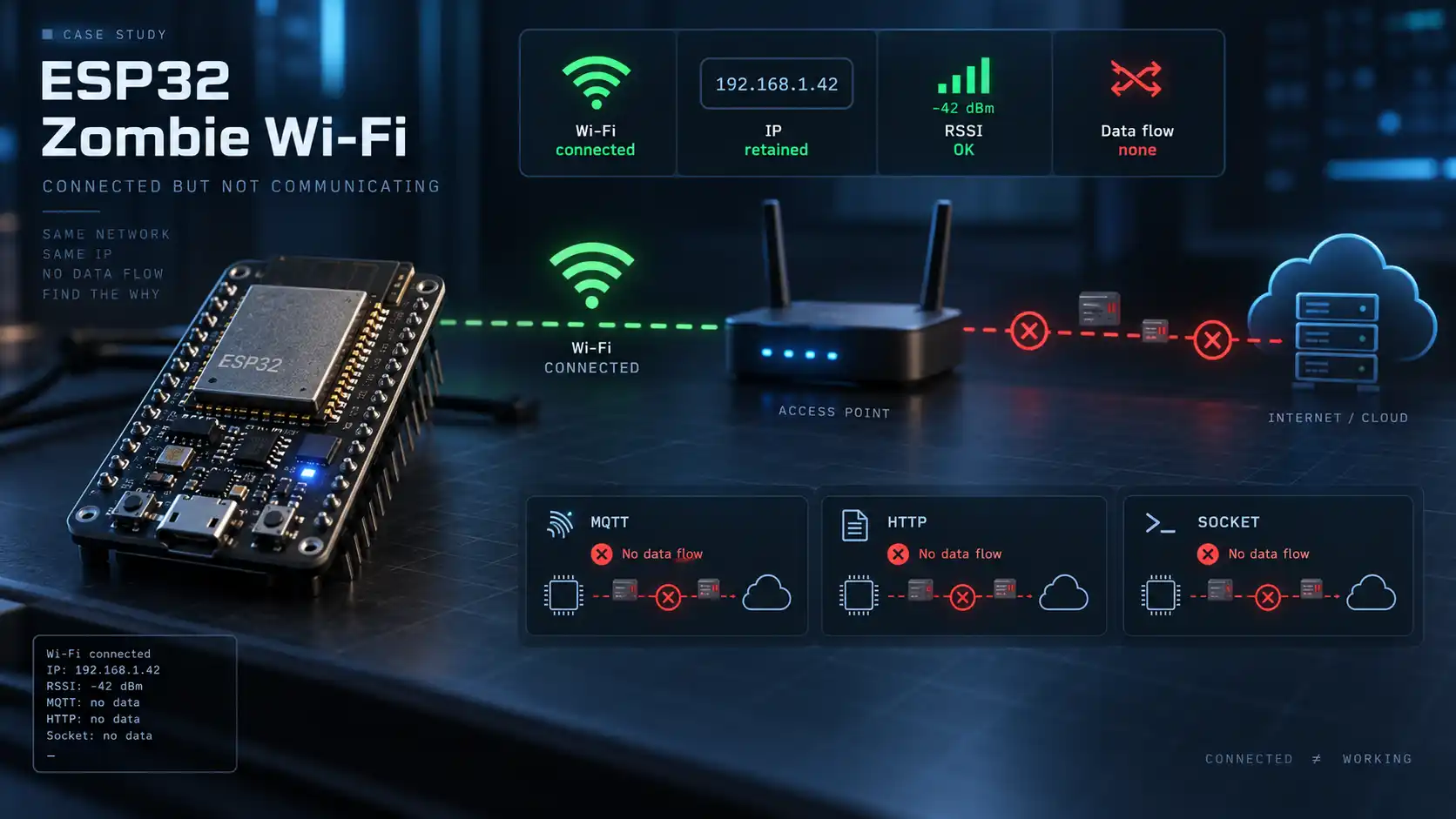
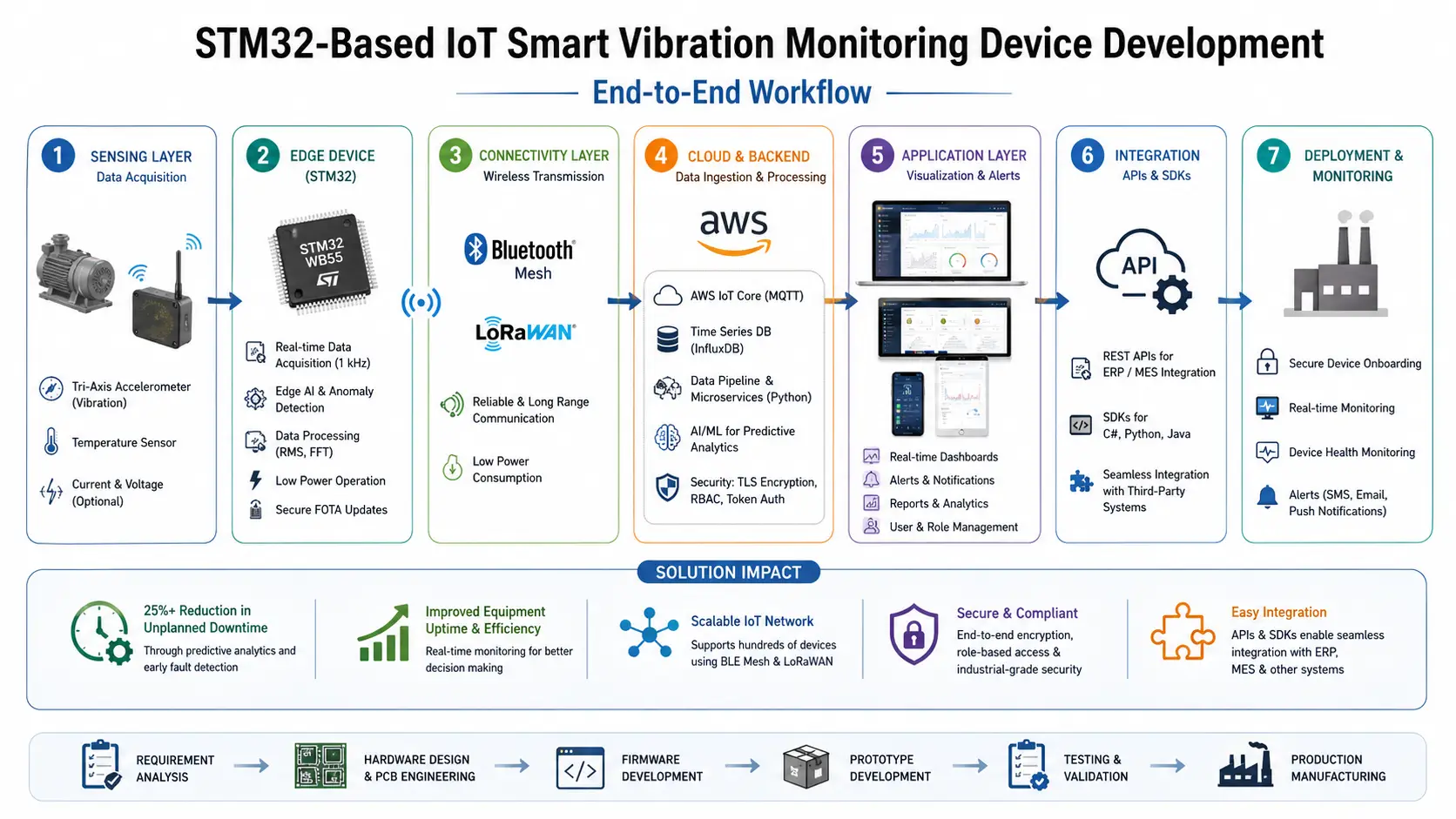
Zephyr RTOS Development Services
Zephyr RTOS represents a contemporary open-source OS aimed at embedded devices that face limited resource availability. Its development model is structured and equipped with many device drivers, security features, and strong networking and Bluetooth LE capabilities.
With Zephyr, companies that create connected products can count on a sound ecosystem and longstanding modularity, reliability, security, and scalability.
Our Zephyr RTOS development services include:
Zephyr board bring-up and hardware configuration Device tree configuration and custom board support Kernel thread and work-queue architecture Bluetooth LE, BLE Mesh, Wi-Fi, and networking integration Sensor and peripheral driver development Power management and battery optimisation MCUboot and secure boot implementation Firmware signing and image verification OTA update architecture and DFU implementation File system, storage, logging, and shell configuration IoT protocol integration, including MQTT and HTTP Hardware-in-the-loop testing and debugging
Zephyr is especially useful for wearable gadgets, intelligent locks, industrial detectors, medical-related remote equipment, BLE devices, devices run on batteries as well as devices where secured boot and solid firmware update are vital.
FreeRTOS Development Services
The open-source real-time operating system FreeRTOS is known for its wide usage in microcontrollers as well as small embedded devices. It offers an excellent option for products that require an efficient task scheduler, take up very little memory, provide reliable timing, and are compatible with a range of microcontrollers.
Our FreeRTOS firmware development services include:
FreeRTOS task architecture and scheduler design Task prioritisation and real-time timing analysis Queue, semaphore, mutex, event-group, and timer implementation Interrupt service routine design Peripheral driver integration Sensor, motor, display, and actuator control BLE, Wi-Fi, MQTT, HTTP, TCP/IP, UART, SPI, I2C, CAN, and Modbus integration Low-power mode implementation Memory optimisation and stack monitoring Watchdog timer and fault-recovery implementation Secure OTA firmware update development Unit testing, integration testing, and firmware validation
FreeRTOS is especially suitable for smart home devices, access-control products, connected sensors, industrial controllers, low-power devices, ESP32-based products, gateways, and custom IoT hardware.
FreeRTOS vs Zephyr: Which RTOS Is Right for Your Product?
The ideal RTOS varies according to the product, hardware system, schedule, security requirements, and future plans.
FreeRTOS is often a good option whenever a small and functional real-time operating system is required especially in the case of existing embedded systems or devices with limited memory.
It could be a good solution for cases with correctly set functionality requirements along with relatively narrow software stack.
Zephyr can be a better fit when the product needs a modern framework, rich networking support, advanced Bluetooth capability, strong device security, scalable configuration, and long-term product evolution across multiple hardware variants.
We don't require all of the products to fit into a single technical ecosystem. Evaluating factors like processor capabilities, available RAM and flash memory, power requirements, communication standards, compliance prerequisites, legacy software, and cloud integration plans is how we determine the appropriate architecture.
RTOS Firmware Architecture We Build
A dependable RTOS solution requires more than just tasks and threads.
That is why we create a firmware architecture with different layers: board support, driver hardware, middleware, communication services, data processes, device control logic, security functions, and application processes. This makes the connection between the components weaker and modifications safer.
Typical RTOS firmware modules may include:
Bootloader and firmware-update manager Sensor acquisition task Device-control and actuator task Bluetooth or Wi-Fi communication task Cloud telemetry and event reporting Persistent storage manager Error handling and watchdog recovery Battery and power-management service Diagnostic logging service User interface, LED, button, or display control Security and credential-management service
This modular approach helps prevent one delayed process from affecting the entire product. It also gives teams a clearer way to test features independently and diagnose field issues.
Low-Power RTOS Development for Battery-Powered Devices
Battery operation is an important condition of wearables, trackers, smart locks, medical devices, environmental sensors, portable IoT items, etc. Poor firmware tailoring limits battery service despite hardware capacity.
RTOS firmware is optimised by our engineers with smart task scheduling, sleep mode management, peripheral shut-off, interval setting, event-based processing, duty cycling, memory improvements, and lowered radio performance.
We analyse the complete device lifecycle: active operation, idle time, BLE advertising, sensor sampling, data transmission, firmware updates, error states, and deep-sleep recovery. The goal is not only lower average current consumption, but also reliable product behaviour when the battery level is low or connectivity is intermittent.
Secure RTOS Firmware and OTA Updates
The design for security must be integrated throughout the firmware framework from the very start. Since connected devices can be in use for years, they must have a secure method of managing changes in capabilities and improvements to cloud platforms.
Our RTOS security and firmware update services can include:
Secure boot Signed firmware images Firmware image verification Encrypted communication Device identity and credential protection Secure manufacturing provisioning OTA update workflows Firmware rollback and recovery strategy Event logging and diagnostic reporting
For devices that have been deployed in the field, an incomplete update cannot render the device unusable. We ensure that all upgrade processes confirm the new version of firmware before it is put into use and have a secure route for recovery when possible.
Why Choose Adequate Infosoft for RTOS Firmware Development?
Careful management of timing, memory, power, shared resources, security, and fault recovery is critical in RTOS firmware.
Adequate Infosoft has expertise in embedded firmware development, IoT connectivity, cloud development, mobile applications and product engineering.
Our services include FreeRTOS development, Zephyr RTOS integration, bare-metal-to RTOS migration, secure boot, Bluetooth connectivity, OTA updates and firmware maintenance.
We evaluate hardware constraints and performance requirements to design suitable architectures, helping businesses develop reliable embedded products that support evolving needs and long-term maintenance.