










 Mean Stack Development
 Vue JS Development
 Javascript Development
 React JS Development
 Angular JS Development
 Next JS development
 Java Development
 Python Development
 Django Development
 Cherrypy Development
 C# Development
 ASP.NET Development
 NodeJS Development
 Laravel Development
 CodeIgniter Development
 Zend Development
 Ruby on Rails Development
 CakePHP Development
 PHP Website Development
 Symfony Development
 Drupal Development
 Joomla Development
 Wordpress Development
 .NET Nuke Development
 Kentico
 Umbraco
 .NET MAUI Development
 Xamarin Application Development
 iOS Application Development
 Android Application Development
 Android Wear App Development
 Ionic Development
 iBeacon Application Development
 Universal Windows Platform (UWP)
 Kotlin Application Development
 Swift Application Development
 Flutter Application Development
 PWA Application Development
 Flutter Health Tech & Wearable App Development Company
 React Native Health Tech Wearable App Development
 Offshore Software Development
 Custom Application Development
 Front-End Development
 Full Stack Development
 AI & Machine Learning
 Custom CRM Solutions
 Flask Software Development
 Electron JS Development
 ChatGPT Development
 Telemedicine App Development
 Build Smart Telemedicine Platform
 Beauty & Salon App Solutions
 Hire Workato Experts
 Magento Development
 Magento 2.0 Development
 Magento Enterprise
 Shopping Cart Development
 Prestashop Development
 Shopify Development
 Open Cart Development
 WooCommerce Development
 BigCommerce Development
 NopCommerce Development
 Virto Commerce Development
 AspDotNetStorefront Development
 .NET Application Development
 Microsoft Dynamics CRM
 VB .NET Development
 Sharepoint Migration
 ASP.NET Core Development
 ASP.NET MVC Development
 AJAX Development
 Agile Development
 Microsoft Bot
 Microsoft Blazor
 Microsoft Azure Cognitive
 HTML 5
 UI/UX Design
 Graphic Design
 Adobe Photoshop
 XML Application Development
 Cloud Computing Solutions
 Azure Cloud App Development
 AWS Development
 Google Cloud Development
 Certified AWS IoT Services Developers
 DevOps Consulting & Development
 Kubernetes Consulting & Services
 SQL Programming Development
 MySQL Development
 MongoDB Development
 Big Data
 Robotic Process Automation
 Social Media Marketing
 Search Engine Optimization
 QA Testing
 Software Testing
 Software Security
 Maintenance And Support
 I.T. Consulting Services
 Business Intelligence
 YII Development
 Data Analysis
 Alexa Skills Development
 On Demand App for Mobile repairing services
 On Demand App for Car Service Booking
 On Demand App for Cleaning Services
 On Demand App for Pharmacy
 On Demand Dedicated Developers
 On Demand Lawyer App Development






 Nuki Smart Lock
 Salto Smart Lock
 TTlock Smart Lock
 NFC App Development
 Custom IOT Enabled Smart Lock
 Smart Locker Solutions
 Hospital Smart Lock Systems
 Hotel Smart Lock Systems
 Smart Home & Office Locks
 Smart Access for Schools & Colleges
 Unloc Smart Lock Integration
 Yale & August Smart Lock Integration
 Populife Smart Lock Integration
 Smart Lock Hardware Development
 Dairy IoT Solutions
 Agri IoT & AI Solutions
 Weather & Climate Solutions
 Water & Waste Management Solutions
 RaspBerry Pi
 Firmware Software Development
 ESP 32 Software Development
 Embedded Development
 Internet of Things
 Smart IoT Development
 IoT Sensor Integration & Development Solutions
 Smart IoT System Development for HVAC
 Tuya IoT App Development
 Particle IoT SDK
 IoT Development with AI
 Smart Pet GPS Tracker
 Dairy GPS Tracking Solutions
 GPS Fleet Management Software
 Car Rental & Subscription Solutions
 Car Buy & Sell Marketplace Development
 AI-Powered Car Wash App Development
 PCB Design & Fabrication
 IoT AC Automation
 AI–IoT Painting Solutions
 IoT Wearable Hardware & App Development
 HVAC Automation & AI Control Systems
 Smart Home IoT Engineering
 AI Embedded Systems
 AI Hardware Design Service
 Advanced IoT Hardware & Firmware Development
 Device Driver Development Services
 NXP i.MX RT Firmware & Hardware Services
 Microchip PIC & AVR Development
 Hire IoT Architects
 IoT Cloud & Infrastructure Solutions
 Infineon XMC / AURIX Development Services
 Matter & Thread IoT Services
 Native IoT Mobile App Development (BLE & Wi-Fi)
 Snapdragon IoT Firmware Development
 Renesas RA/RX Firmware Services
 Silicon Labs EFR32 Development Services
 Smart Wearable App Development
 Smart IoT Meters
 Smart Healthcare Wearable App Development
 Health Care Monitoring System
 Fitness Tracking App Development
 Smart Home Automation Apps
 nRF PCB Design
 ESP32 PCB Design
 Embedded Wearables Engineers
 Rental Property Management System
 Building Management System
 Smart Lighting Development
 Infineon Semiconductor Firmware Development Services
 Custom Camera Development: Hardware, Firmware & PCB Prototyping
 Smart Security Camera SDK
 Nordic Semiconductor SDK
 Infineon SDK
 Arduino SDK
 NFC Lock Integration
 Kerong Lock Integration
 IoT & AI Solutions for Manufacturing
 Smart Inventory & Logistics Solution
 Food & Beverage Industry Solutions
 Smart Hospitality Solutions
 Smart Property Management
 Custom Smart Home IOT SDK
 Smart IoT & AI in Healthcare
 AI-Powered Security Solutions
 Smart Home Safety & AI
 Veterinary Clinic Management (AI)
 Pet Care System (AI & IoT)
 Pet Training & Adoption (AI)
 Healthcare IoT Development
 Event Management Software
 Money Remittance App
 Money Lending App Development
 Utility and Bill Payment App
 IoT Mobile App Development (Flutter & React Native)
 AI & IoT Retail Solutions
 Smart EV App Development
 Smart Solar IoT & AI Solutions
 IoT-Based Energy Systems
 Smart Energy & Utilities Solutions
 6G Solutions
 IoT Security Solutions
 AI-Powered Lottery App Development
 AI-Sports Fitness Club Management
 Travel
 Real Estate
 Medical & Healthcare
 e-Learning
 Consumer Products
 Finance
 Automobile
 Media & Entertainment
 Billing Software
 Enterprise Resource Planning (ERP)
 Augumented & Virtual Reality
 Point of Sale(POS) Development
 Learning Management System
 EV Charging Solutions
 About Us
 Partners & Certifications
 Quality Assurance
 Our Clients & Testimonials
 Development Process
 Our Products
 Social Responsibility
 Work Ethics
 Vision & Mission
 Awards
 Live Project Demos
 Contact Us
 Case Studies
 Portfolio
 Blog
Blog
KERONG Smart Lock Integration for Lockers, Cabinets and Self-Service Systems
A parcel locker needs to release the correct compartment. An employee cabinet needs to recognize the right credential. A battery-free NFC lock needs a reliable phone-to-lock interaction.
These are different engineering problems, even when the hardware comes from the same manufacturer.
Adequate Infosoft develops applications, controller integrations and management software for supported KERONG locking systems. We help connect the hardware with the workflow around it: assigning a compartment, validating access, operating the lock and recording the outcome.
Features require additional hardware.
Before starting development, it is necessary to confirm the lock model, controller, power supply and existing interface, which allows understanding what things can occur locally, what things are to be connected and what features require additional devices.
Our KERONG Integration and Development Services
Hardware Evaluation and Proof of Concept
We perform the analysis of the lock model, controller board, power requirements and feedback signals obtained from documentation.
The proof of concept includes checking the most important performance: getting the access to the needed compartment, the release request and the response obtained. We also define those parameters that cannot be evaluated by the hardware before they become part of the application.
Locker Controller and RS485 Integration
We develop communication software for supported KERONG controllers using the documented protocol.
The work includes controller addressing, compartment mapping, command handling, response parsing and communication timeouts. RS485 describes the communication interface; the actual commands and message structure must come from the relevant controller documentation.
TCP/IP Connectivity and Gateway Development
For networked installations, we connect the locker controller to an appropriate local computer or gateway.
The gateway can coordinate hardware commands, retain necessary operational state and communicate with the backend. We establish how it behaves during network interruptions and prevent controller interfaces from being exposed directly to the public internet.
Software for Click-and-Collect and Parcel Locker
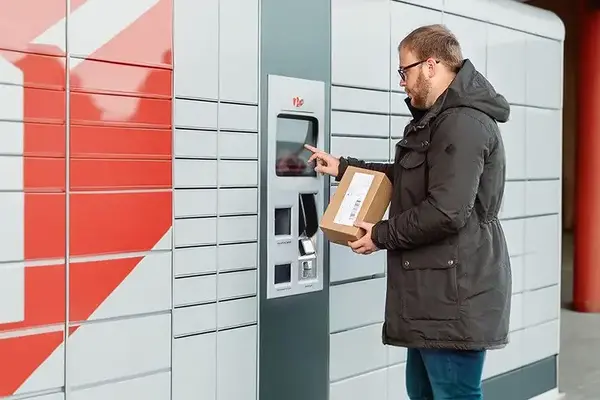
We create procedures for compartment assignment, parcel storage, notification of recipient, pickup and return.
The system separates a booking and a parcel drop-off. Moreover, it deals with problems like a compartment breaking down, a door being open, or an unsuccessful pick-up attempt.
Kiosk and Touchscreen Application Development
We build operator and customer interfaces for supported kiosk hardware.
The scope can include scanning a collection code, choosing a locker, displaying instructions and guiding the user through recovery. Session timeout, accessible instructions and protection of the kiosk’s administration functions are included in the design.
Custom Mobile Applications
We create mobile applications for end users, delivery personnel, building staff, and administration.
Mobile functionality may include locker allocation, approved release requests, local access, and operation logging. The application distinguishes between a request and a process.
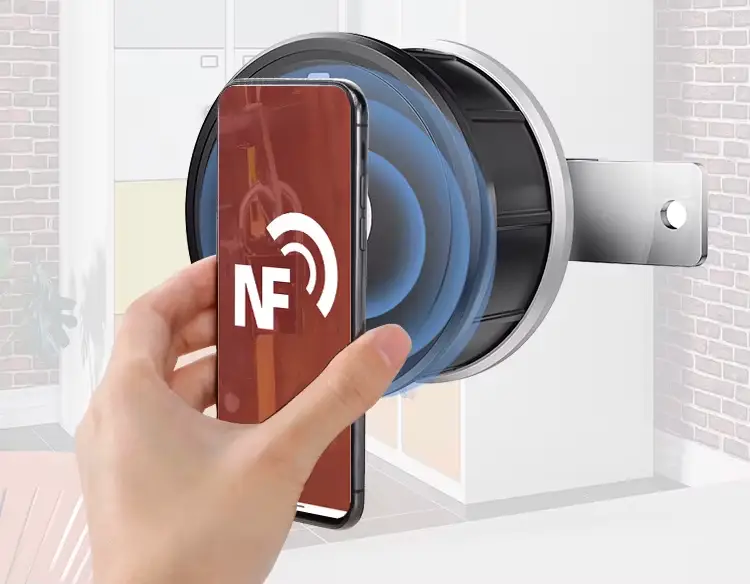
NFC and Battery-Free Lock Integration
We assess supported KERONG NFC locks for cabinet, drawer and locker applications.
The work includes the authorized phone-to-lock interaction, credential lifecycle and permitted event collection. Phone compatibility, NFC behavior and the required power-transfer interaction are tested using the actual lock and target devices.
RFID, PIN, QR and Bluetooth Access Workflows
We integrate the access methods supported by the selected hardware and software interfaces.
These methods may operate at different layers. For example, a QR code may be validated by a kiosk or mobile app, which then instructs a controller to release a compartment. That does not mean the lock itself contains a QR reader.
Cloud Dashboards and Multi-Location Management
We create dashboards enabling efficient management of locations, banks, compartments, users, and operational problems.
The access rights are managed on the backend side. The local operator must only manage the assigned locations, while central operators can get broader view. Remote release and other actions subject to logging are undertaken with an audit trail.
ERP, WMS, Membership and Business-System Integration
We connect locker operations with authorized external systems.
The scope can include orders, employee assignments, equipment loans, memberships or service requests. The design establishes which system owns each record and how updates are reconciled after a failure or interruption.
Embedded Software and Custom Interface Electronics
Where standard components do not meet the agreed requirement, we can scope custom gateway firmware or interface electronics for hardware the client owns or is authorized to modify.
This may involve communication interfaces, sensor inputs, power supervision or protected output stages. Electrical limits, wiring and power behavior are validated against the selected locks and controllers.
Tracking, Assessment and Upkeep
Our monitoring practices are designed around the signals that the equipment emits, for example, communication errors, latch feedback as well as sensor data.
Testing is done to check for wrong addressing, disrupted processes, recovery, and access boundaries. Handover could involve delivering the source code as per the agreement, files with configuration information, documents on wiring, test results, and maintenance techniques.
The firmware made by the producer, equipment guarantees, and licenses granted by third parties are kept apart unless stated otherwise.
Separate the Three Hardware Approaches
| Hardware Approach | What the Integration Should Establish |
|---|---|
| Centrally Powered Locker Bank | Controller protocol, channel mapping, power budget and feedback |
| Battery-Powered Cabinet Lock | Credential support, available connectivity, battery reporting and recovery |
| Battery-Free NFC Lock | Supported phone interaction, authorization, energy transfer and synchronization |
Unlocking, Door Position and Compartment Occupancy Are Different States
A controller accepting a release command does not necessarily prove that the user opened the door.
Likewise, a closed door does not prove that a parcel is inside. The system needs to distinguish the command result, available lock or latch feedback, door-position sensing and compartment occupancy.
We identify the signals required before designing the dashboard. If an occupancy detection mechanism is required, it requires sensor placements and checking against what items the lock will store.
This avoids the misleading messages like “packet retrieved” when the system only knows about an unlock operation.
How Offline NFC Access and Cloud Reporting Fit Together
Local access and central reporting are separate parts of the system. Where the selected lock and credential arrangement support offline operation, a user may be able to access a cabinet without an internet connection.
That does not automatically make the event visible to an administrator at the same moment.
Integration must determine where the event has been captured, if it unlocks the event, and when the phone or other authorized device can upload it.
The dashboard must display the last sync time and the source for each record. The process for revocation must also be clearly defined; a change of the permission in the cloud does not show that an offline lock or credential has applied that change.
Custom Mobile App Development: Control in Your Pocket
What's the biggest advantage of smart locks? You can manage your access from anywhere in the world and to do this, you need a mobile app that fits your business’s needs. Generic apps often miss your specific requirements or lack the features you really need. A poor app can make the entire smart lock technology ineffective.
That's why we focus on custom mobile app development. We understand your processes, whether it’s a co-working space, a hotel, or a large warehouse. We create apps that are visually simple and easy to use but still sturdy.
For example, do you need to automatically revoke access after giving guests 24-hour access? Do you need to see who last opened the lock? Our custom app can handle all of this smoothly. The app works well on both iOS and Android platforms, ensuring a seamless user experience.
Web App Development: Management at Scale
Mobile apps are great for on-the-go control but when you need to manage hundreds of locks at once, pull reports, or control permanent access rights from one place, you need a strong web application.
A web app gives you full power as an administrator. You can view everything comfortably from your desktop on a large dashboard.
This entire management system is your business’s digital control room. We design this web app to easily fit with your existing ERP or CRM system. This integration is vital, as no company wants its employees to enter data into two different programs. Our web app lets you create users in bulk, set access schedules, and instantly monitor security alerts.
Unique Project Solution: Using Kerong NFC Locks
This was a unique project where we created a complete smart access solution using battery-free NFC locks like the Kerong KR-NFC-CL5126.
The client needed a system for small cabinets, lockers, and workstation drawers that didn’t require frequent charging or maintenance.
To meet this need, we made the KR-NFC-CL5126 model central to our solution and developed a custom mobile app.
We established a workflow between the app and the hardware. A user could open the lock by tapping their phone's NFC, and the whole process worked without a battery or power source.
Our system would quickly verify access through the NFC tag and unlock the door. This model is powered by radio energy from the phone, making it completely maintenance-free.
In this solution, we included several key features in the app.
-
The first feature was user registration and device pairing. This assigned each locker a unique digital identity. -
The second feature was NFC access management, allowing the administrator to choose which user could access which locker. -
The third feature was real-time logging, which tracked every unlock event in the app for the administrator to review later. -
The fourth feature was offline access, allowing locks to be opened via NFC even without a network. -
The fifth feature was fast setup mode, which enabled hundreds of lockers to connect to the system in just minutes.
This entire solution transformed the client's workflow. They no longer had to spend time replacing batteries, charging, or wiring. Staff enjoyed a seamless, zero-maintenance, and quick access experience. This project became one of our most successful and innovative NFC-based solutions.
Custom Solutions Using Kerong Smart Locks
Kerong offers many locks, but each client's needs are unique. At Adequate Infosoft, we believe that one solution does not work for everyone. That’s why we develop fully custom solutions using Kerong Smart Locks.
We are not just a service provider, we solve problems. First, we listen to your operational challenges. Then, we choose the right Kerong lock model, such as NFC, Bluetooth, or RFID, and create a complete system around it.
For instance, if you have a lot of small lockers that employees use frequently and you need a solution that removes the hassle of keys and tracks how often each locker is used.
Then we can design a complete custom system where employees open their lockers using their office ID cards, which are NFC-based and data will be sent to your management dashboard in real-time. This is just one example of how we can turn standard hardware into a tailored project solution for you.
Technologies We Use
| Mobile | Swift (iOS), Kotlin/Java (Android), React Native, Flutter, Ionic (Cross-Platform). |
|---|---|
| Backend (Server) | Python (Django/Flask), Node.js (Express), PHP (Laravel) |
| Database | PostgreSQL, MongoDB, MYSQL, MSSQL |
| Cloud Infrastructure | AWS, Google Cloud |
| Communication Protocols | Bluetooth LE (BLE), NFC, TCP/IP |
Frequently Asked Questions
Before proceeding, we need to know the specific type of lock and controller, firmware and protocol or SDK documentation. The check will confirm the availability of the necessary functions and any possible additional hardware.
Integration method will depend on the device. The controller-based system, NFC lock system and connected lock system may have different interfaces. We check compatibility instead of assuming that one API fits all cases.
A solution can use a QR code as an application-level credential. A kiosk or phone validates it and requests the appropriate release operation. The reader, authorization service and controller connection must be included in the design.
No. Removing the battery can remove battery-replacement work, but the lock still has mechanical parts and operating requirements. Phone compatibility, authorization and the supported energy-transfer interaction also need validation.
The selected lock, application, and model of phone must be tested for compatibility. Having NFC on a device is not enough to guarantee an NFC unlocking process.
The system can only notify users if it has been installed properly and have received confirmation about the results.
The primary elements include the availability of documentation, readiness of hardware, types of access, application size, integration with other systems, and the testing stage. A good estimation divides software development and electronics, installation, hosting, and maintenance.