

 Mean Stack Development
 Vue JS Development
 Javascript Development
 React JS Development
 Angular JS Development
 Next JS development
 Java Development
 Python Development
 Django Development
 Cherrypy Development
 C# Development
 ASP.NET Development
 NodeJS Development
 Laravel Development
 CodeIgniter Development
 Zend Development
 Ruby on Rails Development
 CakePHP Development
 PHP Website Development
 Symfony Development
 Drupal Development
 Joomla Development
 Wordpress Development
 .NET Nuke Development
 Kentico
 Umbraco
 .NET MAUI Development
 Xamarin Application Development
 iOS Application Development
 Android Application Development
 Android Wear App Development
 Ionic Development
 iBeacon Application Development
 Universal Windows Platform (UWP)
 Kotlin Application Development
 Swift Application Development
 Flutter Application Development
 PWA Application Development
 Flutter Health Tech & Wearable App Development Company
 React Native Health Tech Wearable App Development
 Offshore Software Development
 Custom Application Development
 Front-End Development
 Full Stack Development
 AI & Machine Learning
 Custom CRM Solutions
 Flask Software Development
 Electron JS Development
 ChatGPT Development
 Veterinary Telemedicine App Development
 Build Smart Telemedicine Platform
 Beauty & Salon App Solutions
 Hire Workato Experts
 Magento Development
 Magento 2.0 Development
 Magento Enterprise
 Shopping Cart Development
 Prestashop Development
 Shopify Development
 Open Cart Development
 WooCommerce Development
 BigCommerce Development
 NopCommerce Development
 Virto Commerce Development
 AspDotNetStorefront Development
 .NET Application Development
 Microsoft Dynamics CRM
 VB .NET Development
 Sharepoint Migration
 ASP.NET Core Development
 ASP.NET MVC Development
 AJAX Development
 Agile Development
 Microsoft Bot
 Microsoft Blazor
 Microsoft Azure Cognitive
 HTML 5
 UI/UX Design
 Graphic Design
 Adobe Photoshop
 XML Application Development
 Cloud Computing Solutions
 Azure Cloud App Development
 AWS Development
 Google Cloud Development
 Certified AWS IoT Services Developers
 DevOps Consulting & Development
 Kubernetes Consulting & Services
 SQL Programming Development
 MySQL Development
 MongoDB Development
 Big Data
 Robotic Process Automation
 Social Media Marketing
 Search Engine Optimization
 QA Testing
 Software Testing
 Software Security
 Maintenance And Support
 I.T. Consulting Services
 Business Intelligence
 YII Development
 Data Analysis
 Alexa Skills Development
 On Demand App for Mobile repairing services
 On Demand App for Car Service Booking
 On Demand App for Cleaning Services
 On Demand App for Pharmacy
 On Demand Dedicated Developers
 On Demand Lawyer App Development






 Nuki Smart Lock
 Salto Smart Lock
 TTlock Smart Lock
 NFC App Development
 Custom IOT Enabled Smart Lock
 Smart Locker Solutions
 Hospital Smart Lock Systems
 Hotel Smart Lock Systems
 Smart Home & Office Locks
 Smart Access for Schools & Colleges
 Unloc Smart Lock Integration
 Yale & August Smart Lock Integration
 Populife Smart Lock Integration
 Smart Lock Hardware Development
 Dairy IoT Solutions
 Agri IoT & AI Solutions
 Weather & Climate Solutions
 Water & Waste Management Solutions
 RaspBerry Pi
 Firmware Software Development
 ESP 32 Software Development
 Embedded Development
 Internet of Things
 Smart IoT Development
 IoT Sensor Integration & Development Solutions
 Smart IoT System Development for HVAC
 Tuya IoT App Development
 Particle IoT SDK
 IoT Development with AI
 Smart Pet GPS Tracker
 Dairy GPS Tracking Solutions
 GPS Fleet Management Software
 Car Rental & Subscription Solutions
 Car Buy & Sell Marketplace Development
 AI-Powered Car Wash App Development
 PCB Design & Fabrication
 IoT AC Automation
 AI–IoT Painting Solutions
 IoT Wearable Hardware & App Development
 HVAC Automation & AI Control Systems
 Smart Home IoT Engineering
 AI Embedded Systems
 AI Hardware Design Service
 Advanced IoT Hardware & Firmware Development
 Device Driver Development Services
 NXP i.MX RT Firmware & Hardware Services
 Microchip PIC & AVR Development
 Hire IoT Architects
 IoT Cloud & Infrastructure Solutions
 Infineon XMC / AURIX Development Services
 Matter & Thread IoT Services
 Native IoT Mobile App Development (BLE & Wi-Fi)
 Snapdragon IoT Firmware Development
 Renesas RA/RX Firmware Services
 Silicon Labs EFR32 Development Services
 Smart Wearable App Development
 Smart IoT Meters
 Smart Healthcare Wearable App Development
 Health Care Monitoring System
 Fitness Tracking App Development
 Smart Home Automation Apps
 nRF PCB Design
 ESP32 PCB Design
 Embedded Wearables Engineers
 Rental Property Management System
 Building Management System
 Smart Lighting Development
 Infineon Semiconductor Firmware Development Services
 Custom Camera Development: Hardware, Firmware & PCB Prototyping
 Smart Security Camera SDK
 Nordic Semiconductor SDK
 Infineon SDK
 Arduino SDK
 NFC Lock Integration
 Kerong Lock Integration
 IoT & AI Solutions for Manufacturing
 Smart Inventory & Logistics Solution
 Food & Beverage Industry Solutions
 Smart Hospitality Solutions
 Smart Property Management
 Custom Smart Home IOT SDK
 Smart IoT & AI in Healthcare
 AI-Powered Security Solutions
 Smart Home Safety & AI
 Veterinary Clinic Management (AI)
 Pet Care System (AI & IoT)
 Pet Training & Adoption (AI)
 Healthcare IoT Development
 Event Management Software
 Money Remittance App
 Money Lending App Development
 Utility and Bill Payment App
 IoT Mobile App Development (Flutter & React Native)
 AI & IoT Retail Solutions
 Smart EV App Development
 Smart Solar IoT & AI Solutions
 IoT-Based Energy Systems
 Smart Energy & Utilities Solutions
 6G Solutions
 IoT Security Solutions
 AI-Powered Lottery App Development
 AI-Sports Fitness Club Management
 Travel
 Real Estate
 Medical & Healthcare
 e-Learning
 Consumer Products
 Finance
 Automobile
 Media & Entertainment
 Billing Software
 Enterprise Resource Planning (ERP)
 Augumented & Virtual Reality
 Point of Sale(POS) Development
 Learning Management System
 EV Charging Solutions
 About Us
 Partners & Certifications
 Quality Assurance
 Our Clients & Testimonials
 Development Process
 Our Products
 Social Responsibility
 Work Ethics
 Vision & Mission
 Awards
 Live Project Demos
 Contact Us
 Case Studies
 Portfolio
 Blog
.NET MAUI IoT App Development Services | Cross-Platform Apps for Connected Devices
IoT devices require more than just connected technology. The customers, service personnel, and operational staff require an application to extract useful information from the device data and help take proper and timely action.
The application is where customers get the value out of their connected solution irrespective of whether it is a smart camera, solar battery system, medical device, smart lock, vehicle tracking device, industrial sensor, or energy management system.
Adequate Infosoft provides .NET MAUI IoT app development services for businesses that need high-performance, cross-platform applications for connected devices.
We build applications that run across iOS, Android, Windows, and macOS while sharing a large part of the codebase in C#. This helps organisations deliver a consistent product experience without maintaining completely separate applications for every platform.
Our services incorporate .NET MAUI application development along with IoT device integration, embedded firmware synchronization, cloud infrastructure, real-time communication, secure APIs, analytics, dashboards, alerts, and ongoing product support. We emphasize building applications that function well under real operating conditions and not just during a successful demonstration of a device.
Let's Work Together!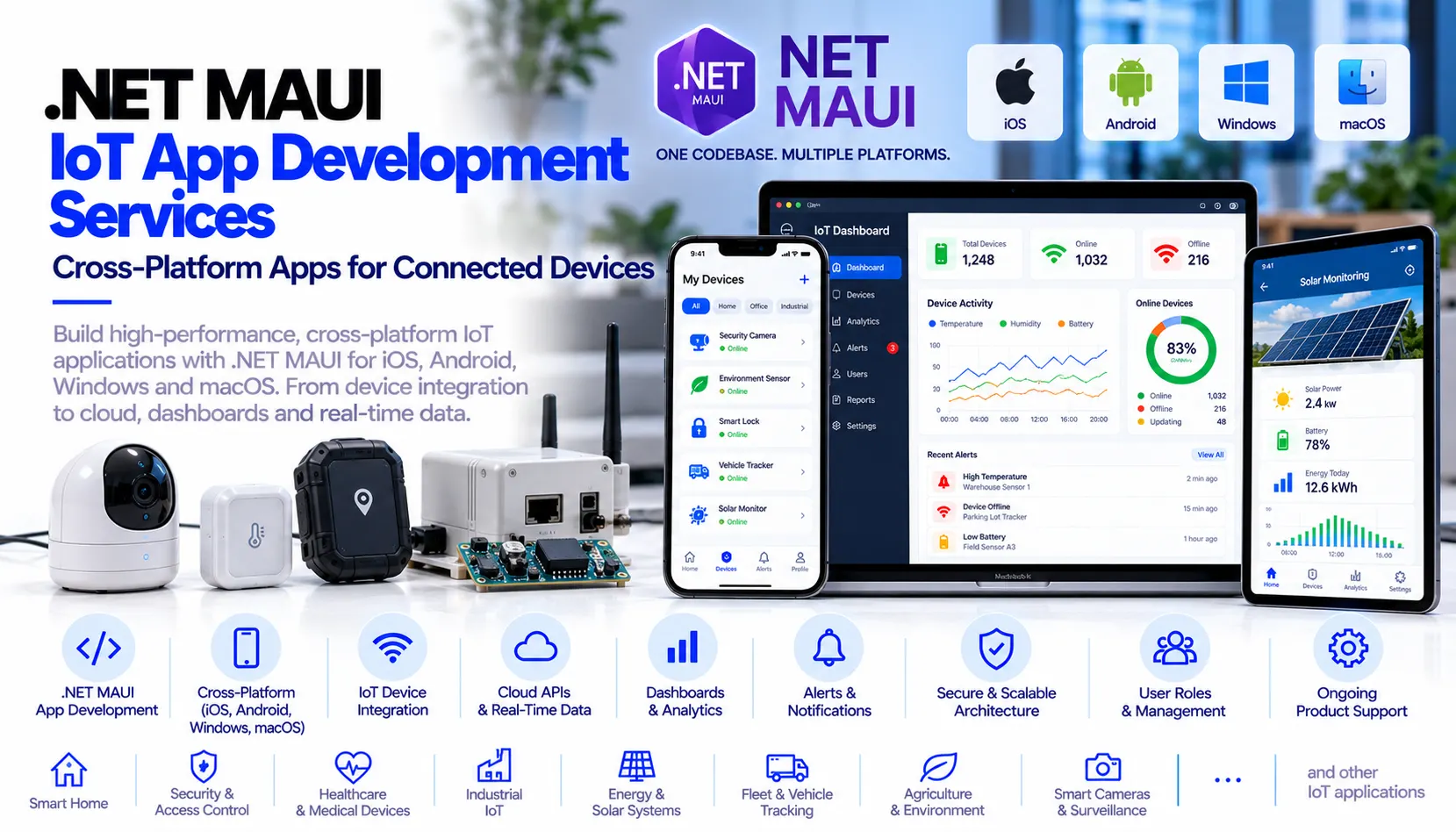
Why Choose .NET MAUI for IoT App Development?
.NET MAUI is the framework that allows development of mobile/desktop applications using C# and .NET from one common base. For companies dealing with IoT and using such frameworks as ASP.NET Core, Azure or any other Microsoft product, or even having their devices with C# firmware support, .NET MAUI may be useful.
There are multiple benefits that .NET MAUI can offer for developing connected devices.
Shared Code Without Losing Device Capabilities
The same business logic, device models, user management, alarm logic, and API integration requirements are typical for an IoT application on both mobile and desktop environments. The .NET MAUI framework ensures that the common areas can be implemented once, but platform-dependent functionalities can be utilized as well.
For instance, a particular product could use the BLE protocol on a mobile device to do some local device provisioning, native video rendering for a camera input stream, push notifications for alarms, and desktop dashboard for operations people. We take care of the architecture of the common and platform-dependent layers so the product would stay maintainable in the future.
A Strong Fit for Microsoft-Based IoT Platforms
Most of the products that employ IoT are based on ASP.NET Core APIs, Azure, Microsoft Entra Identity, SQL Server, Azure IoT, or Microsoft enterprise environment.
.NET MAUI is well-fitted for this kind of architecture.
It becomes simpler to develop within a single technical stack for mobile applications, APIs, cloud services, business apps, and management tools. It will be simpler to transfer domain knowledge, validation, and security patterns throughout the product.
Mobile and Desktop in One Product Strategy
An IoT device might require something beyond just an app on the consumer's phone. Field engineers might need an app on a tablet for commissioning, while operations staff might need an app on Windows for monitoring a large number of devices. The managers might need a mobile interface for getting notifications and approvals.
.NET MAUI can facilitate a more comprehensive strategy for your products since it allows companies to provide appropriate experiences on a wider variety of devices including phones, tablets, and PCs.
Case Study: AI-Powered Smart Security Camera Platform for AIS
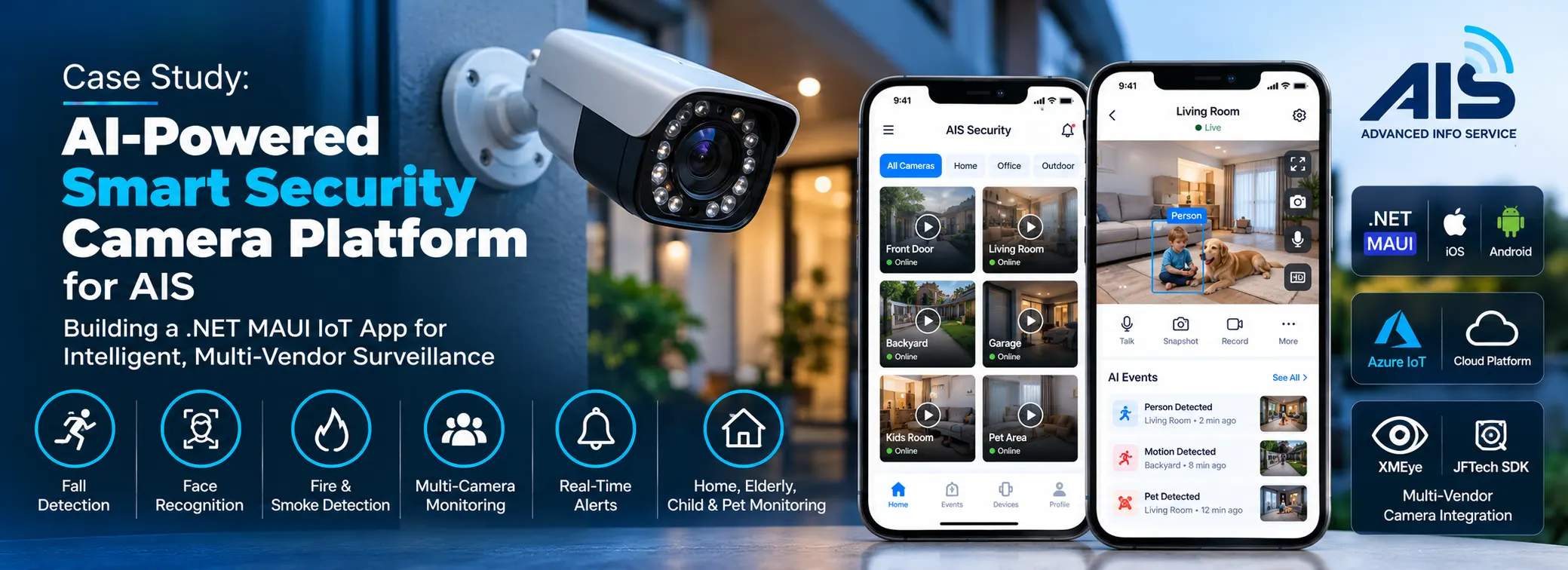
Building a .NET MAUI IoT App for Intelligent, Multi-Vendor Surveillance
Adequate Infosoft designed an AI-enabled management solution for the IP cameras of AIS – Advanced Info Service. They wanted an app to be more than a usual viewer of the CCTV cameras. The product needed to have real-time intelligent security events, multi-camera compatibility, and consistent functionality on Android and iOS platforms.
This platform was aimed at several use cases like home security, eldercare, childcare, pet monitoring, and business security surveillance. Rather than merely recording videos, this platform should detect intelligent events like falling down, face recognition, fire, smoke detection, and many other AI-driven signals. The core problem was to convert complicated camera and AI information into swift actions.
The Challenge
In addition to integrating custom AI camera hardware, AIS was required to integrate third-party camera SDKs such as XMEye and JFTech SDKs. Therefore, there was a need for the system to support diverse hardware and data inputs but still present a unified experience to the end user.
There were also the requirements of developing a responsive and scalable platform. In case something important happened, the user would need to get that notification immediately and have enough information about the situation to know how to proceed. At the same time, the system should not flood the user with notifications from all devices and camera events.
Our .NET MAUI IoT Solution
Cross-platform mobile application development was done with .NET MAUI and C# programming language and backed with ASP.NET Core and Azure IoT Architecture. Cross-platform MAUI application facilitated the implementation of shared business logic and consistent UI across both Android and iOS, but allowed for platform-specific integration in case of stringent media requirements.
For video feed, a native approach was applied using the MAUI integration layer, where AVFoundation library was used for iOS and ExoPlayer for Android with low latency RTSP and RTMP streaming protocol support. This gave users the possibility to access multiple camera feeds from their mobile devices.
The app included a multi-camera dashboard that displayed several camera streams in a structured grid. It also handled intelligent events and alerts generated by the connected camera ecosystem. MQTT-based edge-camera communication and Azure IoT services supported real-time device and event exchange, while the backend unified the different camera SDK integrations.
Value Delivered
Through the development of the AIS app, we see an example of how .NET MAUI can be used to develop a commercial IoT product with complicated device integration.
In terms of clients working on products related to cameras, security, safety, health care, or remote monitoring, the lesson is clear: An effective IoT application needs to turn device complexity into an experience that the user can rely on in an urgent situation.
Client: AIS, Advanced Info Service
Case study link: ai-powered-smart-security-camera-platform
Relevant .NET MAUI IoT Delivery Experience
Our experience spans applications where reliable device communication, visual clarity, security, and operational workflows are essential.
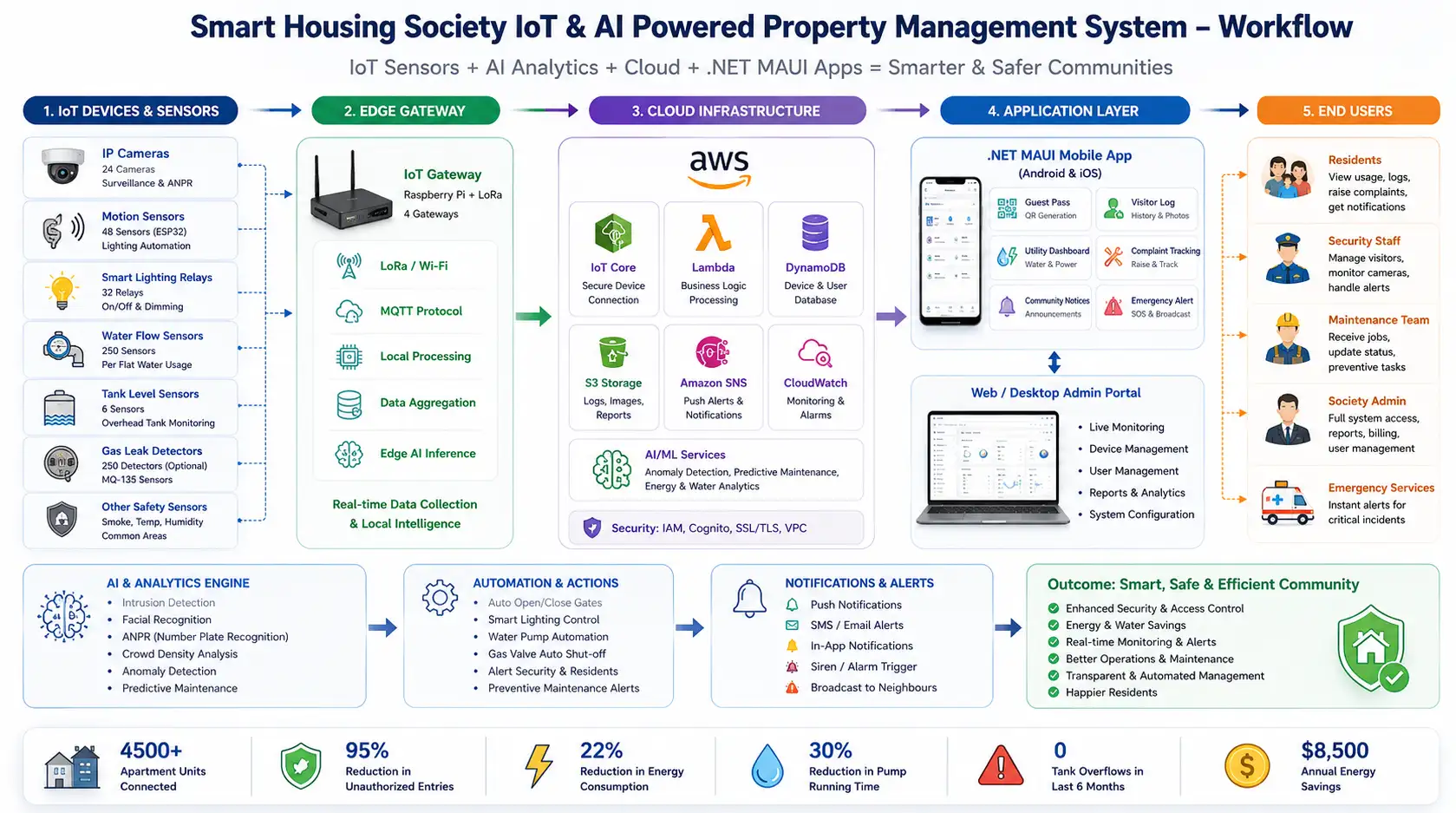
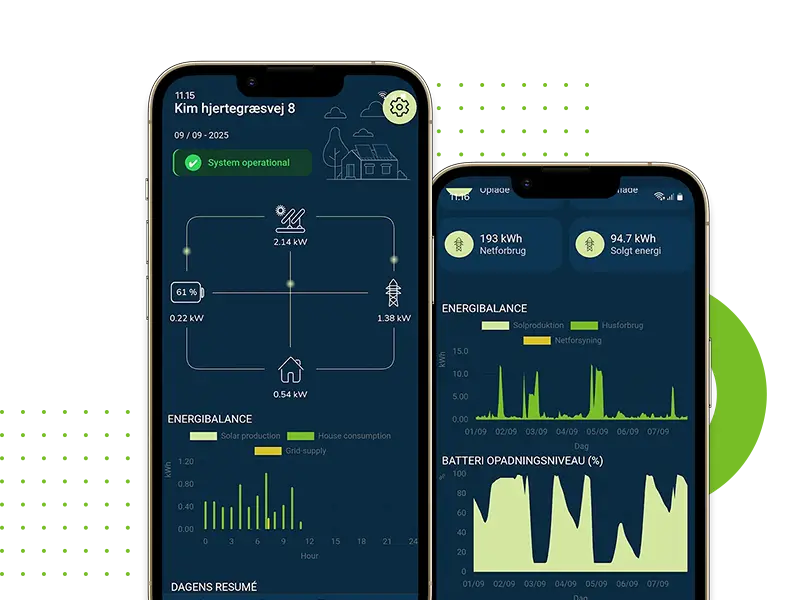
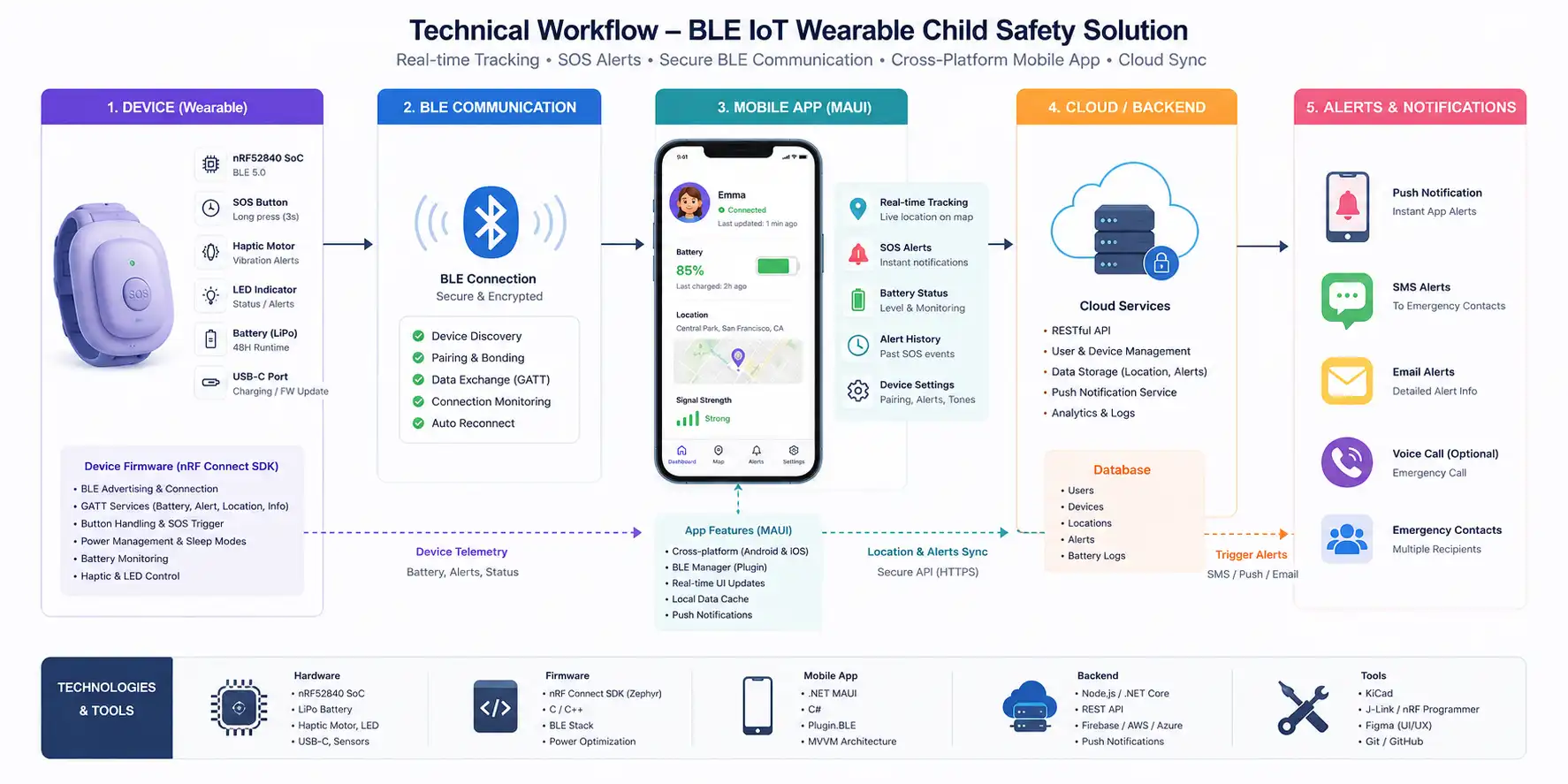
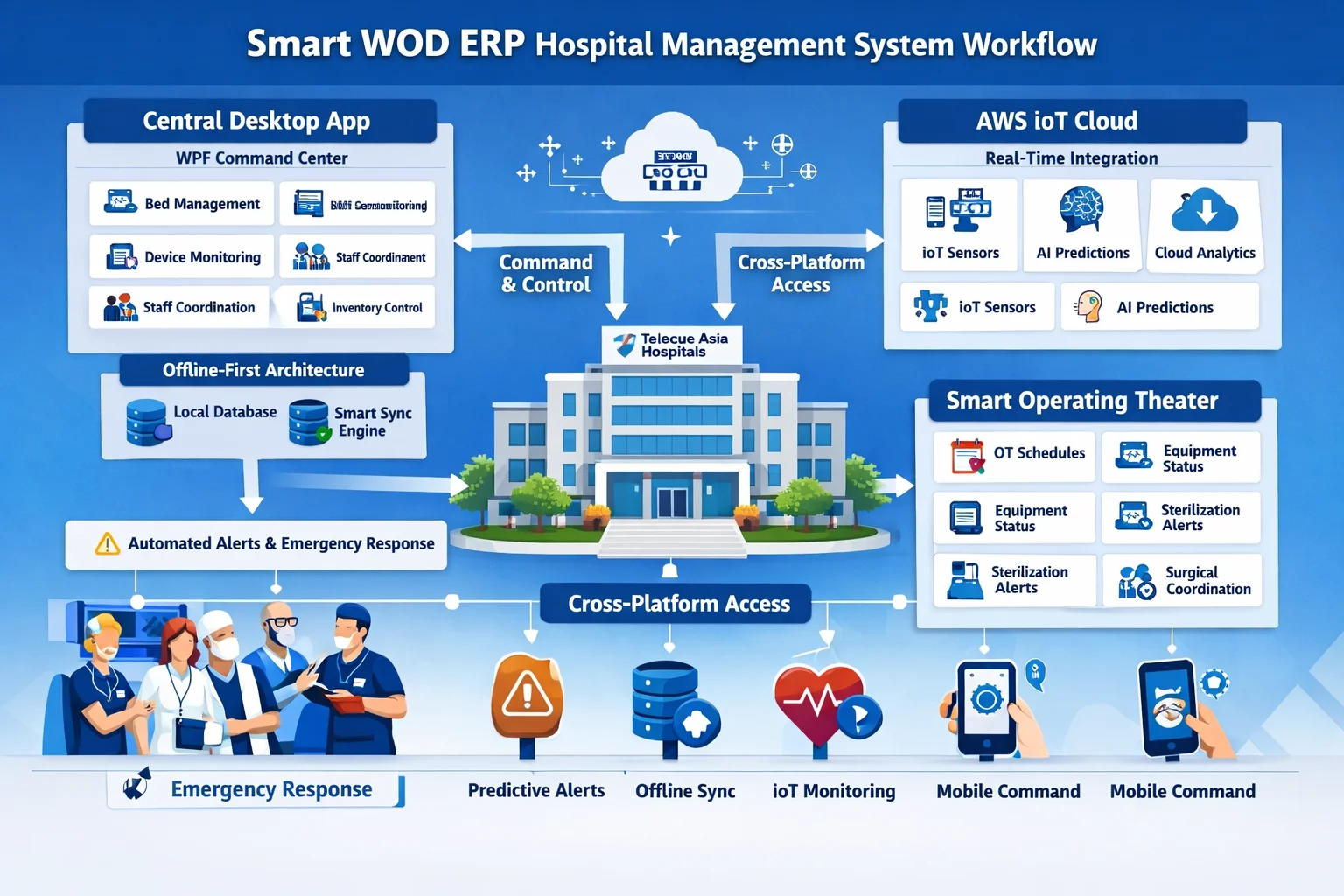
Our .NET MAUI IoT App Development Services
Cross-Platform IoT Mobile and Desktop Applications
We develop .NET MAUI apps for iOS, Android, Windows, and macOS. Our apps are built with the actual users of the product in mind; those include the customers, installers, technicians, operators, administrators, and support staff.
Some common functionalities of our apps include device lists, room/site maps, live status, dashboard, invitations to users, device setup, maintenance log, firmware update process, reporting, notifications, and support utilities.
Bluetooth Low Energy and Local Device Connectivity
Many IoT solutions have adopted BLE to handle initial device setup, local management, diagnostics, and nearby configuration. MAUI apps are developed to communicate with BLE-enabled devices like wearables, sensors, locks, health gadgets, trackers, and smart home devices.
A strong BLE experience requires more than just a scan and connect screen. Permissions, pairings, reconnections, out-of-band signals, background activity, discovery of devices, firmware compatibility, and proper recovery options are all considered while designing an app. Our team can also collaborate with firmware engineers and the mobile application so that device commands and data are clearly stated.
MQTT, WebSocket, and Real-Time Data
Any IoT applications require to visualize the changes. We use the integration of .NET MAUI applications with MQTT, WebSocket, REST API, and cloud technologies to provide the live telemetry, device status, notifications, and remote control capabilities.
A smart energy application might present live production and battery statistics. A camera application might get an AI detection notification. Cold storage platform might notify the manager about temperature threshold. Fleet management application might show the device entering or exiting geofencing.
We design the data pipeline in a way that the user would see the live data while the platform would take care of reconnections, validation of messages, acknowledgments, background processing, and retrieving of historical data.
IoT Dashboards and Data Visualisation
Device information becomes useful when it is easily understandable by people. We build dashboards that provide telemetry, sensor information, location, energy use, battery status, machine performance, alerts, maintenance activities, and operations KPIs.
Different stakeholders require different dashboard designs from us. For example, an end-customer may require a basic dashboard for information on device health status; a technician may require a more granular dashboard for readings and diagnostics; while a manager may require an overall multi-site dashboard with filters and alerts.
We design our dashboards in a way that users can pinpoint the problem in the dashboard itself without having to analyze a complex technical graph.
Device Control, Provisioning, and Configuration
We develop applications that enable authorised users to manage IoT devices safely. Depending on the product, this may include:
Device onboarding and ownership assignment Wi-Fi, BLE, or gateway-based commissioning Device naming and grouping Remote configuration changes Smart lock, relay, pump, lighting, or HVAC control Threshold and alert-rule configuration User and role management Device-health monitoring Firmware update visibility and controls Maintenance and support workflows
For actions that control physical devices, we implement confirmation, acknowledgement, permission, audit-history, and error-recovery patterns. A user should always understand whether a command has been requested, delivered, completed, or failed.
Cloud, API, and Backend Development
A MAUI IoT app requires a reliable backend solution. Our .NET development team builds ASP.NET Core APIs, cloud services, authentication, databases, administrative consoles, integration, and monitoring tools for the mobile application.
We can collaborate using Azure, AWS, SQL Server, PostgreSQL, MongoDB, time-series storage, Azure IoT, AWS IoT, Firebase Cloud Messaging, and device SDKs from other providers. The chosen architecture is based on your security, scalability, compliance, number of devices, data retention, and integration needs.
Security and Privacy by Design
Security becomes particularly paramount in cases where the application has access to devices, health data, surveillance data, location data, or operational systems. Role-based access control, security of APIs, encryption of traffic, secured credentials, device authentication, session management, auditing, and environment isolation are all integrated into our delivery strategy.
We also assist in designing reasonable access rules for the data that your team may require. The user should only have access to devices, locations, cameras, or records for which he or she has authorization.
Begin Your .NET MAUI IoT App Development Project
Whether you are working on a brand new product or updating an existing IoT solution, Adequate Infosoft is there to develop a scalable application for you that will be secure and compatible with all possible hardware and operating systems.
We provide solutions for device provisioning, live data, dashboarding, remote control, alerts and cloud integration.
Frequently Asked Questions
Yes, as .NET MAUI will be perfect for IoT applications where there is a need for common C# codebase on iOS and Android, and where the overall platform involves ASP.NET Core, Azure, Microsoft technologies, or desktop management tools.
Yes, we can have applications that support Bluetooth low energy, Wi-Fi, local gateways, cloud APIs, MQTT services, or other communication methods of the supported devices.
Yes. Our team develops .NET MAUI applications, ASP.NET Core APIs, cloud integration, real-time data services, administration portals, MQTT integration, device-management features, and embedded-system integration.
Yes. .NET MAUI works for developing Android and iOS applications from a single codebase. Our solutions will also work for Windows and macOS, where necessary, for products that need desktop monitoring or workflow.
Yes. We will analyze your current Xamarin Forms application, device SDKs, backend, third-party libraries, and deployment processes and then create a plan to move your app to .NET MAUI.
We use encryption, authentication, role-based security, device identity management, API security, logging, and topic or endpoint level permissions depending on the platform architecture.