

 Mean Stack Development
 Vue JS Development
 Javascript Development
 React JS Development
 Angular JS Development
 Next JS development
 Java Development
 Python Development
 Django Development
 Cherrypy Development
 C# Development
 ASP.NET Development
 NodeJS Development
 Laravel Development
 CodeIgniter Development
 Zend Development
 Ruby on Rails Development
 CakePHP Development
 PHP Website Development
 Symfony Development
 Drupal Development
 Joomla Development
 Wordpress Development
 .NET Nuke Development
 Kentico
 Umbraco
 .NET MAUI Development
 Xamarin Application Development
 iOS Application Development
 Android Application Development
 Android Wear App Development
 Ionic Development
 iBeacon Application Development
 Universal Windows Platform (UWP)
 Kotlin Application Development
 Swift Application Development
 Flutter Application Development
 PWA Application Development
 Flutter Health Tech & Wearable App Development Company
 React Native Health Tech Wearable App Development
 Offshore Software Development
 Custom Application Development
 Front-End Development
 Full Stack Development
 AI & Machine Learning
 Custom CRM Solutions
 Flask Software Development
 Electron JS Development
 ChatGPT Development
 Veterinary Telemedicine App Development
 Build Smart Telemedicine Platform
 Beauty & Salon App Solutions
 Hire Workato Experts
 Magento Development
 Magento 2.0 Development
 Magento Enterprise
 Shopping Cart Development
 Prestashop Development
 Shopify Development
 Open Cart Development
 WooCommerce Development
 BigCommerce Development
 NopCommerce Development
 Virto Commerce Development
 AspDotNetStorefront Development
 .NET Application Development
 Microsoft Dynamics CRM
 VB .NET Development
 Sharepoint Migration
 ASP.NET Core Development
 ASP.NET MVC Development
 AJAX Development
 Agile Development
 Microsoft Bot
 Microsoft Blazor
 Microsoft Azure Cognitive
 HTML 5
 UI/UX Design
 Graphic Design
 Adobe Photoshop
 XML Application Development
 Cloud Computing Solutions
 Azure Cloud App Development
 AWS Development
 Google Cloud Development
 Certified AWS IoT Services Developers
 DevOps Consulting & Development
 Kubernetes Consulting & Services
 SQL Programming Development
 MySQL Development
 MongoDB Development
 Big Data
 Robotic Process Automation
 Social Media Marketing
 Search Engine Optimization
 QA Testing
 Software Testing
 Software Security
 Maintenance And Support
 I.T. Consulting Services
 Business Intelligence
 YII Development
 Data Analysis
 Alexa Skills Development
 On Demand App for Mobile repairing services
 On Demand App for Car Service Booking
 On Demand App for Cleaning Services
 On Demand App for Pharmacy
 On Demand Dedicated Developers
 On Demand Lawyer App Development






 Nuki Smart Lock
 Salto Smart Lock
 TTlock Smart Lock
 NFC App Development
 Custom IOT Enabled Smart Lock
 Smart Locker Solutions
 Hospital Smart Lock Systems
 Hotel Smart Lock Systems
 Smart Home & Office Locks
 Smart Access for Schools & Colleges
 Unloc Smart Lock Integration
 Yale & August Smart Lock Integration
 Populife Smart Lock Integration
 Smart Lock Hardware Development
 Dairy IoT Solutions
 Agri IoT & AI Solutions
 Weather & Climate Solutions
 Water & Waste Management Solutions
 RaspBerry Pi
 Firmware Software Development
 ESP 32 Software Development
 Embedded Development
 Internet of Things
 Smart IoT Development
 IoT Sensor Integration & Development Solutions
 Smart IoT System Development for HVAC
 Tuya IoT App Development
 Particle IoT SDK
 IoT Development with AI
 Smart Pet GPS Tracker
 Dairy GPS Tracking Solutions
 GPS Fleet Management Software
 Car Rental & Subscription Solutions
 Car Buy & Sell Marketplace Development
 AI-Powered Car Wash App Development
 PCB Design & Fabrication
 IoT AC Automation
 AI–IoT Painting Solutions
 IoT Wearable Hardware & App Development
 HVAC Automation & AI Control Systems
 Smart Home IoT Engineering
 AI Embedded Systems
 AI Hardware Design Service
 Advanced IoT Hardware & Firmware Development
 Device Driver Development Services
 NXP i.MX RT Firmware & Hardware Services
 Microchip PIC & AVR Development
 Hire IoT Architects
 IoT Cloud & Infrastructure Solutions
 Infineon XMC / AURIX Development Services
 Matter & Thread IoT Services
 Native IoT Mobile App Development (BLE & Wi-Fi)
 Snapdragon IoT Firmware Development
 Renesas RA/RX Firmware Services
 Silicon Labs EFR32 Development Services
 Smart Wearable App Development
 Smart IoT Meters
 Smart Healthcare Wearable App Development
 Health Care Monitoring System
 Fitness Tracking App Development
 Smart Home Automation Apps
 nRF PCB Design
 ESP32 PCB Design
 Embedded Wearables Engineers
 Rental Property Management System
 Building Management System
 Smart Lighting Development
 Infineon Semiconductor Firmware Development Services
 Custom Camera Development: Hardware, Firmware & PCB Prototyping
 Smart Security Camera SDK
 Nordic Semiconductor SDK
 Infineon SDK
 Arduino SDK
 NFC Lock Integration
 Kerong Lock Integration
 IoT & AI Solutions for Manufacturing
 Smart Inventory & Logistics Solution
 Food & Beverage Industry Solutions
 Smart Hospitality Solutions
 Smart Property Management
 Custom Smart Home IOT SDK
 Smart IoT & AI in Healthcare
 AI-Powered Security Solutions
 Smart Home Safety & AI
 Veterinary Clinic Management (AI)
 Pet Care System (AI & IoT)
 Pet Training & Adoption (AI)
 Healthcare IoT Development
 Event Management Software
 Money Remittance App
 Money Lending App Development
 Utility and Bill Payment App
 IoT Mobile App Development (Flutter & React Native)
 AI & IoT Retail Solutions
 Smart EV App Development
 Smart Solar IoT & AI Solutions
 IoT-Based Energy Systems
 Smart Energy & Utilities Solutions
 6G Solutions
 IoT Security Solutions
 AI-Powered Lottery App Development
 AI-Sports Fitness Club Management
 Travel
 Real Estate
 Medical & Healthcare
 e-Learning
 Consumer Products
 Finance
 Automobile
 Media & Entertainment
 Billing Software
 Enterprise Resource Planning (ERP)
 Augumented & Virtual Reality
 Point of Sale(POS) Development
 Learning Management System
 EV Charging Solutions
 About Us
 Partners & Certifications
 Quality Assurance
 Our Clients & Testimonials
 Development Process
 Our Products
 Social Responsibility
 Work Ethics
 Vision & Mission
 Awards
 Live Project Demos
 Contact Us
 Case Studies
 Portfolio
 Blog
BLE-to-Wi-Fi Provisioning App Development Services | Secure IoT Device Setup
One of the most important points during the lifecycle of a product is the very first connection of a customer with a particular IoT device.
If a smart camera, sensor, appliance, wearables, gateway, lock, energy monitor, or industrial device has high-quality hardware but it cannot connect to Wi-Fi in a simple way, the whole experience of the product gets affected.
BLE-to-Wi-Fi provisioning takes care of the problem of connecting. First of all, the mobile application connects with the IoT device via Bluetooth Low Energy, and next, it provides necessary Wi-Fi credentials to the IoT device. Then, having connected to a local network, the device can register with the cloud and start sending data.
Adequate Infosoft develops BLE-to-Wi-Fi provisioning applications for connected products across smart home, security, healthtech, industrial IoT, energy, agriculture, hospitality, and consumer-device markets.
We combine mobile app development, embedded firmware expertise, cloud integration, security engineering, UX design, and real-device testing to create setup experiences that are simple for users and dependable for product teams.
Let's Work Together!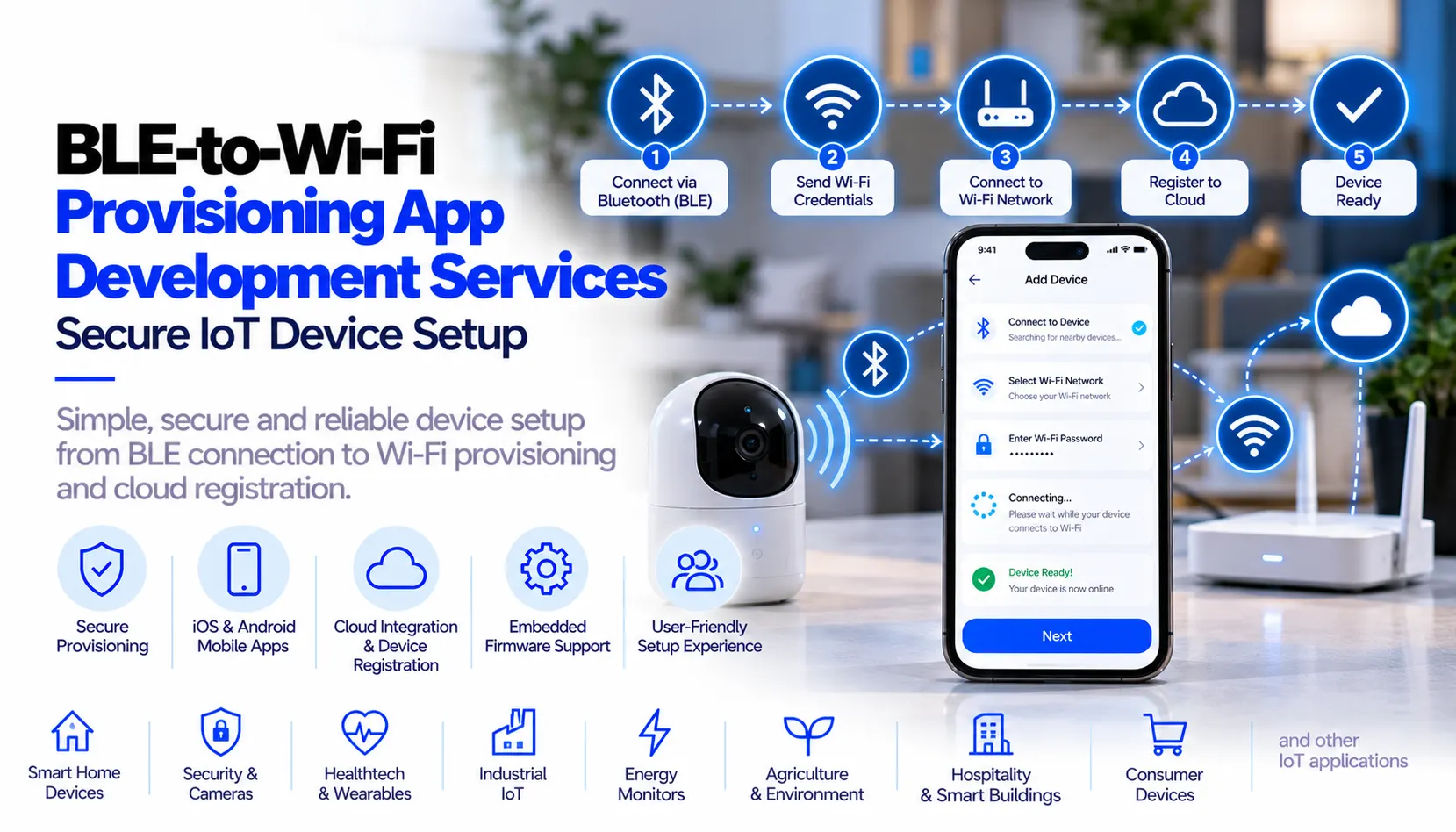
What Is BLE-to-Wi-Fi Provisioning?
BLE to WiFi provisioning is a device onboarding technology that leverages Bluetooth Low Energy technology to provide a temporary and short-range means of connection. BLE technology helps the device advertise itself and makes it possible for the mobile application to discover the device without the need for the device to be online.
The steps of the provisioning process include:
Power on the IoT device. Scan nearby BLE devices using a mobile app. Choose the right device and connect securely. Ask the user for the available Wi-Fi credentials. Securely transfer the Wi-Fi SSID and passphrase using BLE. The device connects to Wi-Fi and provides feedback on the result. The app registers the device in the cloud and sets it up.
It seems fairly simple, but production-level provisioning needs to factor in permissions, authentication, device identity, network compatibility, wrong passwords, weak routers, timeouts, restarts, reconnections, cancellation by the user, and cloud registration failure.
What we have to do here is make sense of all the technical situations for the customer.
Why BLE Provisioning Is Important for IoT Products
IoT devices typically don't include a keyboard, screen, or touch-screen interface. Having to program Wi-Fi settings via hardware button presses, a temporary hotspot, or an overly complicated web portal interface can be difficult. BLE allows a user-friendly mobile app-led process for the device provisioning experience.
A properly designed BLE provisioning application enables the enterprise to:
Lower support calls related to provisioning Ease device activation at first attempt Safeguard Wi-Fi and device credentials Associate each device with its corresponding customer account Make cloud management possible sooner Foster a unified onboarding experience among device lines Help installers, technicians, and end users through role-specific processes Gather valuable diagnostics when provisioning fails
The result for the customer should be straightforward: launch the app, locate the device, input the Wi-Fi information, and get a confirmation that the device is activated.
Case Study: BLE-to-Wi-Fi Setup for an AI Smart Camera Ecosystem
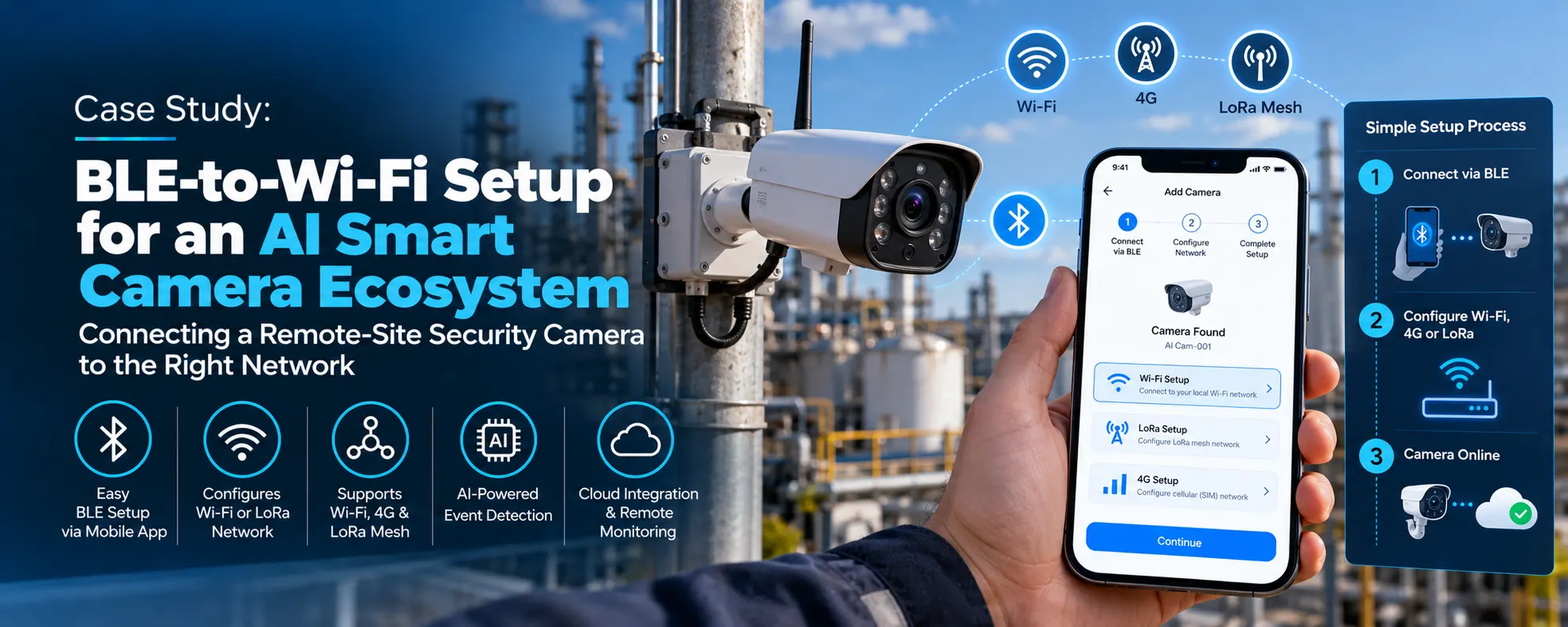
Connecting a Remote-Site Security Camera to the Right Network
The task for Adequate Infosoft was to develop a smart-camera ecosystem, which utilized AI, for a company that owned a big industrial zone with challenging connectivity issues. What the customer required was to design a surveillance system that can work in remote zones where the conventional security systems and Internet access cannot always be ensured.
The application should have been user-friendly enough to allow people to control cameras and configure them depending on their environment (Wi-Fi or LoRa mesh) without using complex programs designed only for specialists.
The project involved custom smart-camera hardware, embedded firmware, AI-driven event detection, multiple connectivity options, cloud integration, and a cross-platform mobile application. Because the cameras could be installed in challenging locations, the initial setup flow had to be practical, understandable, and resilient.
The Provisioning Challenge
Without proper configuration of the camera to the Wi-Fi network, the device will not be able to connect to the network. But it would be impractical for an average user to type in such settings manually on the headless device.
For the client, it was necessary to have a means of configuring the device in different conditions of coverage without making any mistakes and getting the device disconnected from the network. It was necessary to create a short-range connection method for setting up the device prior to connecting to the Internet.
Our BLE-to-Wi-Fi Provisioning Solution
Our team developed a .NET MAUI application for the mobile phone that interacts with the camera via Bluetooth Low Energy during setup. We leveraged Bluetooth Low Energy to configure Wi-Fi credentials or frequency band of LoRa, which would enable installation technicians or authorized users to configure the device via mobile application.
After configuration, the camera could operate using either Wi-Fi, cellular 4G, or LoRa mesh connectivity based on the site requirements. This provided us with flexibility in terms of configuration – we were able to configure cameras for local network connections when necessary, whereas LoRa mesh capabilities could be used for communication in difficult areas of the industrial facility.
The solution also integrated ESP32-S3 and STM32H7 hardware, LoRa SX1262, SIM7600 4G connectivity, TensorFlow Lite, YOLOv8, Azure IoT Hub, and WebSockets. The .NET MAUI app acted as the accessible control layer between the user and a complex device network.
Outcome and Relevance
As the project has illustrated, there is a need for BLE-to-Wi-Fi provisioning as part of the overall IoT experience. The project helped to enable practical local set up before cloud connection was established, while being able to provide a platform that offers remote monitoring as well as security alerts based on artificial intelligence.
From the perspective of an IoT business, such an approach can be utilized for the provision of cameras, sensors, appliances, locks, energy products, gateways, wearable technology, and even industrial equipment.
Client: Industrial security client operating a large industrial complex
Case study link: development-of-ai-smart-camera-lora-esp32
Relevant BLE and Wi-Fi Project Experience
Our experience covers the full path from connected hardware and firmware to mobile apps, cloud services, and real-world deployment.
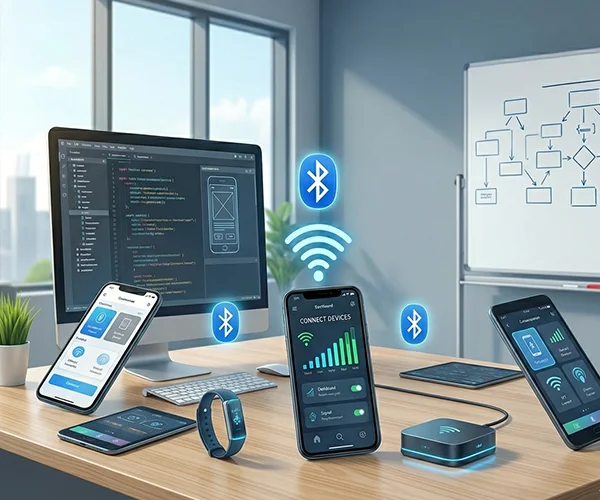
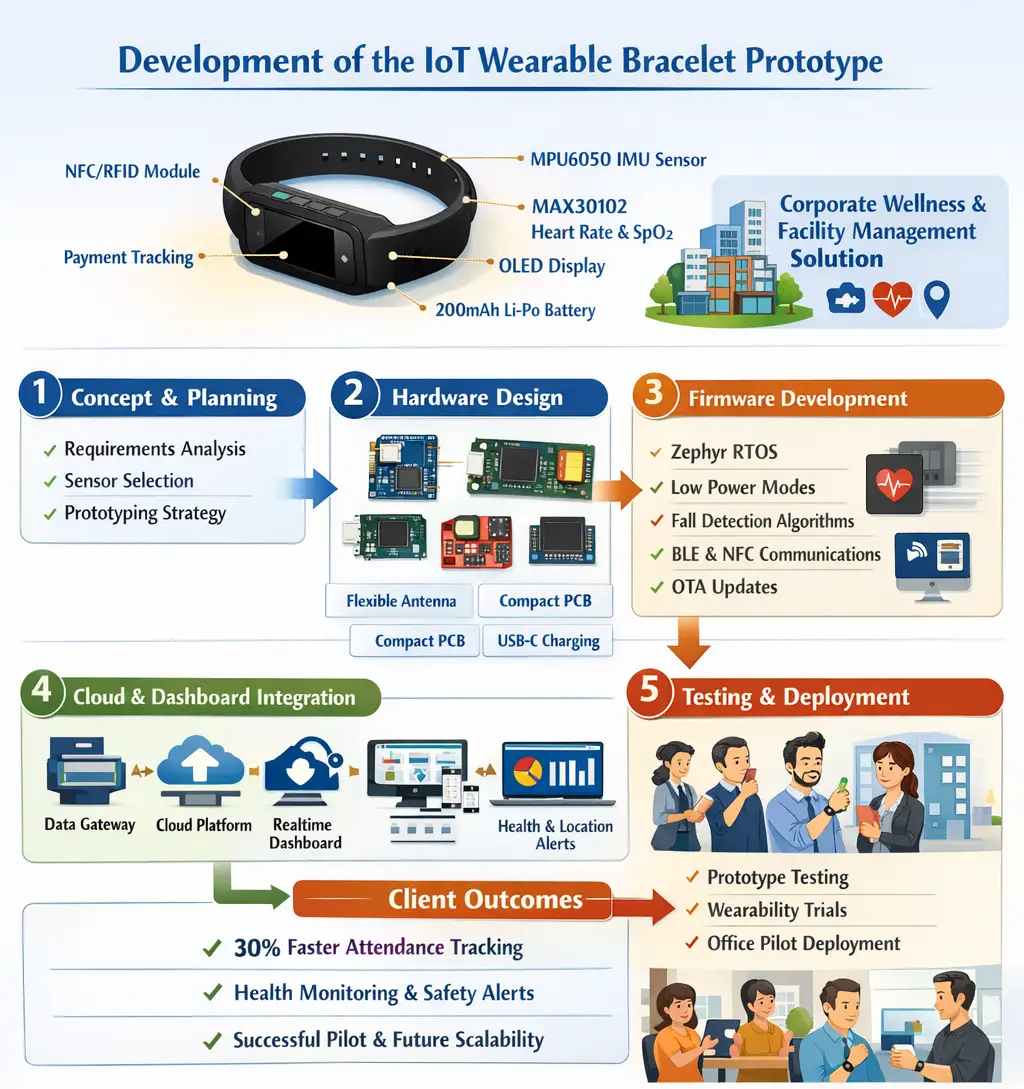
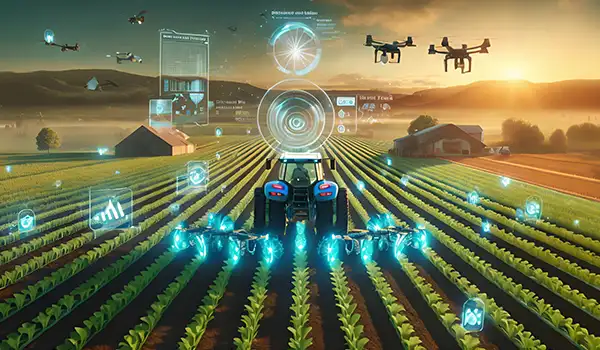
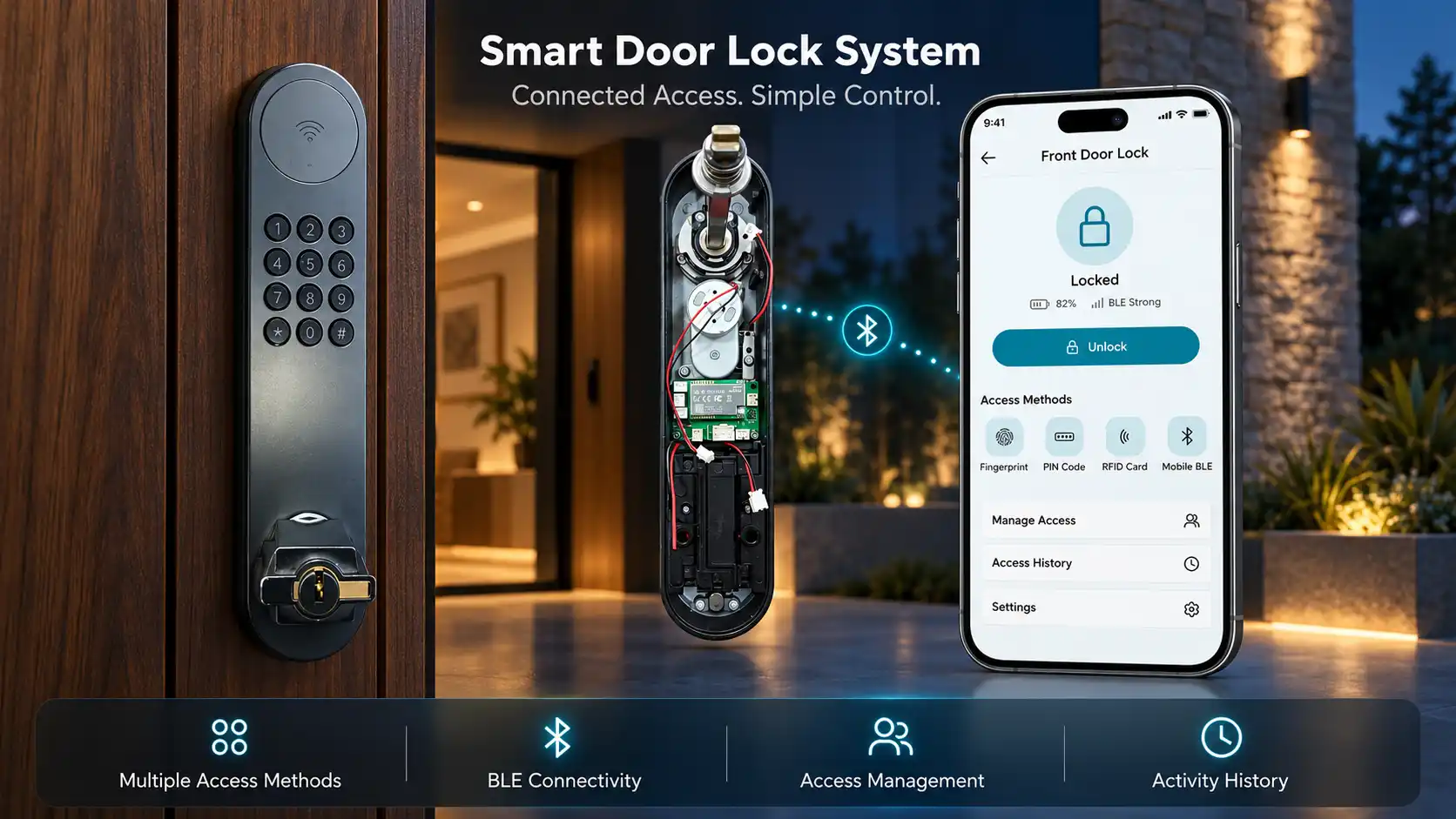
Our BLE-to-Wi-Fi Provisioning App Development Services
iOS and Android Provisioning Applications
Native and cross-platform apps for iOS and Android can be provisioned. Depending on the specific product, our programming languages of choice are Swift, Kotlin, Flutter, React Native, and .NET MAUI.
Choosing the most appropriate technology will depend on the hardware SDK, Bluetooth Low Energy functionality, background processing capability, security model, current codebase, projected scale, and future product road map.
BLE Device Discovery and Secure Pairing
In order to assist users in locating their devices without exposing any private information and confusing them with multiple devices, we develop several methods for discovering devices based on the device identification, signal detection, using QR codes or series numbers, and status of pairing process.
We also have systems for secure pairing and dealing with active sessions to minimize the risk of unauthorized pairs. Depending on the system architecture, our enhanced pair systems may include methods like proof of possession, time-limited tokens, QR-based pairs, digital signatures, and confirmation of account ownership.
Wi-Fi Credential Transfer and Connection Status
Provisioning is not complete when the mobile app sends a password. The device must successfully join the intended network and report its actual state.
We build clear setup journeys that show each stage:
Connecting to the device Sending Wi-Fi information Joining the Wi-Fi network Registering with the cloud Checking for firmware or configuration updates Completing device ownership and naming
If a problem occurs, the app should explain what the customer can do next. For example, it may identify an incorrect password, weak network signal, unsupported network type, or a device that needs to be reset before retrying.
Cloud Registration and Device Ownership
Once the device is connected to Wi-Fi, it is important to associate the device with the respective cloud account. We provide services related to the development of application-level processes and backend processes for the safe registration, ownership, location or room assignment, installer transfer, and multiple user access.
Such a registration process is important in terms of cases when the device can send telemetry and receive alerts or guidance services remotely.
Device Configuration and Post-Setup Experience
Provisioning is the start of the product journey, not the end. We create the next-step experience following connection, which includes device naming, room assignment, alert preference, product training, calibration, setup, remote control configuration, and first-time use verification.
In the case of commercial products, this will include technician workflow, customer handoff, testing documentation, photos of installation, device groups, organisational roles, and maintenance scheduling.
Firmware, Diagnostics, and Recovery Workflows
It is important to have a reliable method for IoT devices to resolve firmware version conflicts, malfunctions in the provisioning process, restarts of devices, and changes in configuration.
Our provisioning apps might allow us to check firmware compatibility, find out how a firmware update went during device operation, evaluate the quality of a connection, and provide device logs and options for clients that allow them to recover.
The right recovery path is one that would keep a temporary problem from causing a product return. Rather than showing a general error message, the application could lead the customer down actions such as getting closer to the router, granting permissions, resetting the device, choosing the correct network, or restarting.
Embedded Firmware and Cloud Coordination
The BLE-to-Wi-Fi provisioning process involves collaborating with multiple stakeholders including mobile application creators, firmware developers, and cloud computing engineers.
Firmware development also includes the creation of various components required by the device including BLE service providers and the overall structure for data packets, and cloud provider registration.
Our embedded and mobile development teams work out all these interfaces from the beginning, thereby avoiding many common integration issues, such as incorrect payload sizes, incorrect status codes, and acknowledgement issues.
Security Considerations for BLE-to-Wi-Fi Provisioning
It is vital that Wi-Fi credentials, device identities, and ownership are secured in the entire setup process. We craft provisioning workflows around our security philosophy, not as an add-on encryption layer at the end.
It involves encrypted BLE communication, short-lived sessions, secure storage techniques, unique device IDs, controlled access to configuration characteristics, device ownership validation, secure cloud APIs, and event logs for auditing.
But we are thinking about lifecycle threats, too. Who should take control of the device when the owner changes? How does an installer pass the device on to their customer securely? How do support staff work when the phone gets stolen? These questions are considered from the very beginning.
Build a Reliable First-Connection Experience
A seamless first time set up experience builds trust for an IoT product. The sufficient Infosoft enables companies to provide secure, simple and scalable BLE to Wi-Fi provisioning experience starting right from the first time of use.
Frequently Asked Questions
That is possible, provided that the whole process is done correctly by means of encryption, authentication, unique identities of devices, ensuring secure access to the configurations and registering it in a cloud.
Yes, it can be safe if done correctly. Encryption, authentication, unique device identities, secure access to configurations, registration in the cloud, and secure credential transmission practices are employed.
Yes, we create BLE-to-Wi-Fi provisioning applications for iOS and Android, using native technologies, Flutter, React Native, and .NET MAUI depending on your device and product requirements.
Yes. We can build installer and consumer flows for provisioning one device or many devices, including bulk setup, device naming, site assignment, grouping, diagnostics, and handover to the end customer.
The app can indicate the specific point of failure and help users fix it. This can range from checking the password, getting closer to the router, giving permissions, restarting the phone, or repeating the connection.
Certainly. Our team can provide assistance with embedded firmware, Bluetooth LE service development, Wi-Fi connection algorithms, cloud registration, mobile applications, backend APIs, device management, and firmware updates.