














 Mean Stack Development
 Vue JS Development
 Javascript Development
 React JS Development
 Angular JS Development
 Next JS development
 Java Development
 Python Development
 Django Development
 Cherrypy Development
 C# Development
 ASP.NET Development
 NodeJS Development
 Laravel Development
 CodeIgniter Development
 Zend Development
 Ruby on Rails Development
 CakePHP Development
 PHP Website Development
 Symfony Development
 Drupal Development
 Joomla Development
 Wordpress Development
 .NET Nuke Development
 Kentico
 Umbraco
 .NET MAUI Development
 Xamarin Application Development
 iOS Application Development
 Android Application Development
 Android Wear App Development
 Ionic Development
 iBeacon Application Development
 Universal Windows Platform (UWP)
 Kotlin Application Development
 Swift Application Development
 Flutter Application Development
 PWA Application Development
 Flutter Health Tech & Wearable App Development Company
 React Native Health Tech Wearable App Development
 Offshore Software Development
 Custom Application Development
 Front-End Development
 Full Stack Development
 AI & Machine Learning
 Custom CRM Solutions
 Flask Software Development
 Electron JS Development
 ChatGPT Development
 Telemedicine App Development
 Build Smart Telemedicine Platform
 Beauty & Salon App Solutions
 Hire Workato Experts
 Magento Development
 Magento 2.0 Development
 Magento Enterprise
 Shopping Cart Development
 Prestashop Development
 Shopify Development
 Open Cart Development
 WooCommerce Development
 BigCommerce Development
 NopCommerce Development
 Virto Commerce Development
 AspDotNetStorefront Development
 .NET Application Development
 Microsoft Dynamics CRM
 VB .NET Development
 Sharepoint Migration
 ASP.NET Core Development
 ASP.NET MVC Development
 AJAX Development
 Agile Development
 Microsoft Bot
 Microsoft Blazor
 Microsoft Azure Cognitive
 HTML 5
 UI/UX Design
 Graphic Design
 Adobe Photoshop
 XML Application Development
 Cloud Computing Solutions
 Azure Cloud App Development
 AWS Development
 Google Cloud Development
 Certified AWS IoT Services Developers
 DevOps Consulting & Development
 Kubernetes Consulting & Services
 SQL Programming Development
 MySQL Development
 MongoDB Development
 Big Data
 Robotic Process Automation
 Social Media Marketing
 Search Engine Optimization
 QA Testing
 Software Testing
 Software Security
 Maintenance And Support
 I.T. Consulting Services
 Business Intelligence
 YII Development
 Data Analysis
 Alexa Skills Development
 On Demand App for Mobile repairing services
 On Demand App for Car Service Booking
 On Demand App for Cleaning Services
 On Demand App for Pharmacy
 On Demand Dedicated Developers
 On Demand Lawyer App Development









 Nuki Smart Lock
 Salto Smart Lock
 TTlock Smart Lock
 NFC App Development
 Custom IOT Enabled Smart Lock
 Smart Locker Solutions
 Hospital Smart Lock Systems
 Hotel Smart Lock Systems
 Smart Home & Office Locks
 Smart Access for Schools & Colleges
 Unloc Smart Lock Integration
 Yale & August Smart Lock Integration
 Populife Smart Lock Integration
 Smart Lock Hardware Development
 Dairy IoT Solutions
 Agri IoT & AI Solutions
 Weather & Climate Solutions
 Water & Waste Management Solutions
 RaspBerry Pi
 Firmware Software Development
 ESP 32 Software Development
 Embedded Development
 Internet of Things
 Smart IoT Development
 IoT Sensor Integration & Development Solutions
 Smart IoT System Development for HVAC
 Tuya IoT App Development
 Particle IoT SDK
 IoT Development with AI
 Smart Pet GPS Tracker
 Dairy GPS Tracking Solutions
 GPS Fleet Management Software
 Car Rental & Subscription Solutions
 Car Buy & Sell Marketplace Development
 AI-Powered Car Wash App Development
 PCB Design & Fabrication
 IoT AC Automation
 AI–IoT Painting Solutions
 IoT Wearable Hardware & App Development
 HVAC Automation & AI Control Systems
 Smart Home IoT Engineering
 AI Embedded Systems
 AI Hardware Design Service
 Advanced IoT Hardware & Firmware Development
 Device Driver Development Services
 NXP i.MX RT Firmware & Hardware Services
 Microchip PIC & AVR Development
 Hire IoT Architects
 IoT Cloud & Infrastructure Solutions
 Infineon XMC / AURIX Development Services
 Matter & Thread IoT Services
 Native IoT Mobile App Development (BLE & Wi-Fi)
 Snapdragon IoT Firmware Development
 Renesas RA/RX Firmware Services
 Silicon Labs EFR32 Development Services
 Smart Wearable App Development
 Smart IoT Meters
 Smart Healthcare Wearable App Development
 Health Care Monitoring System
 Fitness Tracking App Development
 Smart Home Automation Apps
 nRF PCB Design
 ESP32 PCB Design
 Embedded Wearables Engineers
 Rental Property Management System
 Building Management System
 Smart Lighting Development
 Infineon Semiconductor Firmware Development Services
 Custom Camera Development: Hardware, Firmware & PCB Prototyping
 Smart Security Camera SDK
 Nordic Semiconductor SDK
 Infineon SDK
 Arduino SDK
 NFC Lock Integration
 Kerong Lock Integration
 IoT & AI Solutions for Manufacturing
 Smart Inventory & Logistics Solution
 Food & Beverage Industry Solutions
 Smart Hospitality Solutions
 Smart Property Management
 Custom Smart Home IOT SDK
 Smart IoT & AI in Healthcare
 AI-Powered Security Solutions
 Smart Home Safety & AI
 Veterinary Clinic Management (AI)
 Pet Care System (AI & IoT)
 Pet Training & Adoption (AI)
 Healthcare IoT Development
 Event Management Software
 Money Remittance App
 Money Lending App Development
 Utility and Bill Payment App
 IoT Mobile App Development (Flutter & React Native)
 AI & IoT Retail Solutions
 Smart EV App Development
 Smart Solar IoT & AI Solutions
 IoT-Based Energy Systems
 Smart Energy & Utilities Solutions
 6G Solutions
 IoT Security Solutions
 AI-Powered Lottery App Development
 AI-Sports Fitness Club Management
 Travel
 Real Estate
 Medical & Healthcare
 e-Learning
 Consumer Products
 Finance
 Automobile
 Media & Entertainment
 Billing Software
 Enterprise Resource Planning (ERP)
 Augumented & Virtual Reality
 Point of Sale(POS) Development
 Learning Management System
 EV Charging Solutions
 About Us
 Partners & Certifications
 Quality Assurance
 Our Clients & Testimonials
 Development Process
 Our Products
 Social Responsibility
 Work Ethics
 Vision & Mission
 Awards
 Live Project Demos
 Contact Us
 Case Studies
 Portfolio
 Blog
Blog
ARM-Based Embedded System Development Company
Adequate Infosoft is an ARM-based embedded system development company providing end-to-end hardware, firmware, connectivity, edge computing, cloud integration, and product-engineering services.
We help startups, product companies, and industrial enterprises turn embedded concepts into reliable prototypes and production-ready connected devices.
We provide ARM embedded development services for usage in various fields, including Cortex-M family microcontrollers designed for physical processes requiring low power and high speed and Cortex-A processors built for embedded Linux applications, as well as different heterogeneous systems based on a mixture of microcontrollers, processors and GPUs or engines for neural networks.
We collaborate with the following leading semiconductor manufacturers: STMicroelectronics, Nordic Semiconductor, NXP, Infineon, Texas Instruments, Silicon Labs, Renesas, Ambiq, and others.
Our engineers design the entire architecture of the product by taking into account measurable requirements like response time, power consumption, wireless range, memory usage, security, manufacturing costs, environmental conditions, and life expectancy instead of separating the firmware, electronics, mobile application, and cloud infrastructure.
Let's Work Together!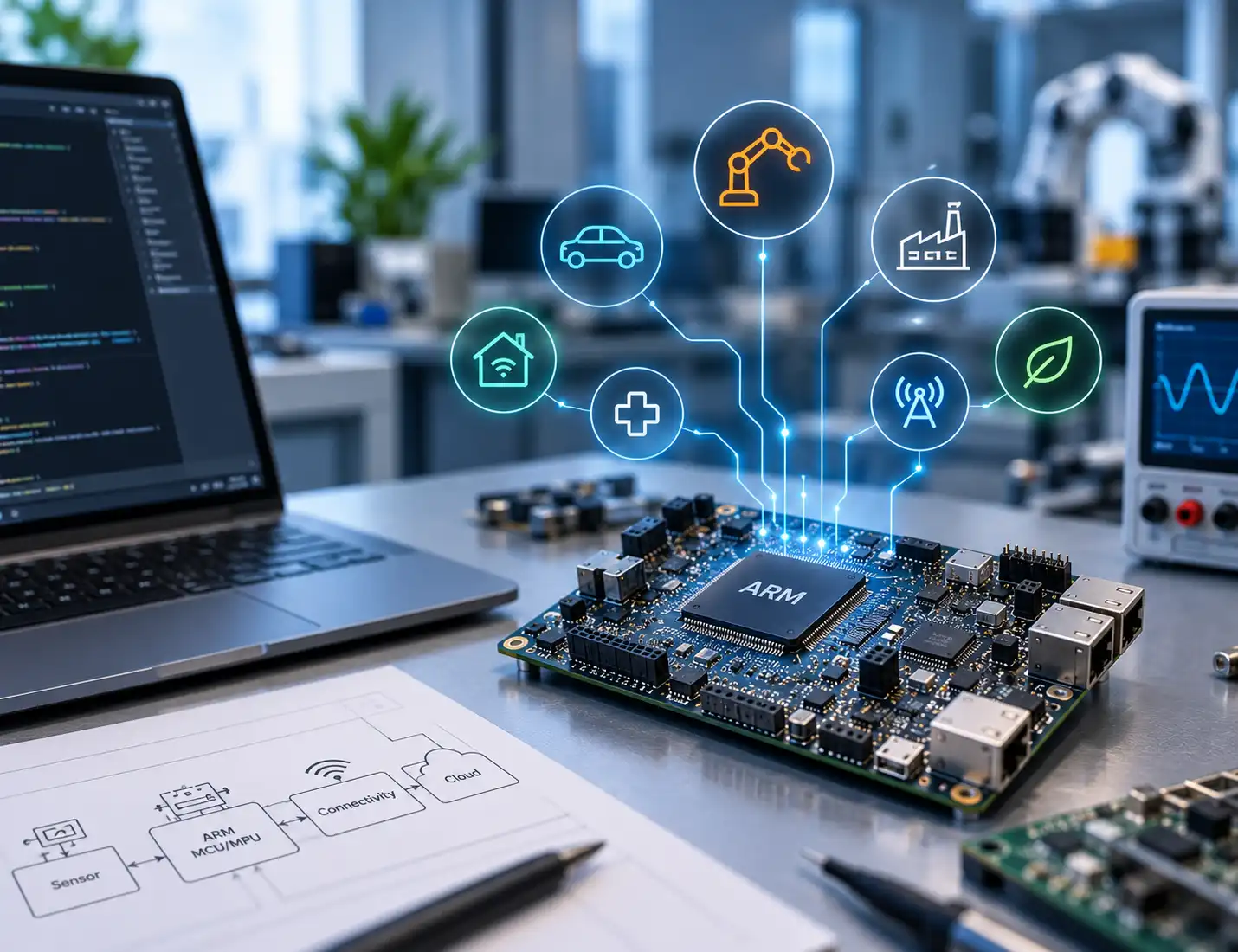
Relevant Adequate Infosoft ARM Case Studies
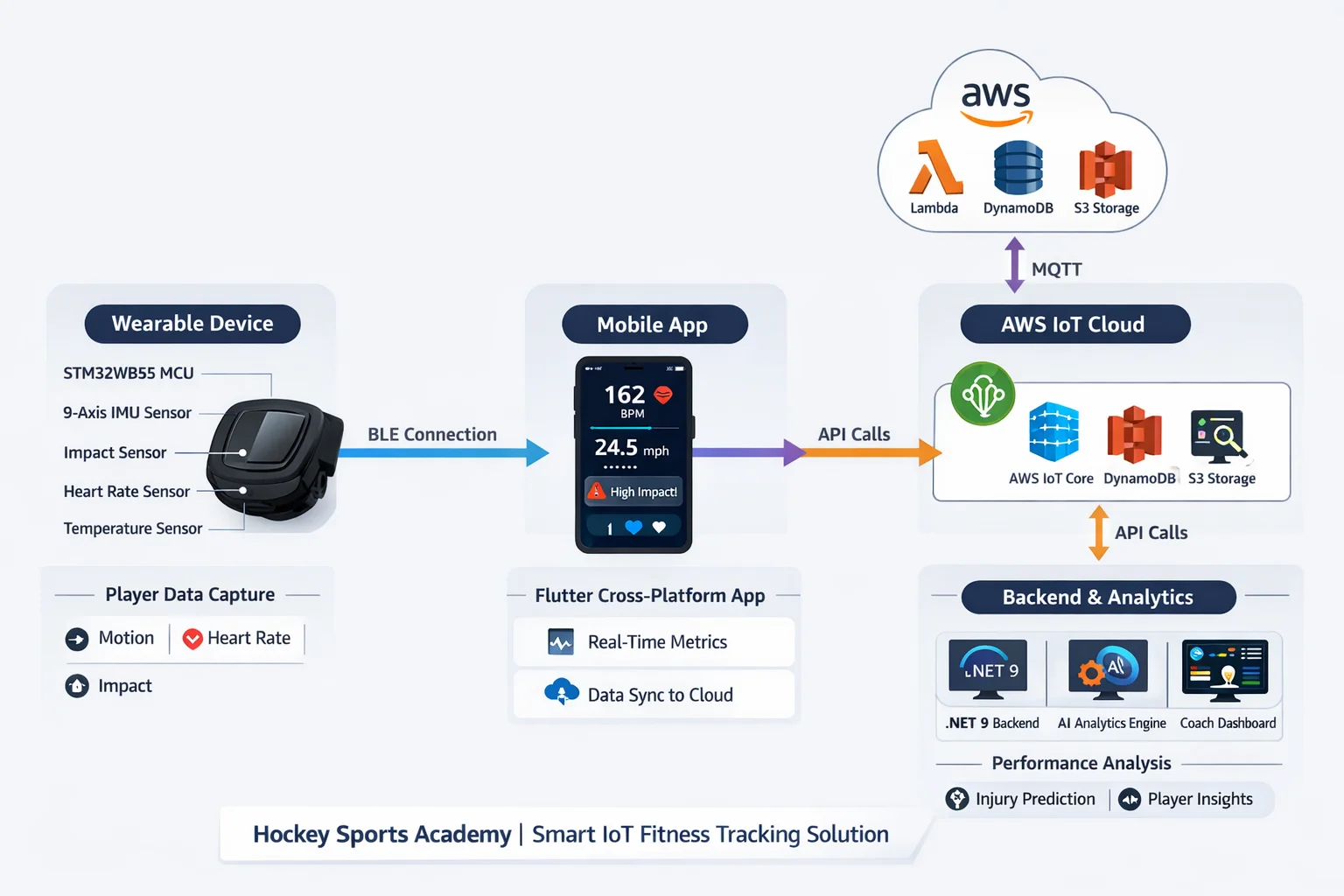
The STM32WB55 Sport Tracking Wearable
Adequate Infosoft created a smart sport-tracking wearable appliance using the ARM Cortex-M series STM32WB55 microcontroller. The development was geared towards merging sensor acquisitions, BLE communication, AWS IoT connectivity, .NET backend, Flutter application, and performance analytics.
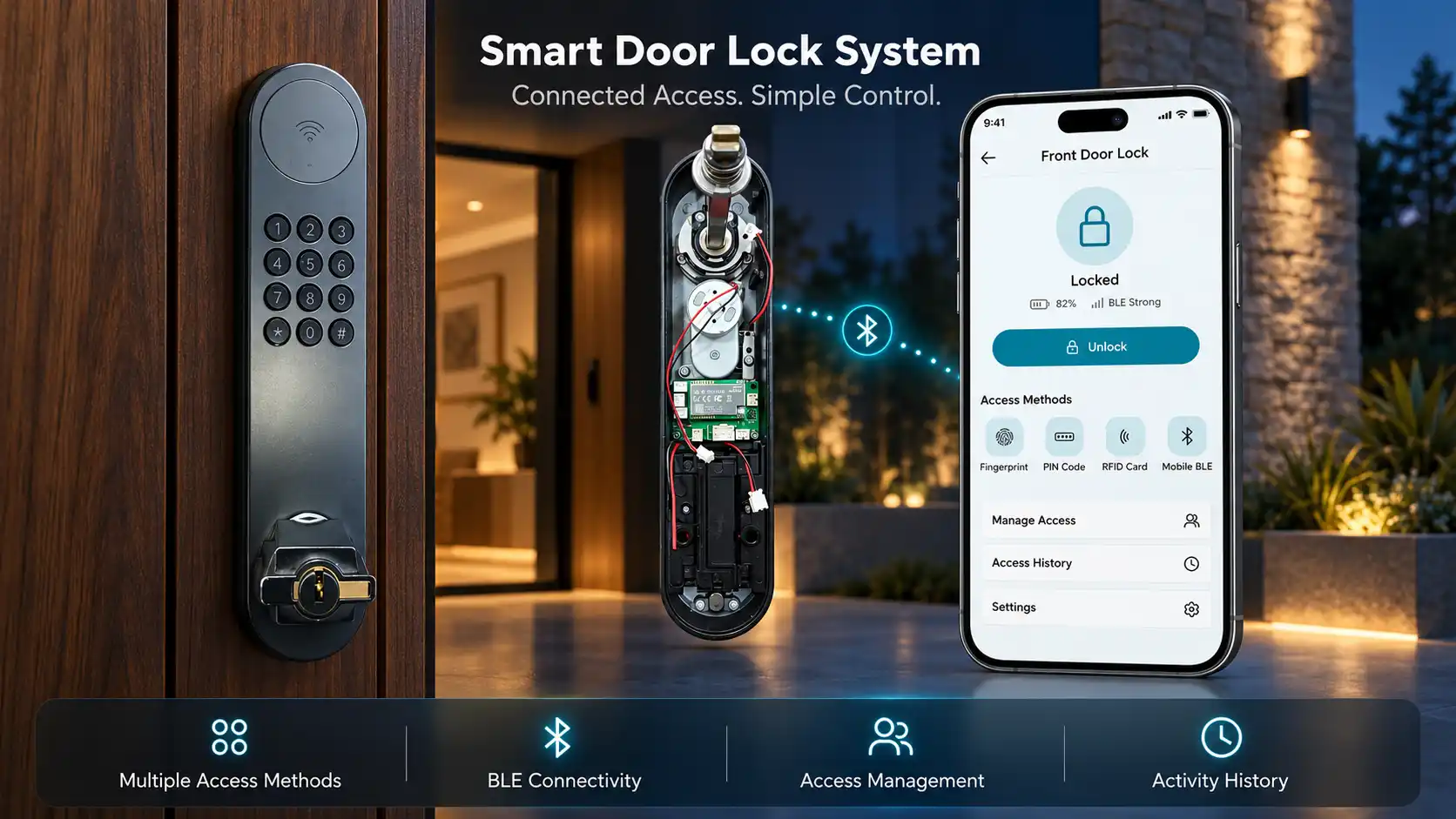
Nordic nRF52840 Blade Lock
The smart lock and access management project illustrates Nordic nRF52 firmware, BLE communications, fingerprint, RFID, and PIN access, mobile integration, management of the cloud, PCB design, and manufacturing.
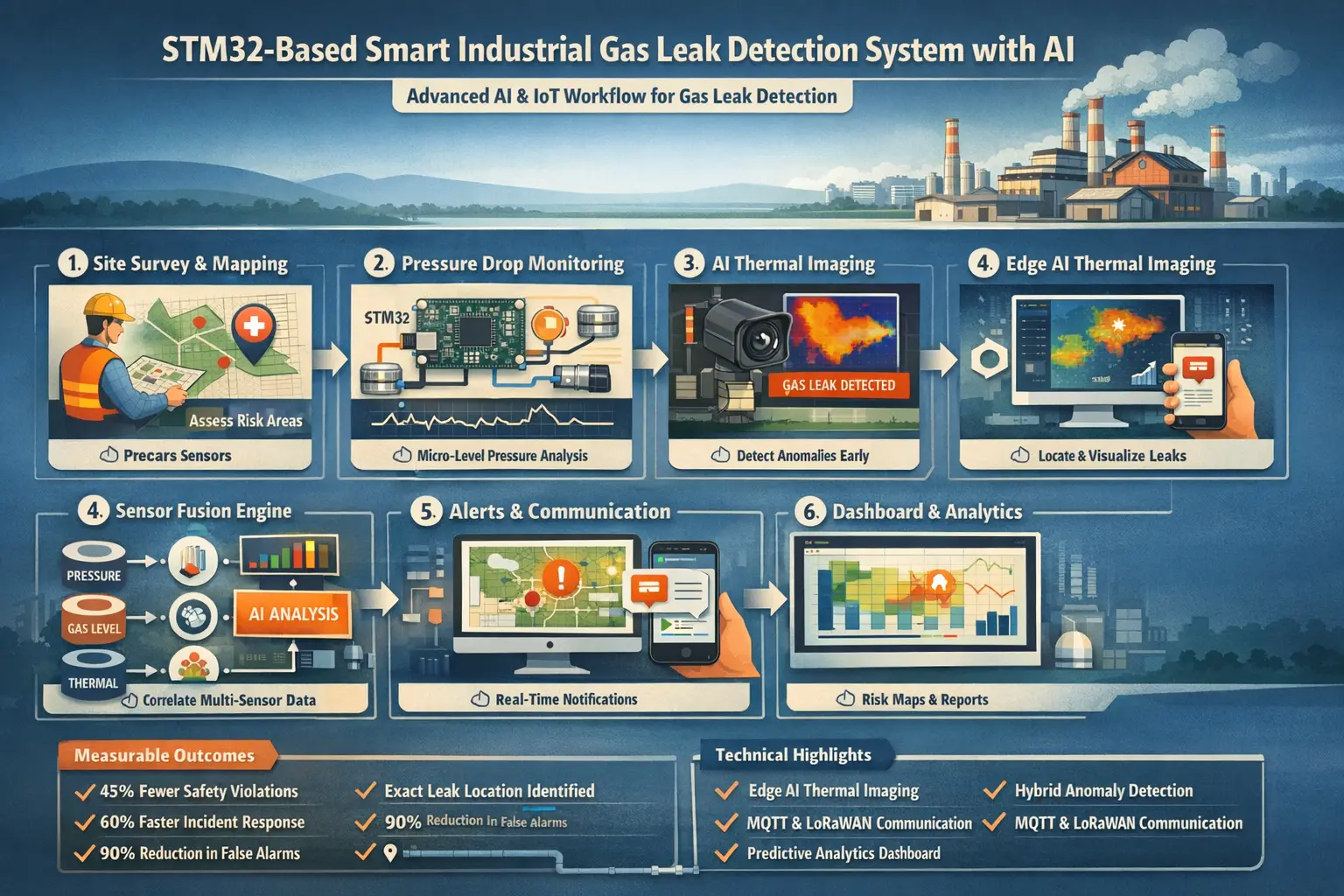
STM32 Industrial Gas-Leak Detection
The gas-detection project demonstrates ARM-based sensor integration, real-time monitoring, alarms, IoT connectivity, and AI-assisted industrial safety workflows.
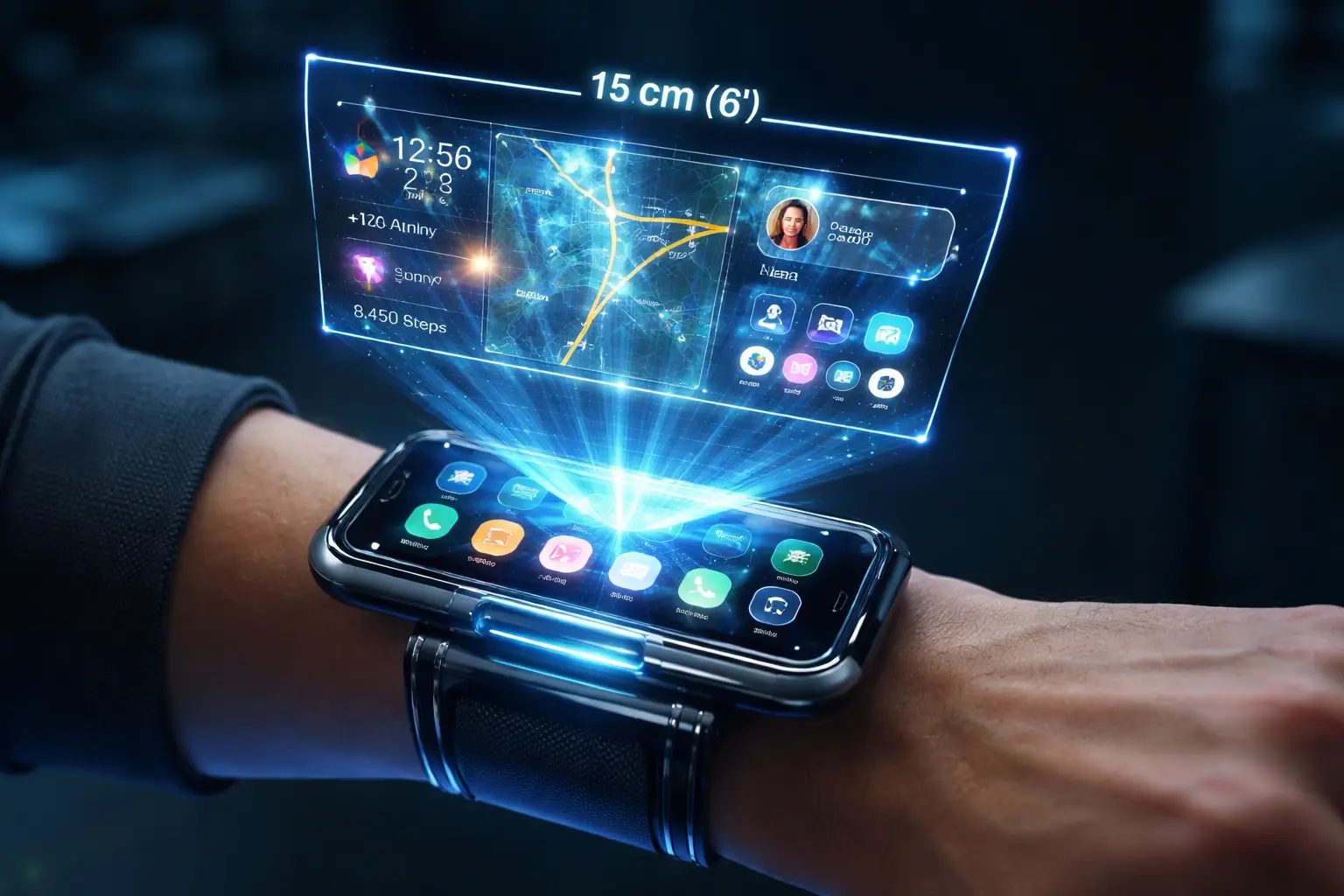
Wrist-Mounted Smart Device based on ARM
This project is about ARM technology, specifically the use of customized Android AOSP, 5G radio wave technology, LiDAR-based gesture control technology, and a unique design of a smart-device interface that proves our capability to develop sophisticated ARM-based application processors.
Custom ARM Embedded Development Services
ARM processor technologies support products varying from coin-cell sensors to industrial controllers and Linux-based edge gateways.
Therefore when one is choosing a processor, it is important not only to look at the clock speed. The right platform needs to support the appropriate peripherals, memory, security, power modes, software, components, and future features.
Clients can engage us for a complete product or for a focused engineering requirement, such as debugging an unstable board, reducing battery consumption, developing a custom bootloader, integrating BLE, or migrating legacy firmware to a newer ARM controller.
Cortex-M Firmware Development for Real-Time Products
The ARM Cortex-M processors are specifically created for microcontroller-based applications where low interrupt latency, compact code, and low power consumption are necessary. The firm develops firmware for Cortex-M0, Cortex-M0+, Cortex-M3, Cortex-M4, Cortex-M7, Cortex-M23, Cortex-M33, Cortex-M55, etc.
Typical applications include industrial sensing, motor control, smart locks, wearable devices, medical electronics, environmental monitors, asset trackers, energy systems, building automation, and battery-powered IoT products.
The development of firmware is possible in C and C++ programming languages; the developers use HAL provided by the vendor as well as CMSIS and hardware abstraction layers. It is possible to create the firmware based on either super-loop working in the bare-metal function mode or an RTOS which is presented as FreeRTOS, Zephyr, ThreadX, or another one respectively.
Development can include:
GPIO, ADC, DAC, PWM, timers, RTC, watchdog, and DMA UART, SPI, I²C, I²S, USB, CAN, CAN FD, LIN, and Ethernet Sensor acquisition, filtering, calibration, and diagnostics Motor-control loops and actuator management Flash storage, external memory, and wear-leveling Low-power modes, wake-up sources, and power profiling Task scheduling, queues, mutexes, and interrupt-safe communication Fault handling, reset-cause tracking, and diagnostic logging
We define timing, memory, and power budgets early so that firmware performance can be measured instead of assumed.
Cortex-A and Embedded Linux Development
Products requiring sophisticated interfaces, high-speed networking, multimedia, computer vision, or local data processing may need an ARM Cortex-A application processor.
Adequate Infosoft provides embedded Linux systems meant for processors like NXP i.MX, STM32MP, Rockchip as well as TI Sitara.
Our Linux engineering services cover bootloader configuration, Linux kernel customization, device trees, board support packages, driver integration, filesystem creation, secure provisioning, and application deployment.
Our expertise includes working with various embedded systems, such as Yocto Project, Buildroot and other Debian-based operating systems, U-Boot, systemd, Docker, and vendor SDKs.
We also build touch screens, local APIs, gateway services, device management agents, and secure connections to the cloud. When a device combines Cortex-A and Cortex-M processors, we define its operation; for example, we use Linux for connectivity and graphical user interface but use a processor for real-time control.
ARM Hardware and Custom PCB Design
Dependable embedded firmware is reliant on well-designed hardware. Our hardware team designs custom ARM-based boards based on selection of processors, power sources, sensors, communication protocols, the impact of physical constraints, and the application environment.
Hardware development may include:
Processor, memory, PMIC, oscillator, and reset design Battery charging, protection, and fuel-gauge circuits Analog front ends and sensor interfaces Ethernet, USB, CAN, RS-485, BLE, Wi-Fi, LTE-M, NB-IoT, and GNSS Secure elements and hardware-backed key storage Displays, touch controllers, microphones, speakers, and cameras RF layout, antenna integration, and impedance-controlled routing Debug, programming, boundary-test, and production-test interfaces EMC-conscious layout and design-for-manufacturing reviews
After fabrication, we perform staged board bring-up: checking rails and clocks before loading minimal firmware, validating memories and buses, and then enabling application subsystems. This method makes hardware faults easier to isolate and reduces the risk of damaging early prototypes.
Connected IoT and Wireless Product Development
We build ARM-based connected devices using Bluetooth Low Energy, Bluetooth Mesh, Matter, Thread, Zigbee, Wi-Fi, Ethernet, cellular IoT, LoRaWAN, NFC, and proprietary sub-GHz communication.
There is much more to connectivity engineering than simply getting a radio link working. In our case, we have to consider provisioning, device identity, data formats, retries, working offline, time synchronization, data buffering through telemetry and recovery from failure caused by loss of the connection.
Integration may either be with the established protocols such as AWS IoT Core, Microsoft Azure IoT, Google Cloud or with a specification made specially for the product using custom MQTT and API.
For mobile-controlled products, we develop native or cross-platform applications for onboarding, configuration, firmware updates, access control, live status, alerts, and diagnostics. Backend services can provide device registries, user roles, audit logs, command routing, analytics, and fleet-management functions.
Secure Boot, OTA Updates, and Embedded Security
Security must be part of the system architecture from the first prototype. Adding encryption shortly before production does not correct an insecure update path or weak device-identity model.
Our ARM embedded security services may include:
Hardware root of trust and secure key provisioning Signed and encrypted firmware images Secure or measured boot Dual-image and fail-safe OTA updates Flash readout and debug-port protection TLS-secured device-to-cloud communication Device certificates and key rotation Role-based access and audit logging TrustZone-based secure and non-secure partitioning Threat modeling and dependency review Recovery procedures for interrupted or invalid updates
Where supported by the chosen MCU, ARM TrustZone can isolate security-sensitive code and data from the general application. The exact security design is selected according to the processor, threat model, regulatory obligations, manufacturing process, and required field-service capability.
Edge AI, DSP, and Intelligent Embedded Devices
Modern ARM devices can execute signal processing and compact machine-learning workloads locally. Edge processing can reduce latency, bandwidth consumption, and unnecessary transfer of sensitive raw data.
We create embedded intelligence that is responsible for detecting vibration, identifying acoustic events, recognizing gestures, diagnosing equipment, wearable sensing, detecting anomalies, and processing computer vision applications.
Our work can involve preparation of data sets, creating signal windows, extracting features, converting models, quantizing models, integrating inference and profiling on the target device.
The models are evaluated using performance measures relevant to the final product, including false alarm rate, missed event rate, latency time, RAM, flash memory, power consumption per inference, and in realistic noise conditions.
Testing, Debugging, and Production Readiness
Embedded systems encounter problems at the borders of hardware, firmware, radio signal behavior, mechanical parts, energy, and actual application in practice, so our validation process is based on testing the whole device rather than only isolated source code modules.
The tests employed depend upon the product and may involve such techniques as unit tests, hardware-in-the-loop tests, protocol tests, long-term operation tests, power cycle recovery tests, brownout tests, tests on wireless coexistence, signal range tests, tests of sensors calibration, tests of thermal properties, battery profiling tests, and fault injection tests.
The methods that we apply include SWD/JTAG debugging, trace systems, oscilloscopes, logic analyzers, protocol analyzers, programmable power circuits, and current measurement devices.
Before we start production, we can develop manufacturing procedures for firmware, tests, programming, calibration, serial number provisioning, and acceptance criteria.
Frequently Asked Questions
We support platforms based on ARM architecture developed by STMicroelectronics, Nordic Semiconductor, NXP, Infineon, Renesas, Silicon Labs, Texas Instruments, Ambiq, and other companies.
The ultimate choice depends on the type of processing, type of interfaces and devices used for acquiring data, type of connectivity, security features, power supply requirements, cost, and lifecycle of devices.
Yes. We can audit existing schematics, source code, build systems, bootloaders, drivers, and known defects before proposing a recovery or migration plan.
Yes. Our services can include PCB engineering, embedded firmware, mobile applications, cloud infrastructure, dashboards, device management, testing, and production support.
Yes. We evaluate how much energy is spent in sleep, how frequently the processor wakes up, how much energy is consumed by peripherals, how often radio is used, how efficient the regulator is, and how fast the firmware works on the platform.
Editorial Resources