

 Mean Stack Development
 Vue JS Development
 Javascript Development
 React JS Development
 Angular JS Development
 Next JS development
 Java Development
 Python Development
 Django Development
 Cherrypy Development
 C# Development
 ASP.NET Development
 NodeJS Development
 Laravel Development
 CodeIgniter Development
 Zend Development
 Ruby on Rails Development
 CakePHP Development
 PHP Website Development
 Symfony Development
 Drupal Development
 Joomla Development
 Wordpress Development
 .NET Nuke Development
 Kentico
 Umbraco
 .NET MAUI Development
 Xamarin Application Development
 iOS Application Development
 Android Application Development
 Android Wear App Development
 Ionic Development
 iBeacon Application Development
 Universal Windows Platform (UWP)
 Kotlin Application Development
 Swift Application Development
 Flutter Application Development
 PWA Application Development
 Flutter Health Tech & Wearable App Development Company
 React Native Health Tech Wearable App Development
 Offshore Software Development
 Custom Application Development
 Front-End Development
 Full Stack Development
 AI & Machine Learning
 Custom CRM Solutions
 Flask Software Development
 Electron JS Development
 ChatGPT Development
 Veterinary Telemedicine App Development
 Build Smart Telemedicine Platform
 Beauty & Salon App Solutions
 Hire Workato Experts
 Magento Development
 Magento 2.0 Development
 Magento Enterprise
 Shopping Cart Development
 Prestashop Development
 Shopify Development
 Open Cart Development
 WooCommerce Development
 BigCommerce Development
 NopCommerce Development
 Virto Commerce Development
 AspDotNetStorefront Development
 .NET Application Development
 Microsoft Dynamics CRM
 VB .NET Development
 Sharepoint Migration
 ASP.NET Core Development
 ASP.NET MVC Development
 AJAX Development
 Agile Development
 Microsoft Bot
 Microsoft Blazor
 Microsoft Azure Cognitive
 HTML 5
 UI/UX Design
 Graphic Design
 Adobe Photoshop
 XML Application Development
 Cloud Computing Solutions
 Azure Cloud App Development
 AWS Development
 Google Cloud Development
 Certified AWS IoT Services Developers
 DevOps Consulting & Development
 Kubernetes Consulting & Services
 SQL Programming Development
 MySQL Development
 MongoDB Development
 Big Data
 Robotic Process Automation
 Social Media Marketing
 Search Engine Optimization
 QA Testing
 Software Testing
 Software Security
 Maintenance And Support
 I.T. Consulting Services
 Business Intelligence
 YII Development
 Data Analysis
 Alexa Skills Development
 On Demand App for Mobile repairing services
 On Demand App for Car Service Booking
 On Demand App for Cleaning Services
 On Demand App for Pharmacy
 On Demand Dedicated Developers
 On Demand Lawyer App Development








 Nuki Smart Lock
 Salto Smart Lock
 TTlock Smart Lock
 NFC App Development
 Custom IOT Enabled Smart Lock
 Smart Locker Solutions
 Hospital Smart Lock Systems
 Hotel Smart Lock Systems
 Smart Home & Office Locks
 Smart Access for Schools & Colleges
 Unloc Smart Lock Integration
 Yale & August Smart Lock Integration
 Populife Smart Lock Integration
 Smart Lock Hardware Development
 Dairy IoT Solutions
 Agri IoT & AI Solutions
 Weather & Climate Solutions
 Water & Waste Management Solutions
 RaspBerry Pi
 Firmware Software Development
 ESP 32 Software Development
 Embedded Development
 Internet of Things
 Smart IoT Development
 IoT Sensor Integration & Development Solutions
 Smart IoT System Development for HVAC
 Tuya IoT App Development
 Particle IoT SDK
 IoT Development with AI
 Smart Pet GPS Tracker
 Dairy GPS Tracking Solutions
 GPS Fleet Management Software
 Car Rental & Subscription Solutions
 Car Buy & Sell Marketplace Development
 AI-Powered Car Wash App Development
 PCB Design & Fabrication
 IoT AC Automation
 AI–IoT Painting Solutions
 IoT Wearable Hardware & App Development
 HVAC Automation & AI Control Systems
 Smart Home IoT Engineering
 AI Embedded Systems
 AI Hardware Design Service
 Advanced IoT Hardware & Firmware Development
 Device Driver Development Services
 NXP i.MX RT Firmware & Hardware Services
 Microchip PIC & AVR Development
 Hire IoT Architects
 IoT Cloud & Infrastructure Solutions
 Infineon XMC / AURIX Development Services
 Matter & Thread IoT Services
 Native IoT Mobile App Development (BLE & Wi-Fi)
 Snapdragon IoT Firmware Development
 Renesas RA/RX Firmware Services
 Silicon Labs EFR32 Development Services
 Smart Wearable App Development
 Smart IoT Meters
 Smart Healthcare Wearable App Development
 Health Care Monitoring System
 Fitness Tracking App Development
 Smart Home Automation Apps
 nRF PCB Design
 ESP32 PCB Design
 Embedded Wearables Engineers
 Rental Property Management System
 Building Management System
 Smart Lighting Development
 Infineon Semiconductor Firmware Development Services
 Custom Camera Development: Hardware, Firmware & PCB Prototyping
 Smart Security Camera SDK
 Nordic Semiconductor SDK
 Infineon SDK
 Arduino SDK
 NFC Lock Integration
 Kerong Lock Integration
 IoT & AI Solutions for Manufacturing
 Smart Inventory & Logistics Solution
 Food & Beverage Industry Solutions
 Smart Hospitality Solutions
 Smart Property Management
 Custom Smart Home IOT SDK
 Smart IoT & AI in Healthcare
 AI-Powered Security Solutions
 Smart Home Safety & AI
 Veterinary Clinic Management (AI)
 Pet Care System (AI & IoT)
 Pet Training & Adoption (AI)
 Healthcare IoT Development
 Event Management Software
 Money Remittance App
 Money Lending App Development
 Utility and Bill Payment App
 IoT Mobile App Development (Flutter & React Native)
 AI & IoT Retail Solutions
 Smart EV App Development
 Smart Solar IoT & AI Solutions
 IoT-Based Energy Systems
 Smart Energy & Utilities Solutions
 6G Solutions
 IoT Security Solutions
 AI-Powered Lottery App Development
 AI-Sports Fitness Club Management
 Travel
 Real Estate
 Medical & Healthcare
 e-Learning
 Consumer Products
 Finance
 Automobile
 Media & Entertainment
 Billing Software
 Enterprise Resource Planning (ERP)
 Augumented & Virtual Reality
 Point of Sale(POS) Development
 Learning Management System
 EV Charging Solutions
 About Us
 Partners & Certifications
 Quality Assurance
 Our Clients & Testimonials
 Development Process
 Our Products
 Social Responsibility
 Work Ethics
 Vision & Mission
 Awards
 Live Project Demos
 Contact Us
 Case Studies
 Portfolio
 Blog
Arduino IoT Product Development Company | From Prototype to Connected Product
Marketing an IoT concept based on Arduino goes way beyond merely attaching a sensor to the microcontroller. An efficient gadget should provide reliable data, react appropriately to the situation, establish secure connections, communicate with mobile applications and/or dashboards, and be easily managed by the customer post-purchase.
Adequate Infosoft is an Arduino IoT product development company that helps startups, product companies, manufacturers and enterprises turn connected-device concepts into practical products. We combine embedded firmware, electronics, wireless connectivity, cloud platforms, mobile applications and web dashboards in one delivery process.
Arduino remains an excellent base for creating innovative products. Due to its extensive community, user-friendly environment and support of a variety of sensors, displays, relays and communications components, Arduino is perfect for prototyping and MVPs as well as for many custom-built solutions.
The right product architecture should nevertheless be chosen depending on the environment, power supply needs, security issues and further production considerations.
We enable our clients to go beyond demonstration by developing a complete IoT product to test, pilot and further develop.
Let's Work Together!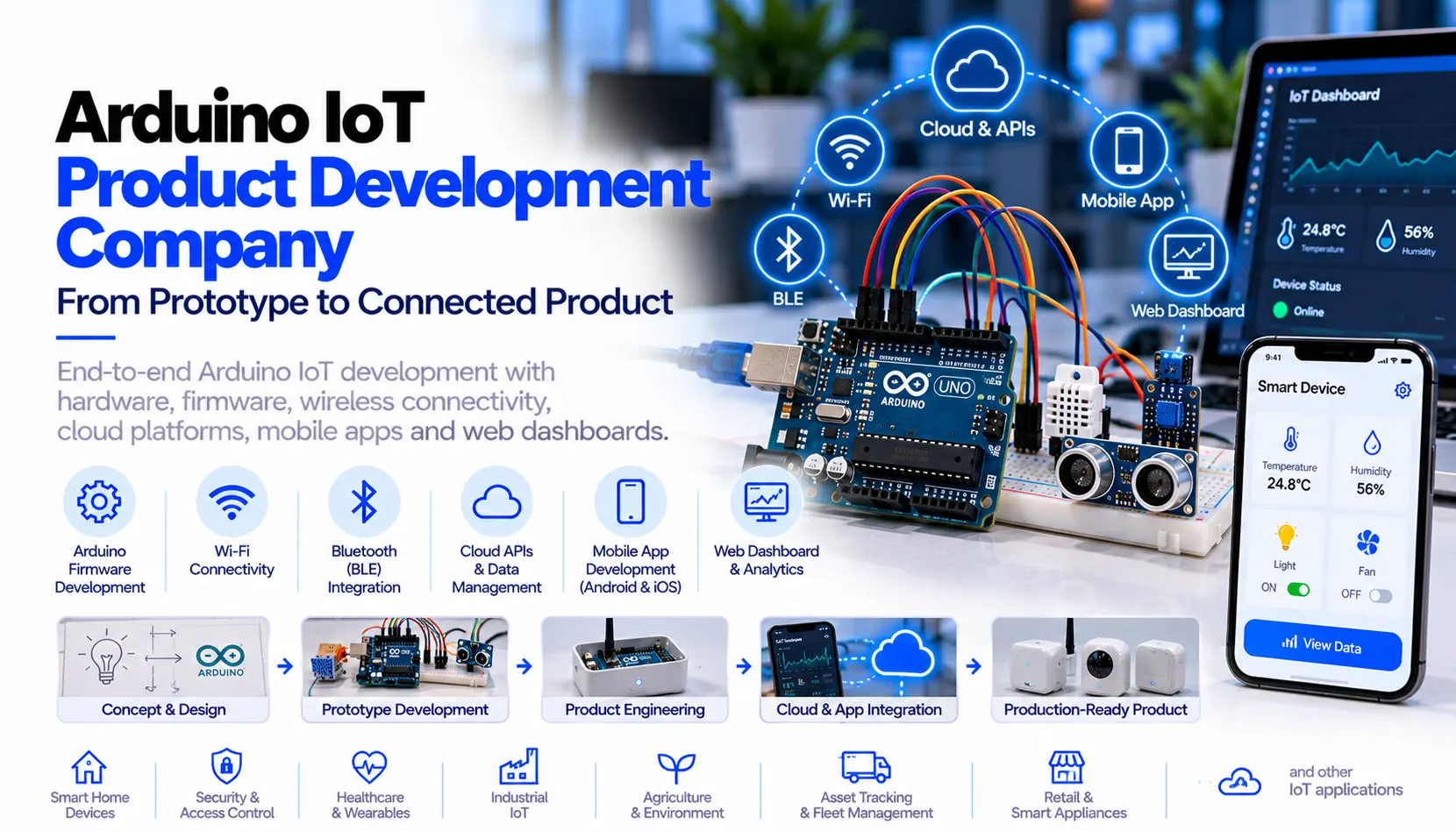
Arduino IoT Product Development Services
Our Arduino development team works across the full connected-product lifecycle, from defining a concept to supporting cloud-connected devices in the field.
Our services include:
Arduino firmware development using C and C++ Arduino Uno, Nano, Mega and Portenta development ATmega328P, ESP32, ESP8266 and Arduino-compatible controller integration Custom PCB design, schematics, BOM support and prototype development Sensor, actuator, relay, motor, RFID, NFC, GPS and display integration BLE, Wi-Fi, cellular, MQTT, HTTP/HTTPS and REST API connectivity Mobile apps for iOS and Android Flutter, React Native, .NET MAUI, native Swift and Kotlin development Cloud platforms, device management and real-time dashboards IoT backend APIs using ASP.NET Core, Node.js or Django OTA firmware update strategy and device diagnostics Hardware-in-the-loop testing, pilot deployment and manufacturing support
Whether you need an Arduino smart energy meter, agriculture controller, smart lock, industrial sensor, wearable prototype, vehicle tracker, robot or consumer product, we design the system around the use case, not a generic template.
From Arduino Prototype to Market-Ready IoT Product
The early prototype phase is important because it helps validate an idea quickly. But the components that make a demo work are not always enough for a product that must operate daily in homes, factories, farms or vehicles.
A production-minded Arduino IoT product needs answers to practical questions:
How will the device recover after a power failure? What happens if the Wi-Fi network changes? Is sensor data accurate, timestamped and validated? Can customers set up the product without technical assistance? How will the device be updated after deployment? Is communication protected against unauthorised access? Can the cloud platform handle thousands of devices? Are components available for repeat manufacturing?
Our engineers address these questions during architecture and development rather than leaving them until after launch.
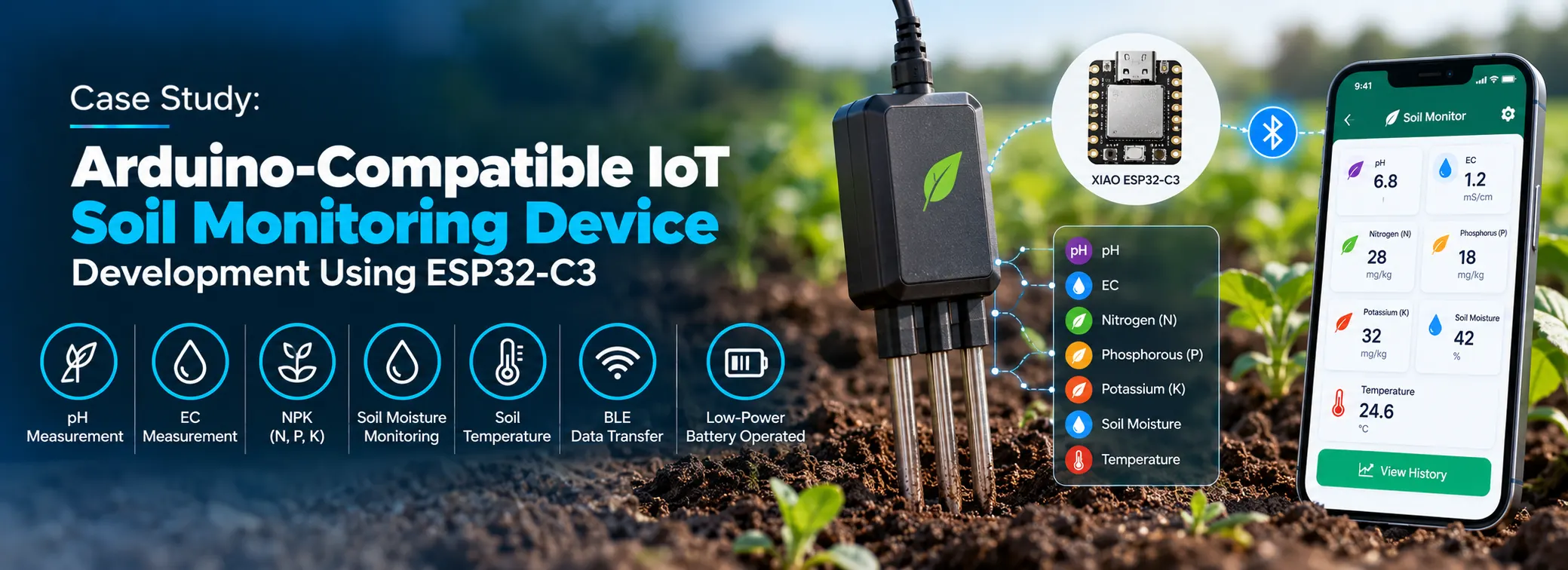
Case Study: Arduino-Compatible IoT Soil Monitoring Device Development Using ESP32-C3
Building a Low-Power Smart Agriculture Device for Reliable Field Measurements
Adequate Infosoft with proper requirements developed a low power IoT soil sensing system for an agricultural client where precise field data was required but without the need for constant power supply.
The customer wanted a battery-operated, portable device that can measure vital soil parameters like pH, EC, Nitrogen, Phosphorous, Potassium, Water and Temperature. Furthermore, the device is expected to send the measured parameters over to a mobile app for irrigation and soil management purposes.
To quickly validate the device, the engineering group decided on XIAO ESP32-C3 as the system with a compatibility to Arduino systems along with the in-built RISC-V based ESP32-C3 microcontroller from Espressif.
The board provided Wi-Fi and Bluetooth Low Energy connectivity while supporting a fast prototype cycle through familiar Arduino-compatible and ESP-IDF development workflows.
Sensor Integration and Embedded Firmware Architecture
The major technical issue was to work with various sensor types in one IoT device. In order to do that, we used a 7-in-1 NPKPHCTH soil probe with RS485 protocol. As the probe uses Modbus RTU protocol for communication, we provided the RS485-TTL converter with an algorithm that would send requests via Modbus, check CRC-16 response, and get the values of NPK, pH, EC, moisture, and temperature.
In addition, analog sensors were possible with the help of 12-bit ADC of ESP32-C3.
Digital temperature and humidity sensors, such as BME680, were handled through I2C driver routines. This modular driver approach made it possible to change or add sensors later without rewriting the full firmware.
For field calibration, the firmware included serial-UART diagnostic output during development. Engineers could compare raw readings against reference values and tune offsets before the device was prepared for normal mobile-app use.
Bluetooth Low Energy Data Delivery
Rather than using Bluetooth to send massive JSONs, we went ahead to create our own BLE GATT service providing Soil Data characteristic. We managed to process all data from sensors to little-endian binary format; thus we minimized the message size.
In addition to that, the firmware of BLE used a regulated advertising scheme where the advertising speed was the maximum during the first discovery stage and a slower one later to save battery power.
The usage of writable BLE characteristics made it possible for the mobile application to remotely apply calibration offsets and set sampling or deep-sleep times.
Battery Optimisation and Reliability Controls
The process was as follows: Measure → Advertise → Sleep state machine. On wake-up, the ESP32-C3 turned the RS485 soil probe on, let it stabilize, got measurement readings and enabled BLE when it was necessary. If no phone was connected to it, the device kept readings in non-volatile storage and went into deep sleep state until the next scheduled measurement.
In order to increase the reliability of the system when working outdoors, we added a watchdog timer that could restart the system in case the RS485 sensor went into a non-responsive mode. The failed Modbus CRC would prompt the controller to retry until the device would fall asleep, protecting the battery from infinite retries.
Outcome and Handover
The final prototype demonstrated dependable hourly soil-data collection and BLE transfer during battery-powered testing.
Adequate Infosoft developed the project to ensure a smooth handover to the client, which included firmware source code, the final binaries, service UUIDs, the packet structure and setup instructions.
The project shows how using the Arduino-compatible ESP32 hardware helps transition from a simple prototype to a practical IoT agriculture project with sensor integration, low-power firmware, Bluetooth functionality, and a roadmap to custom PCB production.
Case study link: soil-iot-sensor-development-esp32-c3
Relevant Arduino and IoT Delivery Experience
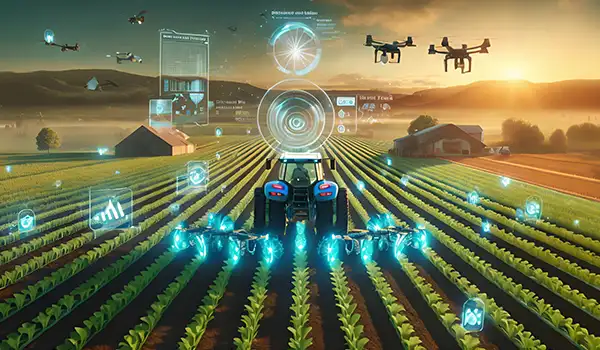
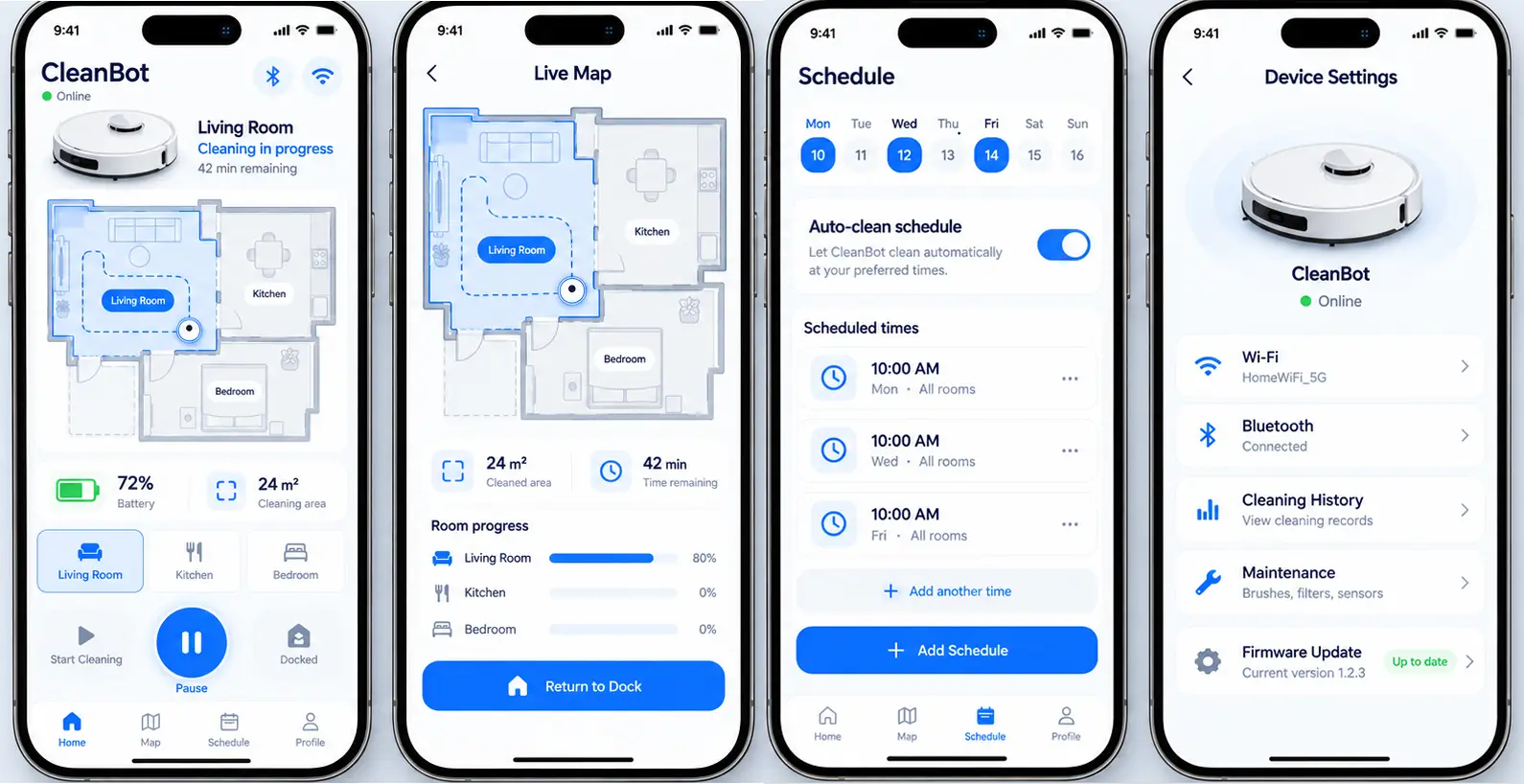
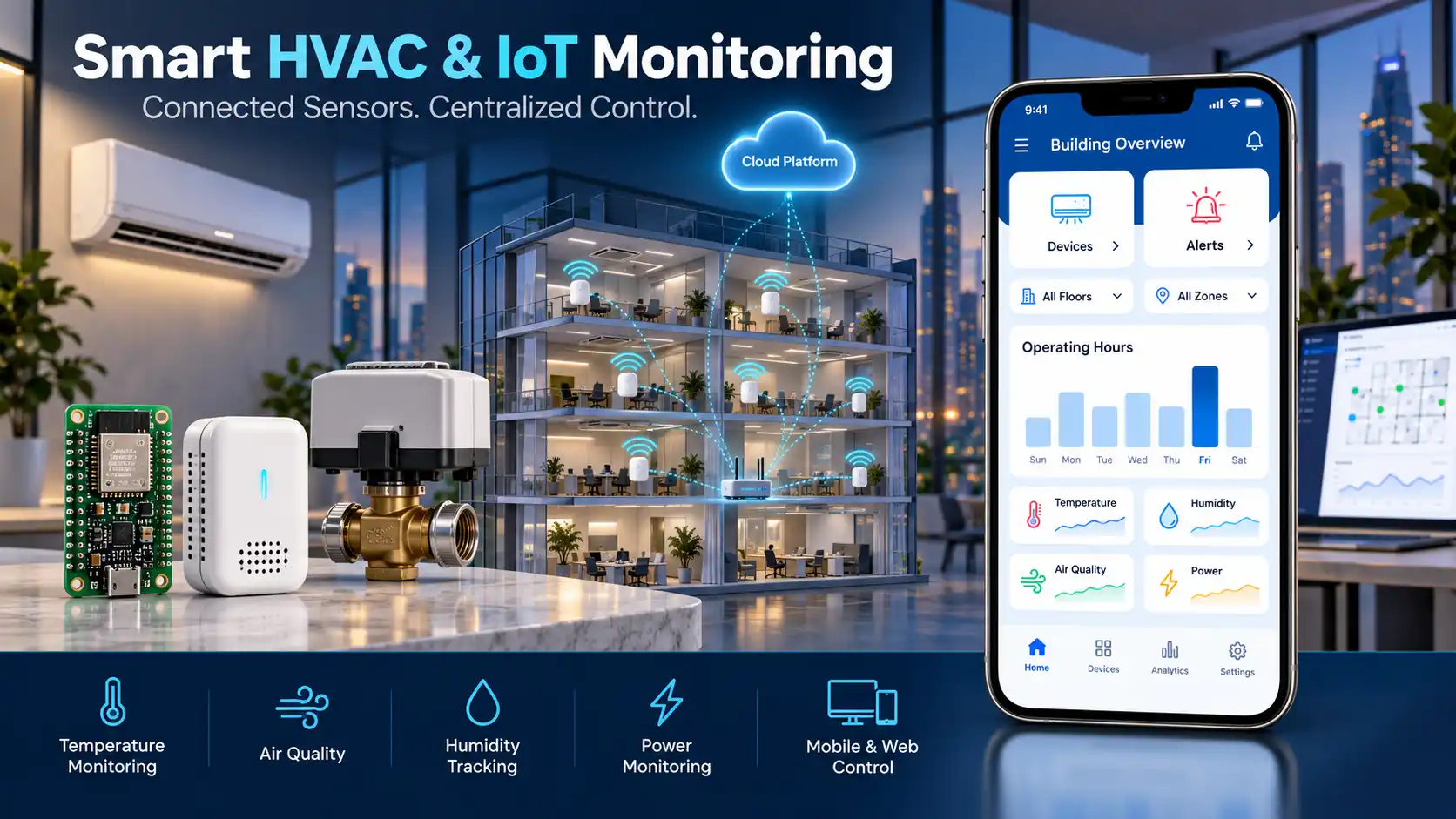
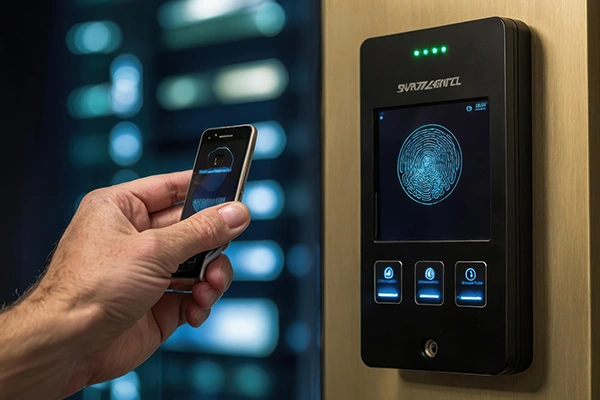
Our public case studies demonstrate the variety of connected products we have delivered across hardware, firmware, mobile, cloud and operational workflows.
Our Arduino Product Engineering Process
Product discovery and technical feasibility
We begin by understanding the intended customer, operating conditions, critical features and commercial goal. We evaluate the sensors, power source, enclosure constraints, communication range and required data frequency.
At this stage, it is necessary to decide if a basic Arduino board is the right option for the prototype, or if the ESP32, an ARM-based controller or a dedicated wireless chip will serve the purpose better in the future product.
Hardware, PCB and component planning
The basis of a reliable IoT device is quality electronics. We provide schematic review, PCB topology design, selection of sensors and power system.
For preliminary proof of concept, development boards can speed up the validation process. In an operational device, custom PCB will be needed for optimization of costs, size, reliability, and ease of manufacturing.
Embedded firmware development
We develop modular firmware for sensor acquisition, device logic, communication, diagnostics, and error handling. Instead of relying on a long loop-based sketch, we perform clear state management, structured command handling, and fault-recovery logic when required by the product.
This approach is important for products controlling physical systems such as motors, relays, irrigation valves, access equipment or energy devices.
Connectivity, cloud and mobile integration
The Arduino IoT product may require both local and cloud connectivity. Bluetooth LE will be handy for close-range set up and low-energy communication. Wi-Fi is used for cloud-based control and monitoring. The cellular or gateway connectivity may be required for tracking and deployment.
We integrate communication between the device and our software using MQTT, REST APIs, WebSockets and cloud infrastructure. Then mobile applications and dashboards offer users setup, status, alerts, history and remote controls of the device.
Testing, pilot and production support
We test the product on real hardware, phones, network and power states. This includes reconnects, partial sensor data, losing connection to Wi-Fi, behavior of the mobile application in background and device restarts.
In case when product is ready for manufacturing, we can assist in preparing testing procedures, programming workflows, documentation and technical handover.
Arduino IoT Solutions We Build
Businesses engage us for a wide range of Arduino IoT product ideas, including:
Smart home lighting, climate, access and appliance controls Connected energy meters and prepaid meter systems Industrial condition-monitoring and sensor-data products GPS tracking, telematics and asset-monitoring devices Smart agriculture and automated irrigation controllers Wearables, health-monitoring prototypes and fitness devices RFID, NFC and smart-access control systems Robotics, motor-control and autonomous-device prototypes Environmental monitoring and safety-alert systems Consumer IoT products with mobile app and cloud integration
We can also help improve an existing Arduino prototype that has unreliable connectivity, an outdated app, incomplete cloud integration or an unclear plan for production.
Frequently Asked Questions
Sure. Arduino and Arduino-like frameworks are frequently used in PoCs, industrial applications and connected products development. The appropriate board, electronics, firmware architecture, testing and manufacturing processes will vary depending on product requirements.
There might be concept validation, hardware development, PCB development, firmware, connectivity, mobile applications, backend API, cloud service, dashboards, testing and manufacturing assistance.
Indeed. We create applications for mobile devices that work on both iOS and Android platforms using Flutter, React Native, .NET MAUI, Swift, or Kotlin. The applications can support device configuration, BLE connections, Wi-Fi setup, instant access to real-time data, alerts, and the possibility of being operated remotely.
Definitely, we can ensure a secure connection between an Arduino device and AWS, Microsoft Azure or a custom cloud solution using MQTT, HTTPS APIs, and proper techniques of device authentication.
Yes. The existing hardware and firmware will be analyzed, and we will increase its reliability, security, connectivity, usability or readiness for pilot launch.
Yes. We are involved in custom PCB design, selection of components, prototyping, test methods, manufacture and design-for-manufacture planning for the next step of product development.