

 Mean Stack Development
 Vue JS Development
 Javascript Development
 React JS Development
 Angular JS Development
 Next JS development
 Java Development
 Python Development
 Django Development
 Cherrypy Development
 C# Development
 ASP.NET Development
 NodeJS Development
 Laravel Development
 CodeIgniter Development
 Zend Development
 Ruby on Rails Development
 CakePHP Development
 PHP Website Development
 Symfony Development
 Drupal Development
 Joomla Development
 Wordpress Development
 .NET Nuke Development
 Kentico
 Umbraco
 .NET MAUI Development
 Xamarin Application Development
 iOS Application Development
 Android Application Development
 Android Wear App Development
 Ionic Development
 iBeacon Application Development
 Universal Windows Platform (UWP)
 Kotlin Application Development
 Swift Application Development
 Flutter Application Development
 PWA Application Development
 Flutter Health Tech & Wearable App Development Company
 React Native Health Tech Wearable App Development
 Offshore Software Development
 Custom Application Development
 Front-End Development
 Full Stack Development
 AI & Machine Learning
 Custom CRM Solutions
 Flask Software Development
 Electron JS Development
 ChatGPT Development
 Veterinary Telemedicine App Development
 Build Smart Telemedicine Platform
 Beauty & Salon App Solutions
 Hire Workato Experts
 Magento Development
 Magento 2.0 Development
 Magento Enterprise
 Shopping Cart Development
 Prestashop Development
 Shopify Development
 Open Cart Development
 WooCommerce Development
 BigCommerce Development
 NopCommerce Development
 Virto Commerce Development
 AspDotNetStorefront Development
 .NET Application Development
 Microsoft Dynamics CRM
 VB .NET Development
 Sharepoint Migration
 ASP.NET Core Development
 ASP.NET MVC Development
 AJAX Development
 Agile Development
 Microsoft Bot
 Microsoft Blazor
 Microsoft Azure Cognitive
 HTML 5
 UI/UX Design
 Graphic Design
 Adobe Photoshop
 XML Application Development
 Cloud Computing Solutions
 Azure Cloud App Development
 AWS Development
 Google Cloud Development
 Certified AWS IoT Services Developers
 DevOps Consulting & Development
 Kubernetes Consulting & Services
 SQL Programming Development
 MySQL Development
 MongoDB Development
 Big Data
 Robotic Process Automation
 Social Media Marketing
 Search Engine Optimization
 QA Testing
 Software Testing
 Software Security
 Maintenance And Support
 I.T. Consulting Services
 Business Intelligence
 YII Development
 Data Analysis
 Alexa Skills Development
 On Demand App for Mobile repairing services
 On Demand App for Car Service Booking
 On Demand App for Cleaning Services
 On Demand App for Pharmacy
 On Demand Dedicated Developers
 On Demand Lawyer App Development






 Nuki Smart Lock
 Salto Smart Lock
 TTlock Smart Lock
 NFC App Development
 Custom IOT Enabled Smart Lock
 Smart Locker Solutions
 Hospital Smart Lock Systems
 Hotel Smart Lock Systems
 Smart Home & Office Locks
 Smart Access for Schools & Colleges
 Unloc Smart Lock Integration
 Yale & August Smart Lock Integration
 Populife Smart Lock Integration
 Smart Lock Hardware Development
 Dairy IoT Solutions
 Agri IoT & AI Solutions
 Weather & Climate Solutions
 Water & Waste Management Solutions
 RaspBerry Pi
 Firmware Software Development
 ESP 32 Software Development
 Embedded Development
 Internet of Things
 Smart IoT Development
 IoT Sensor Integration & Development Solutions
 Smart IoT System Development for HVAC
 Tuya IoT App Development
 Particle IoT SDK
 IoT Development with AI
 Smart Pet GPS Tracker
 Dairy GPS Tracking Solutions
 GPS Fleet Management Software
 Car Rental & Subscription Solutions
 Car Buy & Sell Marketplace Development
 AI-Powered Car Wash App Development
 PCB Design & Fabrication
 IoT AC Automation
 AI–IoT Painting Solutions
 IoT Wearable Hardware & App Development
 HVAC Automation & AI Control Systems
 Smart Home IoT Engineering
 AI Embedded Systems
 AI Hardware Design Service
 Advanced IoT Hardware & Firmware Development
 Device Driver Development Services
 NXP i.MX RT Firmware & Hardware Services
 Microchip PIC & AVR Development
 Hire IoT Architects
 IoT Cloud & Infrastructure Solutions
 Infineon XMC / AURIX Development Services
 Matter & Thread IoT Services
 Native IoT Mobile App Development (BLE & Wi-Fi)
 Snapdragon IoT Firmware Development
 Renesas RA/RX Firmware Services
 Silicon Labs EFR32 Development Services
 Smart Wearable App Development
 Smart IoT Meters
 Smart Healthcare Wearable App Development
 Health Care Monitoring System
 Fitness Tracking App Development
 Smart Home Automation Apps
 nRF PCB Design
 ESP32 PCB Design
 Embedded Wearables Engineers
 Rental Property Management System
 Building Management System
 Smart Lighting Development
 Infineon Semiconductor Firmware Development Services
 Custom Camera Development: Hardware, Firmware & PCB Prototyping
 Smart Security Camera SDK
 Nordic Semiconductor SDK
 Infineon SDK
 Arduino SDK
 NFC Lock Integration
 Kerong Lock Integration
 IoT & AI Solutions for Manufacturing
 Smart Inventory & Logistics Solution
 Food & Beverage Industry Solutions
 Smart Hospitality Solutions
 Smart Property Management
 Custom Smart Home IOT SDK
 Smart IoT & AI in Healthcare
 AI-Powered Security Solutions
 Smart Home Safety & AI
 Veterinary Clinic Management (AI)
 Pet Care System (AI & IoT)
 Pet Training & Adoption (AI)
 Healthcare IoT Development
 Event Management Software
 Money Remittance App
 Money Lending App Development
 Utility and Bill Payment App
 IoT Mobile App Development (Flutter & React Native)
 AI & IoT Retail Solutions
 Smart EV App Development
 Smart Solar IoT & AI Solutions
 IoT-Based Energy Systems
 Smart Energy & Utilities Solutions
 6G Solutions
 IoT Security Solutions
 AI-Powered Lottery App Development
 AI-Sports Fitness Club Management
 Travel
 Real Estate
 Medical & Healthcare
 e-Learning
 Consumer Products
 Finance
 Automobile
 Media & Entertainment
 Billing Software
 Enterprise Resource Planning (ERP)
 Augumented & Virtual Reality
 Point of Sale(POS) Development
 Learning Management System
 EV Charging Solutions
 About Us
 Partners & Certifications
 Quality Assurance
 Our Clients & Testimonials
 Development Process
 Our Products
 Social Responsibility
 Work Ethics
 Vision & Mission
 Awards
 Live Project Demos
 Contact Us
 Case Studies
 Portfolio
 Blog
Native iOS & Android IoT App Development Services
Adequate Infosoft develops native iOS and Android IoT applications for companies building smart locks, wearables, medical devices, connected appliances, energy products, sensors, and industrial equipment.
Swift and SwiftUI are the languages our engineers use for applications on iPhones and iPads while for Android apps, we prefer Kotlin with the latest Android architecture. This allows product teams to directly leverage platform features like BLE, WiFi provisioning, NFC, backgrounding, biometric authentication, secure key storage, location permissions, and push notifications.
An IoT mobile app is considered by us as a part of a comprehensive IoT system rather than just another means of controlling your devices. Our team deals with the development of a mobile application, device firmware, APIs, MQTT or WebSocket communication, user roles, device life cycle, and analytics.
This approach helps us to pinpoint the points of failure which are often discovered post-launch: hard-to-pair devices, loss of Wi-Fi credentials during configuration, flaky background updates, unstable device state, or issues with accounts and access control.
Let's Work Together!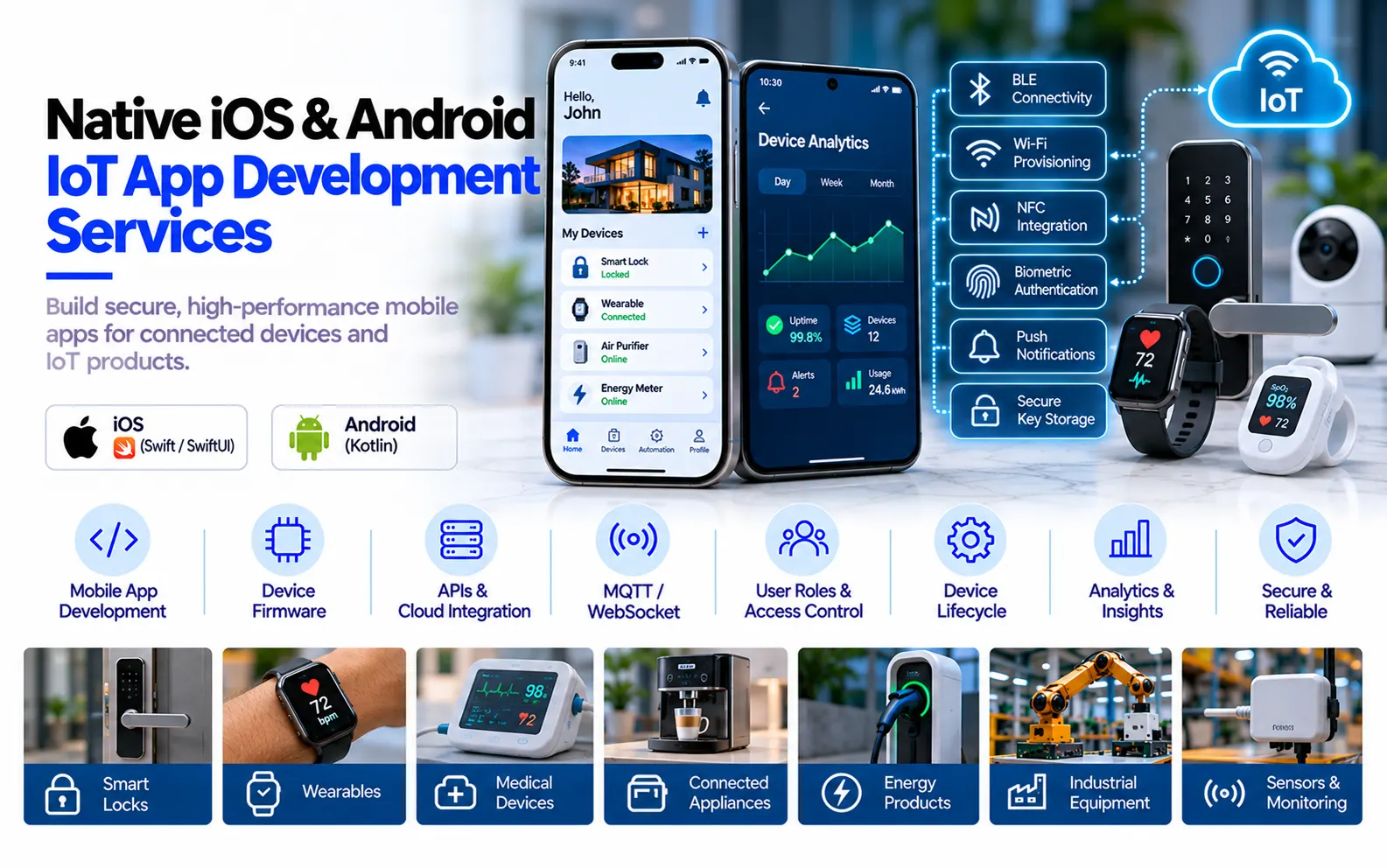
Native Mobile Development for Connected Products
In situations that require high reliability, hardware compatibility, maintainability, and good user experience, native development will be a preferred option for the IoT product. With Swift and Kotlin, the app gets access to services provided by the respective platform (Apple or Android) without having to use another layer of abstraction.
Our iOS apps are created using Swift, SwiftUI, where necessary, Core Bluetooth, Network, UserNotifications, Keychain, and background processes provided by Apple. Our Android apps are created using Kotlin, Jetpack Compose or XML, where appropriate, Bluetooth API, WorkManager, foreground services, encrypted storage, and Firebase Cloud Messaging.
This is especially valuable for:
BLE device discovery, pairing, bonding, and secure communication Smart lock control, digital keys, temporary access, and audit trails Wi-Fi provisioning through BLE, SoftAP, QR code, or captive portal flows Wearables that sync health, fitness, location, or sensor data Smart home and building-control applications EV charging, solar, energy monitoring, and connected-meter apps Medical and wellness companion applications Equipment monitoring, alerts, field-service tools, and industrial dashboards
IoT Features We Build
BLE Connectivity and Device Pairing
Bluetooth Low Energy is a critical component in many IoT products from both consumer and industrial segments. At the same time, it is probably the toughest field of mobile software engineering. iOS and Android platforms have different permission handling, background behaviour, scan filtering and connect lifecycles. A good product requires more than scan and connect capabilities.
We provide BLE flows for discovering devices, filtering signals, GATT services interaction, MTU-aware communication, firmware version validation, connect flow, device ownership and recovery messages. We are able to incorporate secure pairing capabilities, including challenge-response authentication, encryption of characteristics, rotation of credentials and secure storage of tokens for products that use such technology.
Wi-Fi Provisioning and Local Network Setup
Many devices require an application in order to securely receive the Wi-Fi credentials prior to connection to the cloud. Our onboarding experience includes guiding the user from account creation through to device discovery, network configuration, confirmation, and initial use instructions.
Depending on the requirements of the product and the hardware, we are able to provide BLE to Wi-Fi provisioning, access point provisioning, QR code setup, local network discovery, and cloud confirmation. In addition to this, we also take into consideration many other challenging conditions that may exist in the real world.
Remote Control and Real-Time Device Status
The app for a connected device should display its status in a credible way, not just its latest command. We develop cloud-based interfaces to differentiate between the requested action, an accepted command by the server, and the current state of the device.
Our services might incorporate MQTT, WebSockets, REST API calls, server-sent events, and push notifications. The standard set of features covers remote locking/unlocking, controlling lights/heat and air conditioning systems, scheduling, geofencing, sensors' history, alarms, battery status, faults, and multi-device dashboarding.
Roles, Access, and Security
IoT devices often have access to physical assets or sensitive usage information. Access management models are provided for owners, family members, guests, renters, installers, site administrators, and customer support.
These could range from time-limited digital keys, scheduling, guest invitations, auditing, two-factor authentication, biometric re-authentication, and device transfer when the owner changes.
From the first day, security is being discussed in architectural meetings, including encryption of local data, use of secure tokens, HTTPS/TLS, limited access of APIs, and server-side validation. If products operate door locks, alarm systems, or electronic facilities or handle health data, security testing and incident planning should be undertaken before marketing.
A Native App Is Worth Considering When Reliability Matters
Cross-platform architecture might be appropriate for certain IoT devices, especially when uniformity of interfaces and rapid delivery are the key factors.
Conversely, native development is a better option when BLE connectivity, advanced background processing, NFC technology, platform-specific APIs, complex animations, or long lifespan of the application are involved.
Native architecture will allow the team to quickly adjust the application if changes occur with the permission system, Bluetooth operation, background processing, or any other requirements introduced by Apple and Android platforms.
Case Study: Native Smart Access App for a UAE Smart Controls Provider
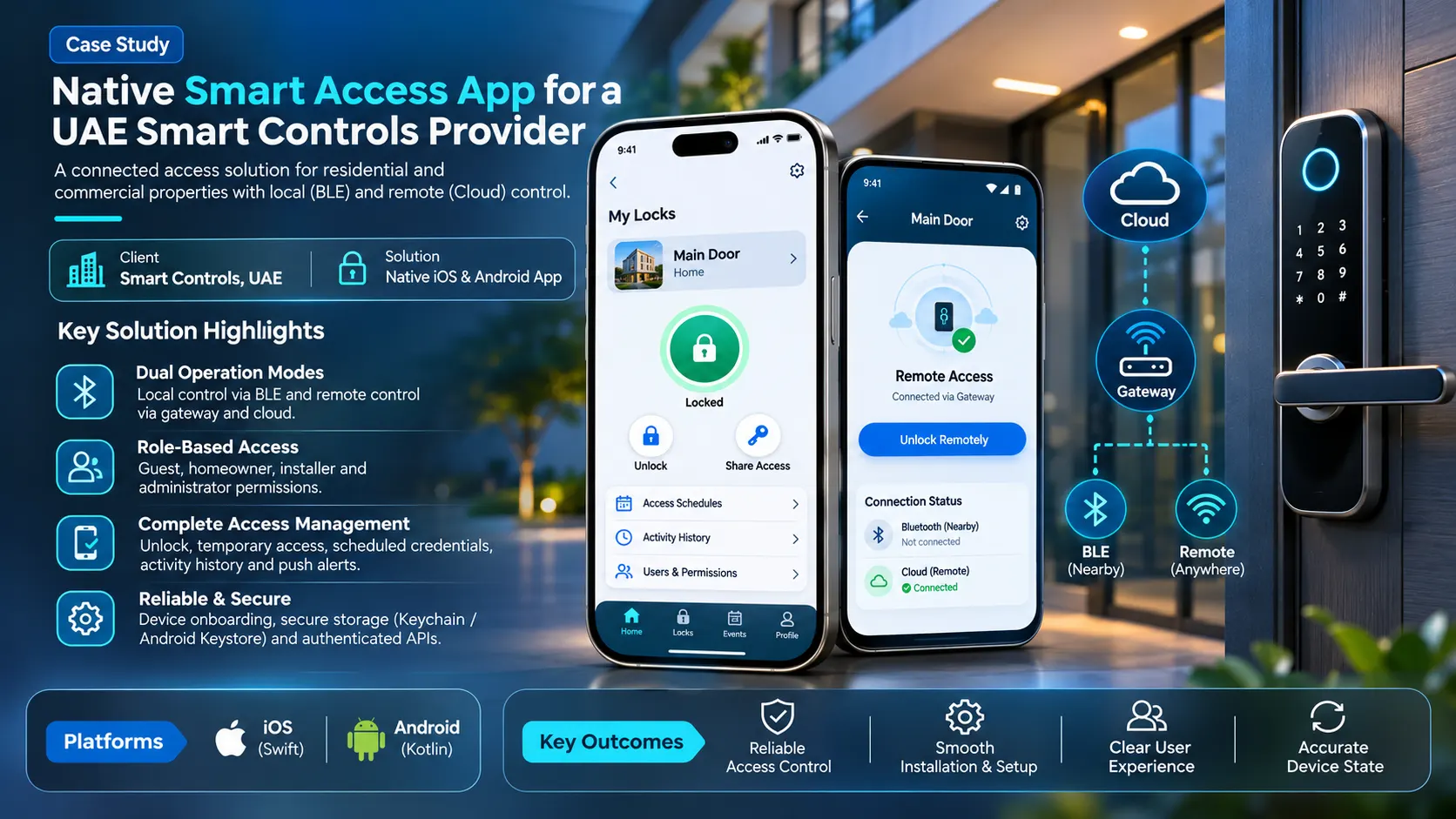
Client: Smart Controls, UAE, delivered under a confidential commercial engagement.
The client was looking for a mobile application for a connected access solution that could be utilized in residential and commercial properties.
The application should be able to provide an easy-to-use solution for the users who wanted an unlock functionality while also providing the necessary capabilities for installing and administrating the device as well as performing troubleshooting remotely.
Not only was the problem in connecting the phone and the smart lock. The system should be able to handle two distinct operation modes.
When the user is close to the lock, the connection should work using Bluetooth low energy protocol for both communication and immediate control.
If the user is far from the location, then the account should be able to perform remote actions via gateway and the cloud services.
The most important thing was that there should be a distinction between local and remote states so that the user wouldn't think the door was open just because the order has been sent from the phone.
Native iOS and Android Implementation
Native applications were developed separately for iOS using Swift and Android using Kotlin. Mobile architecture was based on the connectivity layer that could be used in multiple applications.
The connectivity layer provided functionality for Bluetooth Low Energy (BLE) scanning, connection handling, GATT actions, retries, and device command processing. Sessions and access data were stored in iOS Keychain and Android secure storage.
During the onboarding process, the application walked through authentication of installers, Bluetooth permissions, device discovery, lock enrollment, gateway assignment, and installation validation.
Error handling was provided for cases when a lock was already associated with another user, gateway not available, wrong device time, poor Bluetooth signal strength, and installation interruption.
The customer-facing experience included lock status, remote lock and unlock commands, temporary digital access, scheduled credentials, activity history, and push alerts. Administration features allowed an authorized owner to invite users, revoke access, and view events without exposing installer-level actions to ordinary residents.
Authenticating APIs were used to integrate the backend for the user, devices, permissions, and event history. In the case of remote actions, the application sent a request and updated the UI interface only when the response from the server or the device confirmed its state.
This helped minimize the possibility of showing an inaccurate "unlocked" state if the gateway was down or the device did not respond to the request.
Testing, Release, and Operational Learning
The testing involved the use of iPhone and Android devices with varied Bluetooth behaviour, repeated pairing, expiration of the token, lack of internet connectivity, offline gateway, and movement of app to the background. Testing was done to confirm role-based permissions such that a guest, homeowner, installer, and administrator could carry out their specific roles only.
The project reinforced a key rule for connected access products: success is determined by recovery behaviour as much as normal behaviour. A polished IoT app must clearly explain what happened, what the user can do next, and whether the physical device confirmed the action. That engineering discipline is what makes native iOS and Android IoT applications dependable after they reach real homes, sites, and users.
Relevant Native iOS & Android IoT App Development Case Studies
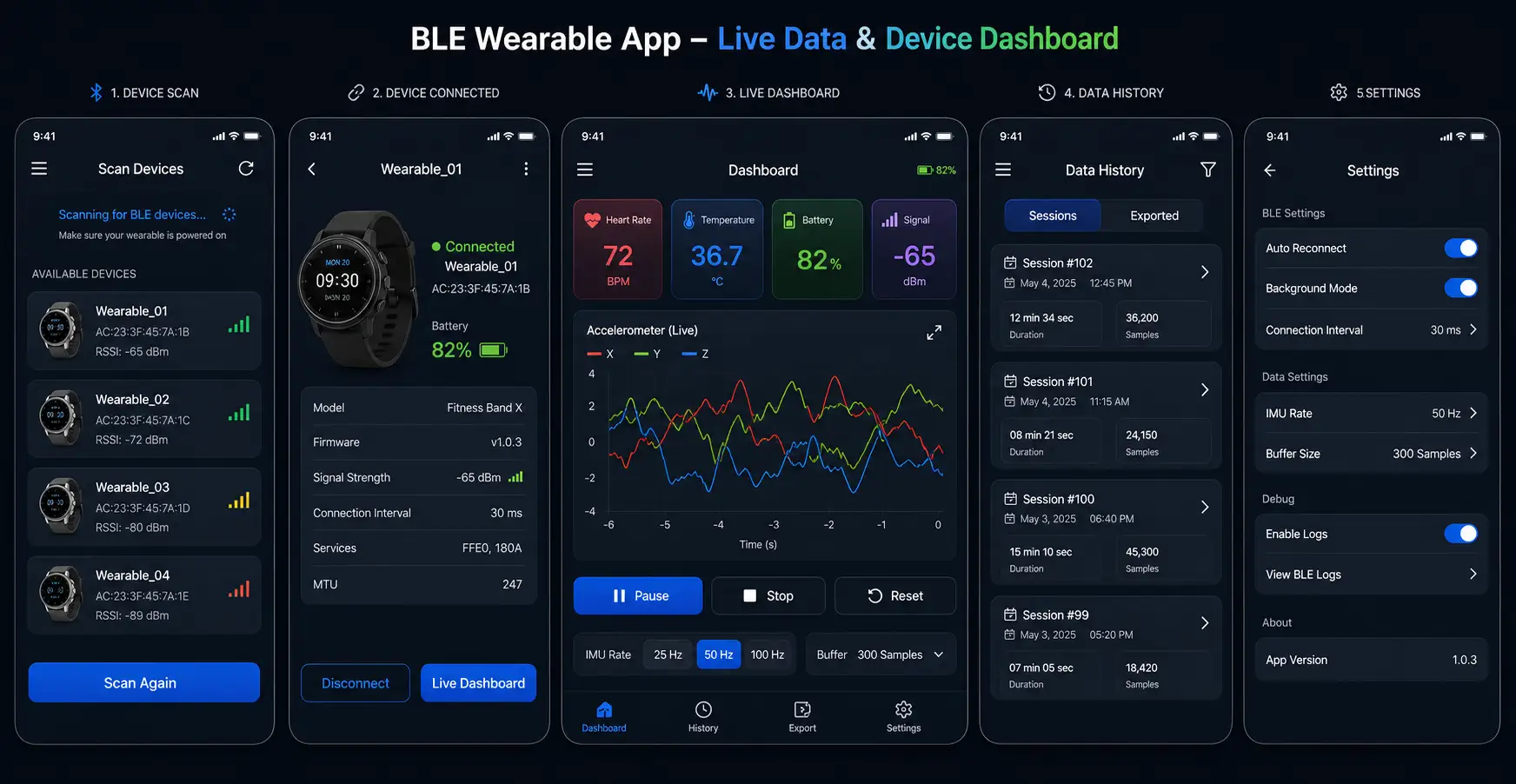
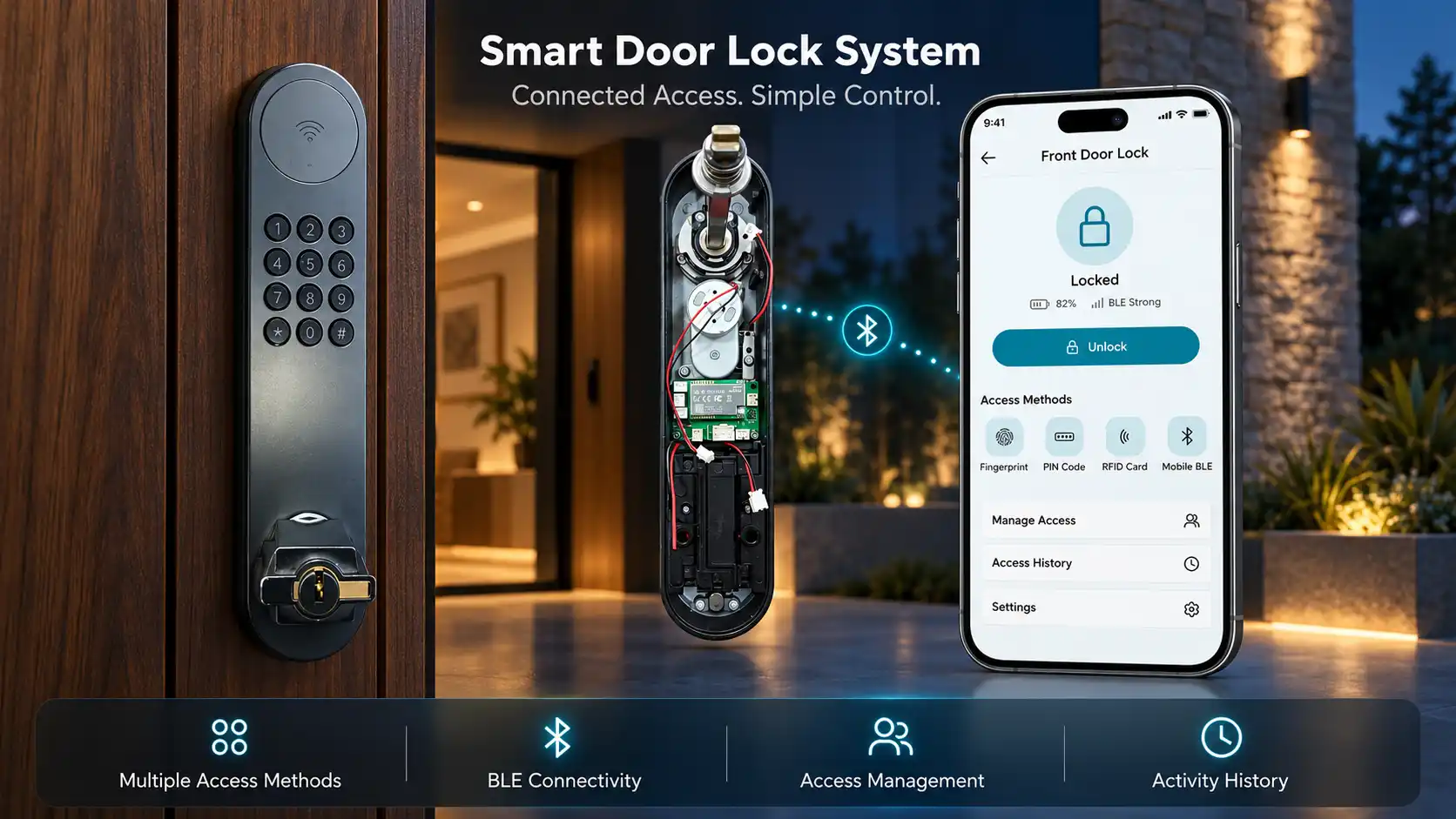
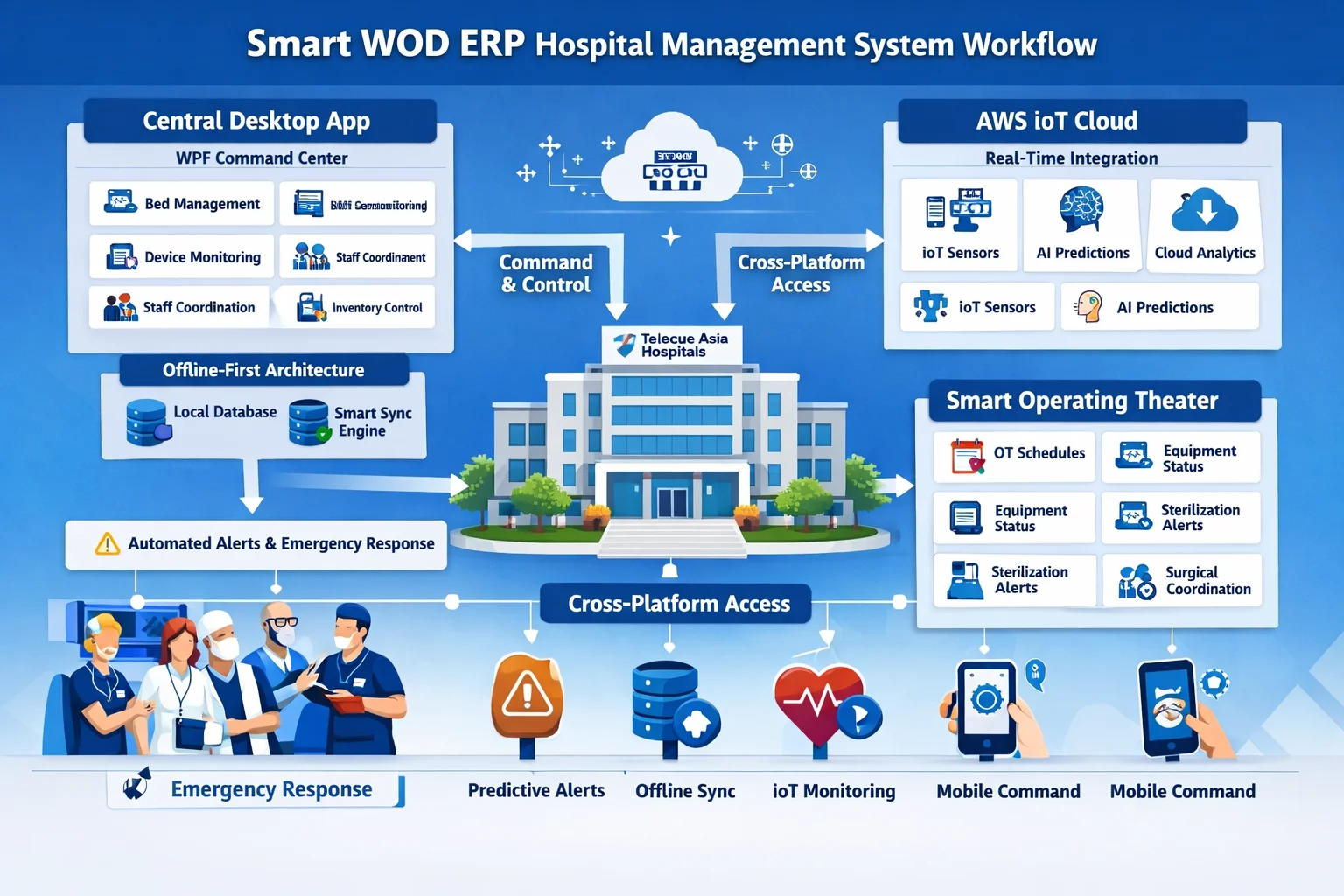
Adequate Infosoft's experience spans mobile applications, connected products, wearables, health technology, cloud systems, and user-focused product engineering. The following examples help demonstrate the breadth that supports an IoT application delivery engagement.
Frequently Asked Questions
Yes, we create iOS mobile apps using Swift programming language and native Android apps with Kotlin. We are capable of developing both apps within the framework of one IoT product roadmap and implementing platform-specific features in each case.
Yes, we are capable of working with BLE protocols, REST APIs, MQTT brokers, gateways, cloud platform, and hardware developers. At the beginning of the project we analyze all necessary protocol documentation, API specs, device states, error codes, and security requirements.
Yes. We develop BLE-based provisioning flows that securely transfer Wi-Fi information to a device, confirm cloud registration, and provide user-friendly recovery steps if setup fails.
Yes. We build features such as local and remote unlock, temporary access, e-keys, access schedules, activity logs, device sharing, installer roles, and gateway-linked remote control.
An initial proof of concept will require some time – several weeks or more depending on the hardware and firmware. Developing a production-ready solution that includes configuration and connection of the device, integration with the cloud, user roles, notifications, analytics, testing, and submission to the store usually involves phases.
Sure. We have the ability to offer our customers support services related to OS updates, bug fixing, additional device types, new features development, performance analysis, and distribution to App Store/Google Play.