














 Mean Stack Development
 Vue JS Development
 Javascript Development
 React JS Development
 Angular JS Development
 Next JS development
 Java Development
 Python Development
 Django Development
 Cherrypy Development
 C# Development
 ASP.NET Development
 NodeJS Development
 Laravel Development
 CodeIgniter Development
 Zend Development
 Ruby on Rails Development
 CakePHP Development
 PHP Website Development
 Symfony Development
 Drupal Development
 Joomla Development
 Wordpress Development
 .NET Nuke Development
 Kentico
 Umbraco
 .NET MAUI Development
 Xamarin Application Development
 iOS Application Development
 Android Application Development
 Android Wear App Development
 Ionic Development
 iBeacon Application Development
 Universal Windows Platform (UWP)
 Kotlin Application Development
 Swift Application Development
 Flutter Application Development
 PWA Application Development
 Flutter Health Tech & Wearable App Development Company
 React Native Health Tech Wearable App Development
 Offshore Software Development
 Custom Application Development
 Front-End Development
 Full Stack Development
 AI & Machine Learning
 Custom CRM Solutions
 Flask Software Development
 Electron JS Development
 ChatGPT Development
 Telemedicine App Development
 Build Smart Telemedicine Platform
 Beauty & Salon App Solutions
 Hire Workato Experts
 Magento Development
 Magento 2.0 Development
 Magento Enterprise
 Shopping Cart Development
 Prestashop Development
 Shopify Development
 Open Cart Development
 WooCommerce Development
 BigCommerce Development
 NopCommerce Development
 Virto Commerce Development
 AspDotNetStorefront Development
 .NET Application Development
 Microsoft Dynamics CRM
 VB .NET Development
 Sharepoint Migration
 ASP.NET Core Development
 ASP.NET MVC Development
 AJAX Development
 Agile Development
 Microsoft Bot
 Microsoft Blazor
 Microsoft Azure Cognitive
 HTML 5
 UI/UX Design
 Graphic Design
 Adobe Photoshop
 XML Application Development
 Cloud Computing Solutions
 Azure Cloud App Development
 AWS Development
 Google Cloud Development
 Certified AWS IoT Services Developers
 DevOps Consulting & Development
 Kubernetes Consulting & Services
 SQL Programming Development
 MySQL Development
 MongoDB Development
 Big Data
 Robotic Process Automation
 Social Media Marketing
 Search Engine Optimization
 QA Testing
 Software Testing
 Software Security
 Maintenance And Support
 I.T. Consulting Services
 Business Intelligence
 YII Development
 Data Analysis
 Alexa Skills Development
 On Demand App for Mobile repairing services
 On Demand App for Car Service Booking
 On Demand App for Cleaning Services
 On Demand App for Pharmacy
 On Demand Dedicated Developers
 On Demand Lawyer App Development







 Nuki Smart Lock
 Salto Smart Lock
 TTlock Smart Lock
 NFC App Development
 Custom IOT Enabled Smart Lock
 Smart Locker Solutions
 Hospital Smart Lock Systems
 Hotel Smart Lock Systems
 Smart Home & Office Locks
 Smart Access for Schools & Colleges
 Unloc Smart Lock Integration
 Yale & August Smart Lock Integration
 Populife Smart Lock Integration
 Smart Lock Hardware Development
 Dairy IoT Solutions
 Agri IoT & AI Solutions
 Weather & Climate Solutions
 Water & Waste Management Solutions
 RaspBerry Pi
 Firmware Software Development
 ESP 32 Software Development
 Embedded Development
 Internet of Things
 Smart IoT Development
 IoT Sensor Integration & Development Solutions
 Smart IoT System Development for HVAC
 Tuya IoT App Development
 Particle IoT SDK
 IoT Development with AI
 Smart Pet GPS Tracker
 Dairy GPS Tracking Solutions
 GPS Fleet Management Software
 Car Rental & Subscription Solutions
 Car Buy & Sell Marketplace Development
 AI-Powered Car Wash App Development
 PCB Design & Fabrication
 IoT AC Automation
 AI–IoT Painting Solutions
 IoT Wearable Hardware & App Development
 HVAC Automation & AI Control Systems
 Smart Home IoT Engineering
 AI Embedded Systems
 AI Hardware Design Service
 Advanced IoT Hardware & Firmware Development
 Device Driver Development Services
 NXP i.MX RT Firmware & Hardware Services
 Microchip PIC & AVR Development
 Hire IoT Architects
 IoT Cloud & Infrastructure Solutions
 Infineon XMC / AURIX Development Services
 Matter & Thread IoT Services
 Native IoT Mobile App Development (BLE & Wi-Fi)
 Snapdragon IoT Firmware Development
 Renesas RA/RX Firmware Services
 Silicon Labs EFR32 Development Services
 Smart Wearable App Development
 Smart IoT Meters
 Smart Healthcare Wearable App Development
 Health Care Monitoring System
 Fitness Tracking App Development
 Smart Home Automation Apps
 nRF PCB Design
 ESP32 PCB Design
 Embedded Wearables Engineers
 Rental Property Management System
 Building Management System
 Smart Lighting Development
 Infineon Semiconductor Firmware Development Services
 Custom Camera Development: Hardware, Firmware & PCB Prototyping
 Smart Security Camera SDK
 Nordic Semiconductor SDK
 Infineon SDK
 Arduino SDK
 NFC Lock Integration
 Kerong Lock Integration
 IoT & AI Solutions for Manufacturing
 Smart Inventory & Logistics Solution
 Food & Beverage Industry Solutions
 Smart Hospitality Solutions
 Smart Property Management
 Custom Smart Home IOT SDK
 Smart IoT & AI in Healthcare
 AI-Powered Security Solutions
 Smart Home Safety & AI
 Veterinary Clinic Management (AI)
 Pet Care System (AI & IoT)
 Pet Training & Adoption (AI)
 Healthcare IoT Development
 Event Management Software
 Money Remittance App
 Money Lending App Development
 Utility and Bill Payment App
 IoT Mobile App Development (Flutter & React Native)
 AI & IoT Retail Solutions
 Smart EV App Development
 Smart Solar IoT & AI Solutions
 IoT-Based Energy Systems
 Smart Energy & Utilities Solutions
 6G Solutions
 IoT Security Solutions
 AI-Powered Lottery App Development
 AI-Sports Fitness Club Management
 Travel
 Real Estate
 Medical & Healthcare
 e-Learning
 Consumer Products
 Finance
 Automobile
 Media & Entertainment
 Billing Software
 Enterprise Resource Planning (ERP)
 Augumented & Virtual Reality
 Point of Sale(POS) Development
 Learning Management System
 EV Charging Solutions
 About Us
 Partners & Certifications
 Quality Assurance
 Our Clients & Testimonials
 Development Process
 Our Products
 Social Responsibility
 Work Ethics
 Vision & Mission
 Awards
 Live Project Demos
 Contact Us
 Case Studies
 Portfolio
 Blog
Blog
Medical Wearable Device Development Services | Adequate Infosoft
Adequate Infosoft helps healthtech and medical-device teams develop connected wearables from feasibility through production preparation.
Our services combine architecture, compact PCB design, biosensors, firmware, Bluetooth or cellular connectivity, applications, cloud, cybersecurity, verification and manufacturing handoff.
A medical wearable is more than a small IoT device. Its intended use, users and claims determine its evidence, risk controls and regulatory pathway.
A wellness band and a wearable that influences diagnosis or therapy cannot share the same assumptions. We define what the product will do, what can go wrong and what evidence will demonstrate safe, consistent performance.
Let's Work Together!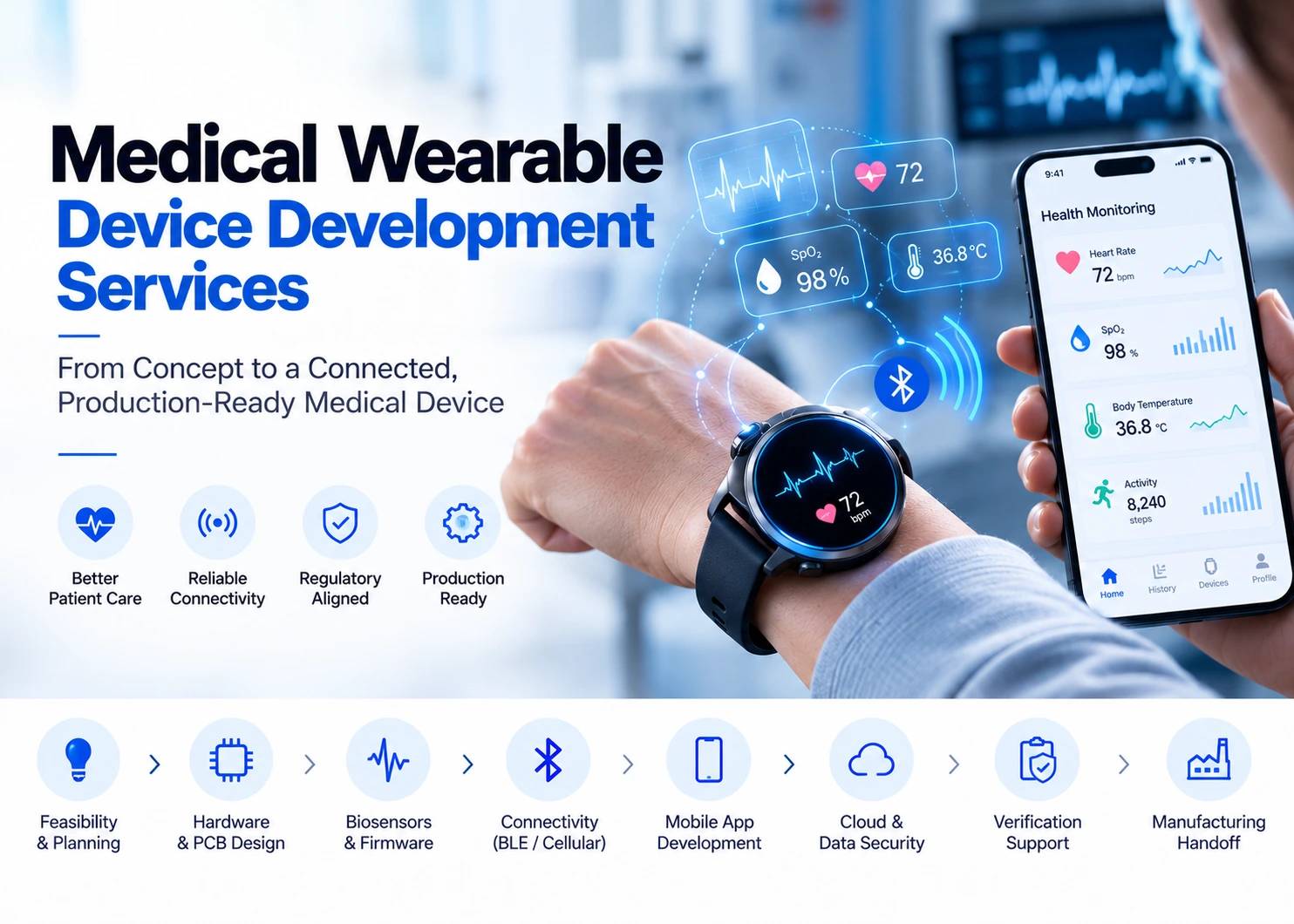
Medical Wearable Products We Develop
We offer the following solutions:
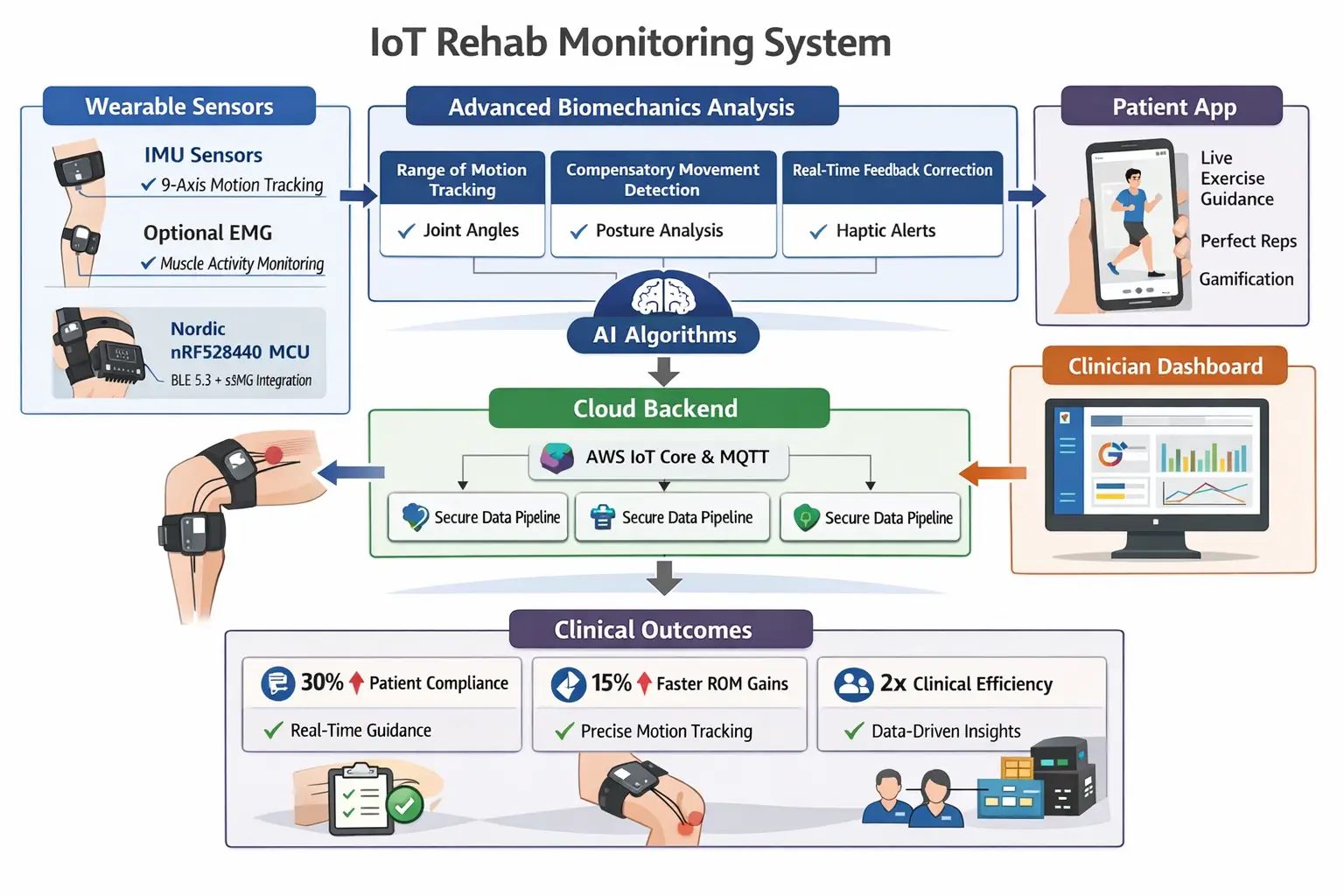
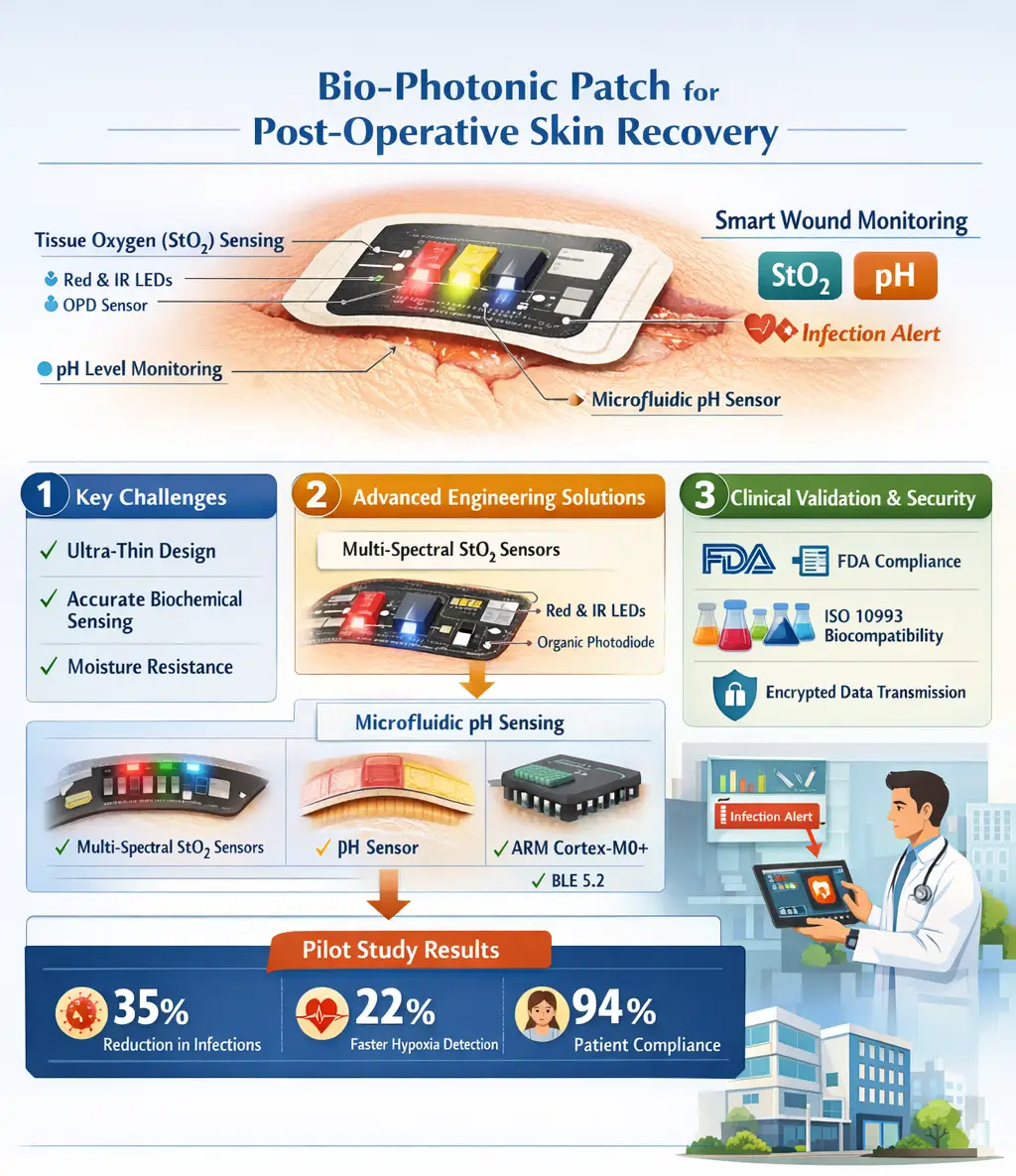
ECG, PPG, SpO₂ and temperature monitoring wearables; Rehabilitation wearables utilizing IMU systems, range of motion analysis or surface EMG; Remote monitoring equipment and connected care equipment; Biosensor patches and post-operative monitoring systems; Devices for fall detection and senior-monitoring equipment; Therapeutic stimulation, haptic guidance and drug delivery devices; Smart rings, smart wristbands and condition specific trackers; and Research prototypes ready to develop
Not all the outputs of sensors equal a diagnosis. We distinguish the sensors to provide an appropriate interface for the end-user based on the sensible insights of the sensors.
Relevant Adequate Infosoft Medical Wearable Experience
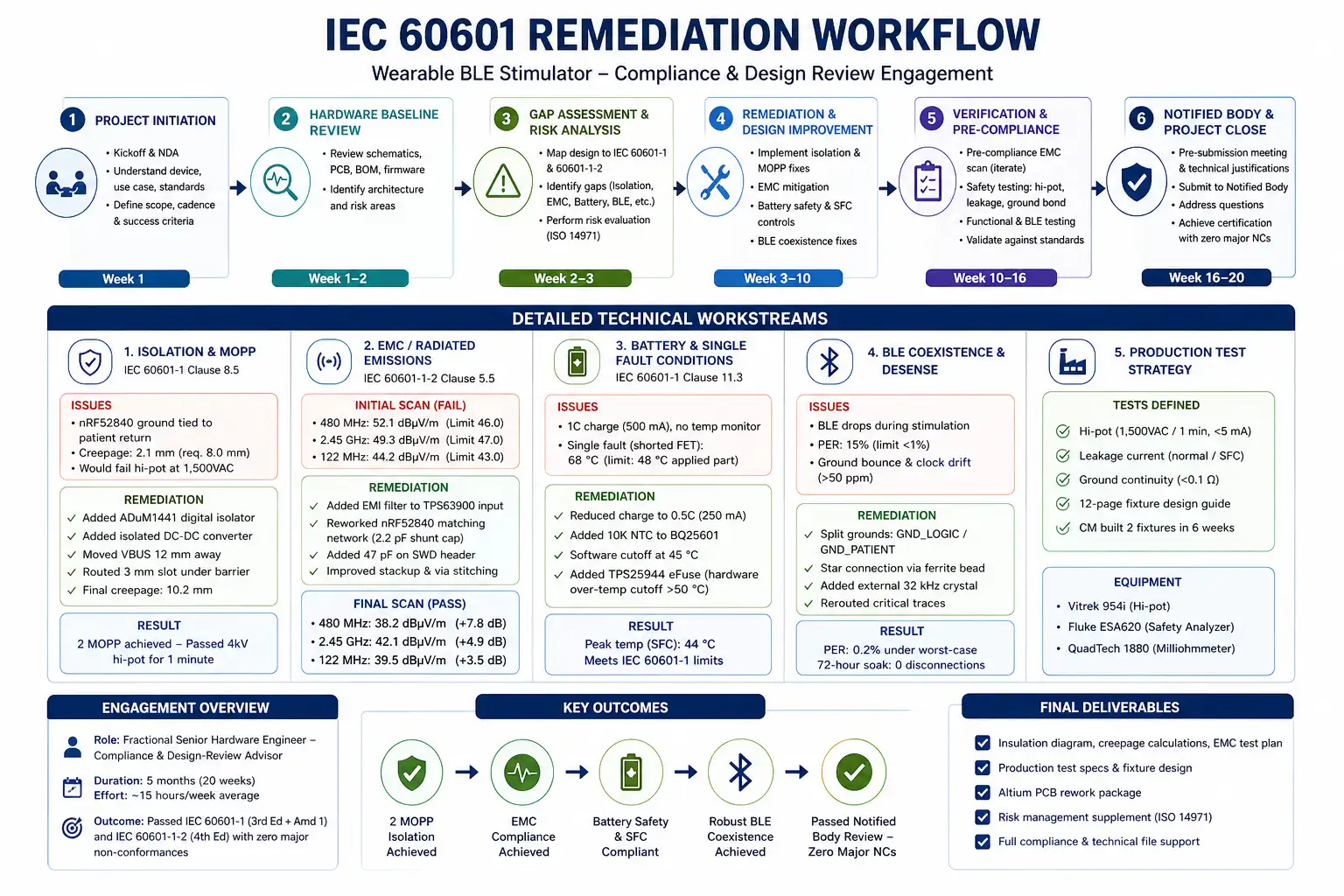
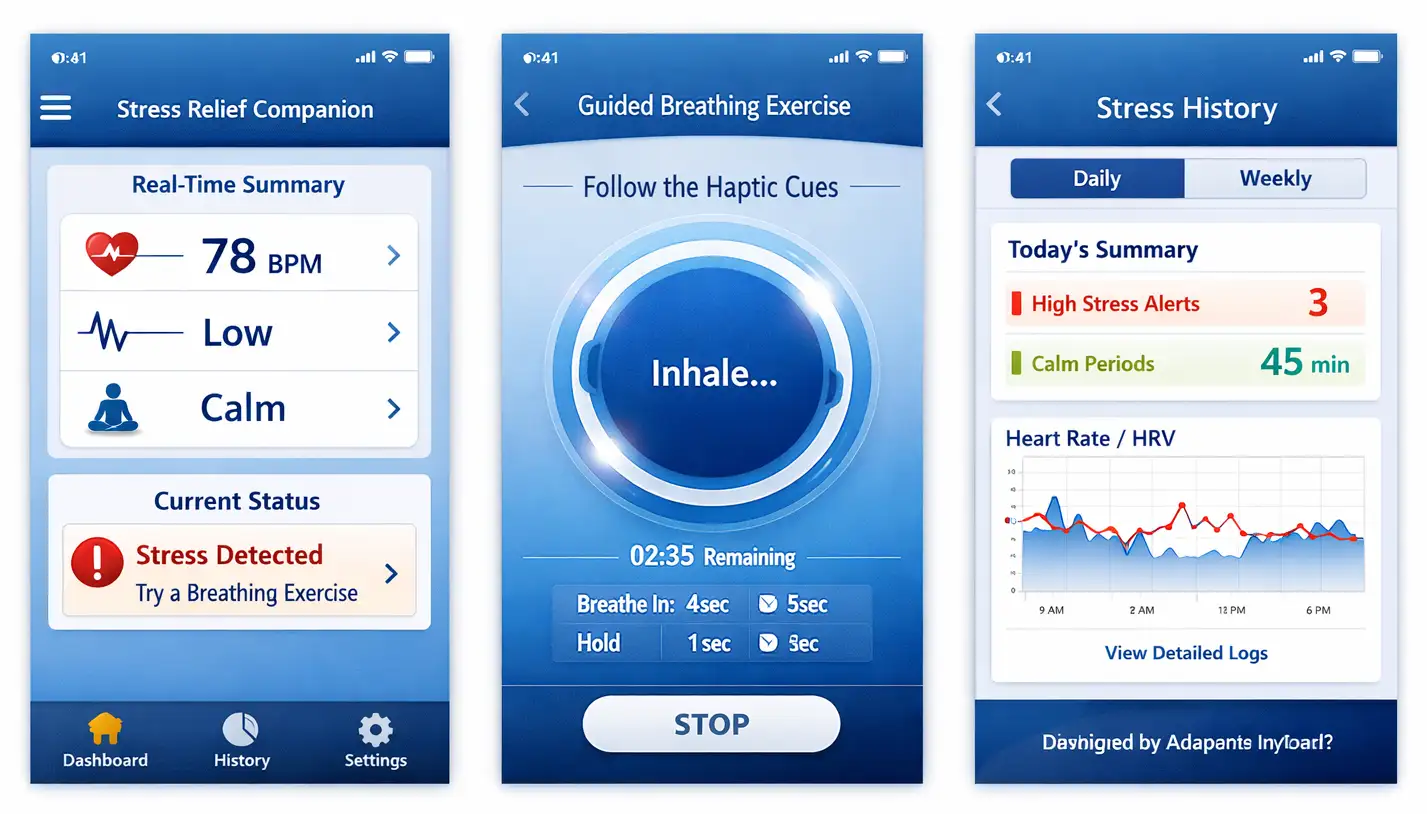
Our experience in the fields of medical and healthcare wearables embraces the integration of biosensors, the design of embedded software, rehabilitation monitoring, connected apps, and hardware design review.
Used to illustrate the capability of our specialists to solve real-life engineering problems regarding wearables and their software are five different projects involving these devices in practical applications.
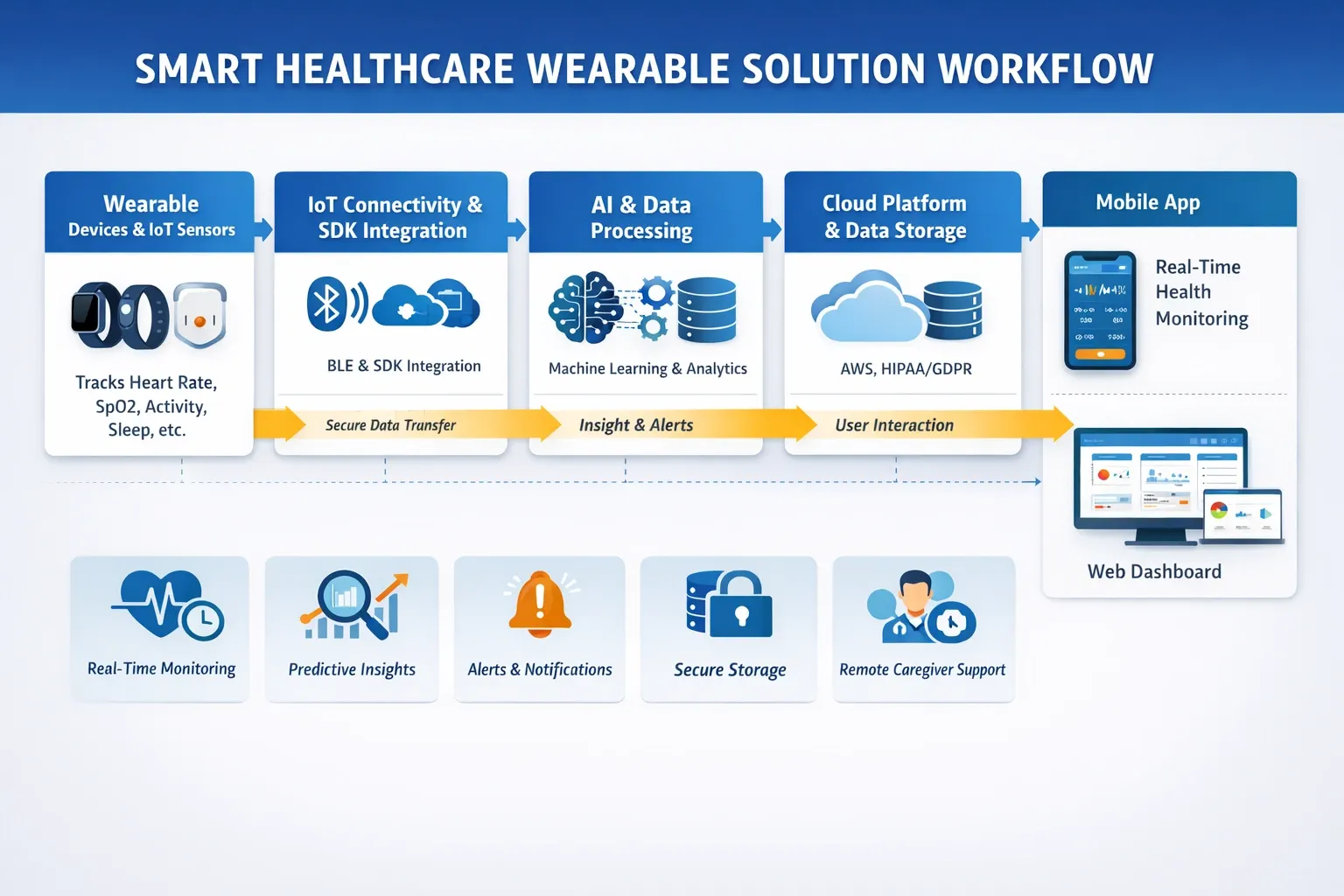
Explore Our Live Medical Wearable App Development Projects
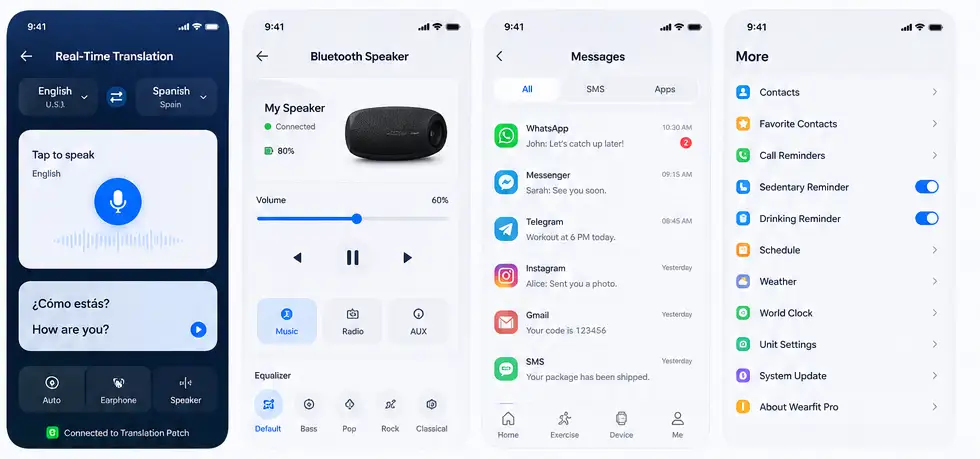
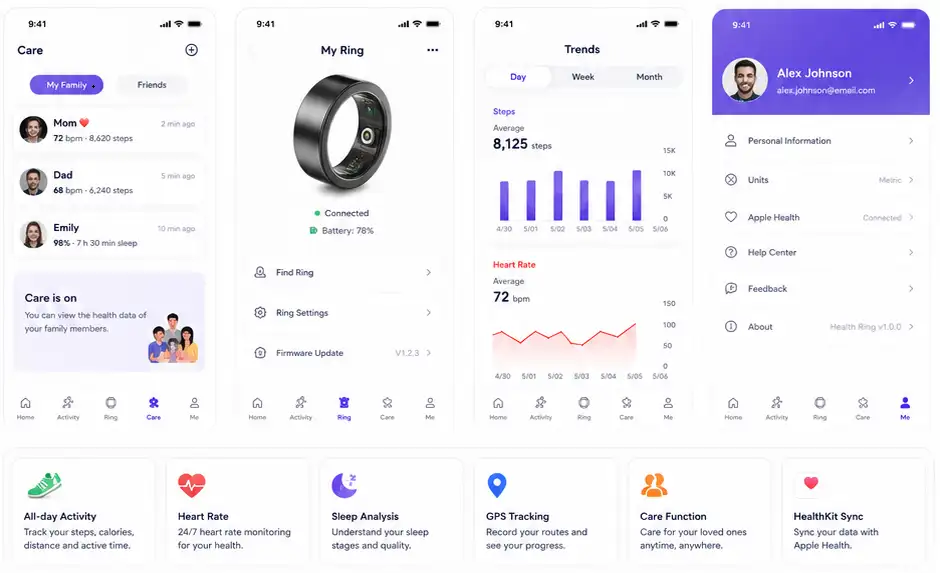
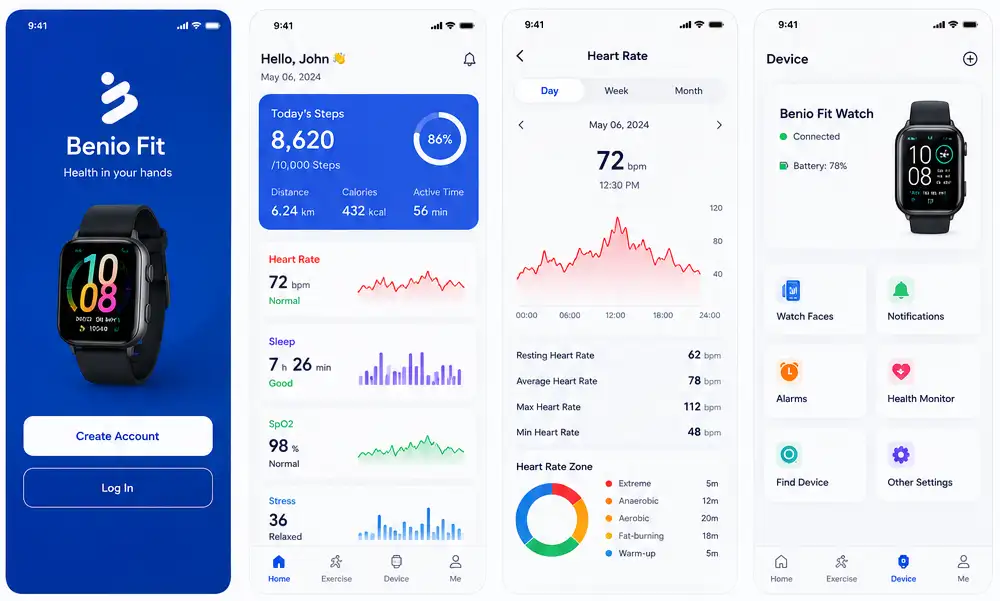
Our expertise in developing medical wearable apps includes BLE communication, fitness and health tracking, cloud and cross-platform mobile app development.
Check out our projects to learn what we have accomplished in the fields of React Native, Flutter and .NET MAUI along with our engineering approaches for integrating wearables with mobile and cloud systems.
End-to-End Medical Wearable Engineering
Viability, slated use and architecture of the system
We create ideas into verifiable requirements that encompass users, environment, measurement range, alarm alerts, connectivity, operation, arch and failure response. Initial models provide answers to the principle queries such as will the sensing device receive the usable body signal, sustain contact, operate at radio frequencies along with meeting the requirements of power consumption.
The architecture decision is whether to process the data in the cloud or at the location local, use a cellular or a mobile way of transmission and whether to ensure safety while working off-line. The outcome can include requirements, blocks diagrams, inputs on risks, device approach, and the idea of verification.
Integration of a Biosensor along with an analogue-front-end
Various factors affect the readings obtained using a wearable device, including motion, skin color, placement, ambient light, electrode contact, sweat, and electrical noise. This study integrates the technologies of PPG, ECG, SpO₂, temperature, IMU, pressure, respiration, bioimpedance, and sEMG with the use of proper filtering, ADC configuration and shielding methods.
The firmware synchronizes the data, eliminates bad readings, identifies bad contact, and maintains the necessary signal quality indicators. All required algorithms are tested on training datasets and compared against reference methods.
Compact PCB, power and enclosure development
Medical wearables must balance size, temperature rise, RF, electrical safety, battery protection, isolation and comfort. We design rigid or rigid-flex PCBs, power trees, charging, antennas and production interfaces. Current profiling covers sensing, processing, radio, haptics, standby and abnormal scenarios.
Enclosures account for optical windows or electrodes, adhesives, cleaning, ingress protection, charging and assembly. Patient-contacting materials may require biological evaluation; a "biocompatible" material claim does not validate the complete device or contact duration.
Embedded firmware and edge processing
We work to create firmware for RTOS systems or standalone firmware with various features like drivers, gathering data, calibration processes, timestamp and storage functions, BLE GATT or GSM modules, watchdog systems, diagnostics, and the safety of the updates process. Accurate in-edge applications let cut down bandwidth needs and ensure necessary offline activities.
Certain requirements, reviews, traceability, anomaly management processes, and testing can support life cycle and associated processes according to IEC 62304.
Mobile apps, cloud and clinical workflows
We focus on secure onboarding, connection of patient-to-device, background synchronization, quality of data, reminders and alerts escalation. Clinician dashboard will be able to inform about the list of patients, trends, devices health, adherence, thresholds and audits.
Backends may involve AWS or Azure or custom infrastructures along with device identifiers, encryption and policies of access, retention, consent and APIs. If required, we will develop HL7 FHIR interfaces. Product owners must confirm requirements regarding privacy, hosting and clinical workflows.
Regulatory and Quality Readiness
Integrating regulation into engineering processes is our core competency. Reference regulations are dependent on classification, application, market, components used, and the functionality of the software. Regulatory considerations that we take into account include:
ISO 14971 regarding risk management lifecycle process; IEC 62304 with respect to software development lifecycle for medical devices; IEC 60601-1 and IEC 60601-1-2 with respect to electrical safety, performance, and EMC; IEC 62366-1 covering usability engineering in terms of safety and use errors; ISO 10993 for planning biological evaluation; ISO 13485 or FDA's QMSR regulations regarding the quality system of the manufacturer; Other standard regulations related to radio communication, batteries, privacy, and cybersecurity requirements.
From February 2, 2026 onwards, the US FDA's QMSR refers to ISO 13485:2016. FDA guidance on designing secure devices and ensuring the availability of documentation from manufacturers has been issued. In the EU, regulation (EU) 2017/745 represents the current rules, while revision of the law is pending. It is important to address up-to-date regulations in practice.
We provide support in terms of traceability, risk controls, design reviews, verification protocols, testing reports, evidence on cybersecurity, SBOM, production tests, and laboratory remediation certifications.
Cybersecurity Across the Product Lifecycle
Connected wearables require security from provisioning through retirement. We use unique identities, authenticated pairing, encryption, secure boot, signed firmware, protected keys and least-privilege access. Threat modeling covers device, app, API, cloud, update service and manufacturing.
Secure OTA should authenticate images, resist rollback where required, tolerate interruptions and report status. Postmarket processes cover vulnerability intake, assessment and remediation. "HIPAA compliant" is not a device feature or general certificate; applicability depends on organizations, data and workflows. We build safeguards while clients establish the full program.
Frequently Asked Questions
The difference lies in the objectives and claims instead of outward appearance. A product that provides information about diagnosis, monitoring or treatment may be regulated.
Yes. A unified team can coordinate sensors, connectivity, data models, security, synchronization, dashboards and production tests.
We engineer against identified requirements and prepare evidence, controls and verification documentation. Approval cannot be promised before intended use, classification, test results and submission pathway are known.
This depends on the level of sophistication of the technology, status of the prototype, validation of the prototype, the device classification, testing and supply chain. A feasibility prototype may take months to develop while the product that is validated or authorized takes considerably longer.
Cost is driven by sensor complexity, custom electronics, enclosure tooling, applications, cloud scope, cybersecurity, verification, clinical work and certification. A requirements and risk workshop provides a more reliable estimate than a generic per-device figure.