


 Mean Stack Development
 Vue JS Development
 Javascript Development
 React JS Development
 Angular JS Development
 Next JS development
 Java Development
 Python Development
 Django Development
 Cherrypy Development
 C# Development
 ASP.NET Development
 NodeJS Development
 Laravel Development
 CodeIgniter Development
 Zend Development
 Ruby on Rails Development
 CakePHP Development
 PHP Website Development
 Symfony Development
 Drupal Development
 Joomla Development
 Wordpress Development
 .NET Nuke Development
 Kentico
 Umbraco
 .NET MAUI Development
 Xamarin Application Development
 iOS Application Development
 Android Application Development
 Android Wear App Development
 Ionic Development
 iBeacon Application Development
 Universal Windows Platform (UWP)
 Kotlin Application Development
 Swift Application Development
 Flutter Application Development
 PWA Application Development
 Flutter Health Tech & Wearable App Development Company
 React Native Health Tech Wearable App Development
 Offshore Software Development
 Custom Application Development
 Front-End Development
 Full Stack Development
 AI & Machine Learning
 Custom CRM Solutions
 Flask Software Development
 Electron JS Development
 ChatGPT Development
 Telemedicine App Development
 Build Smart Telemedicine Platform
 Beauty & Salon App Solutions
 Hire Workato Experts
 Magento Development
 Magento 2.0 Development
 Magento Enterprise
 Shopping Cart Development
 Prestashop Development
 Shopify Development
 Open Cart Development
 WooCommerce Development
 BigCommerce Development
 NopCommerce Development
 Virto Commerce Development
 AspDotNetStorefront Development
 .NET Application Development
 Microsoft Dynamics CRM
 VB .NET Development
 Sharepoint Migration
 ASP.NET Core Development
 ASP.NET MVC Development
 AJAX Development
 Agile Development
 Microsoft Bot
 Microsoft Blazor
 Microsoft Azure Cognitive
 HTML 5
 UI/UX Design
 Graphic Design
 Adobe Photoshop
 XML Application Development
 Cloud Computing Solutions
 Azure Cloud App Development
 AWS Development
 Google Cloud Development
 Certified AWS IoT Services Developers
 DevOps Consulting & Development
 Kubernetes Consulting & Services
 SQL Programming Development
 MySQL Development
 MongoDB Development
 Big Data
 Robotic Process Automation
 Social Media Marketing
 Search Engine Optimization
 QA Testing
 Software Testing
 Software Security
 Maintenance And Support
 I.T. Consulting Services
 Business Intelligence
 YII Development
 Data Analysis
 Alexa Skills Development
 On Demand App for Mobile repairing services
 On Demand App for Car Service Booking
 On Demand App for Cleaning Services
 On Demand App for Pharmacy
 On Demand Dedicated Developers
 On Demand Lawyer App Development









 Nuki Smart Lock
 Salto Smart Lock
 TTlock Smart Lock
 NFC App Development
 Custom IOT Enabled Smart Lock
 Smart Locker Solutions
 Hospital Smart Lock Systems
 Hotel Smart Lock Systems
 Smart Home & Office Locks
 Smart Access for Schools & Colleges
 Unloc Smart Lock Integration
 Yale & August Smart Lock Integration
 Populife Smart Lock Integration
 Smart Lock Hardware Development
 Dairy IoT Solutions
 Agri IoT & AI Solutions
 Weather & Climate Solutions
 Water & Waste Management Solutions
 RaspBerry Pi
 Firmware Software Development
 ESP 32 Software Development
 Embedded Development
 Internet of Things
 Smart IoT Development
 IoT Sensor Integration & Development Solutions
 Smart IoT System Development for HVAC
 Tuya IoT App Development
 Particle IoT SDK
 IoT Development with AI
 Smart Pet GPS Tracker
 Dairy GPS Tracking Solutions
 GPS Fleet Management Software
 Car Rental & Subscription Solutions
 Car Buy & Sell Marketplace Development
 AI-Powered Car Wash App Development
 PCB Design & Fabrication
 IoT AC Automation
 AI–IoT Painting Solutions
 IoT Wearable Hardware & App Development
 HVAC Automation & AI Control Systems
 Smart Home IoT Engineering
 AI Embedded Systems
 AI Hardware Design Service
 Advanced IoT Hardware & Firmware Development
 Device Driver Development Services
 NXP i.MX RT Firmware & Hardware Services
 Microchip PIC & AVR Development
 Hire IoT Architects
 IoT Cloud & Infrastructure Solutions
 Infineon XMC / AURIX Development Services
 Matter & Thread IoT Services
 Native IoT Mobile App Development (BLE & Wi-Fi)
 Snapdragon IoT Firmware Development
 Renesas RA/RX Firmware Services
 Silicon Labs EFR32 Development Services
 Smart Wearable App Development
 Smart IoT Meters
 Smart Healthcare Wearable App Development
 Health Care Monitoring System
 Fitness Tracking App Development
 Smart Home Automation Apps
 nRF PCB Design
 ESP32 PCB Design
 Embedded Wearables Engineers
 Rental Property Management System
 Building Management System
 Smart Lighting Development
 Infineon Semiconductor Firmware Development Services
 Custom Camera Development: Hardware, Firmware & PCB Prototyping
 Smart Security Camera SDK
 Nordic Semiconductor SDK
 Infineon SDK
 Arduino SDK
 NFC Lock Integration
 Kerong Lock Integration
 IoT & AI Solutions for Manufacturing
 Smart Inventory & Logistics Solution
 Food & Beverage Industry Solutions
 Smart Hospitality Solutions
 Smart Property Management
 Custom Smart Home IOT SDK
 Smart IoT & AI in Healthcare
 AI-Powered Security Solutions
 Smart Home Safety & AI
 Veterinary Clinic Management (AI)
 Pet Care System (AI & IoT)
 Pet Training & Adoption (AI)
 Healthcare IoT Development
 Event Management Software
 Money Remittance App
 Money Lending App Development
 Utility and Bill Payment App
 IoT Mobile App Development (Flutter & React Native)
 AI & IoT Retail Solutions
 Smart EV App Development
 Smart Solar IoT & AI Solutions
 IoT-Based Energy Systems
 Smart Energy & Utilities Solutions
 6G Solutions
 IoT Security Solutions
 AI-Powered Lottery App Development
 AI-Sports Fitness Club Management
 Travel
 Real Estate
 Medical & Healthcare
 e-Learning
 Consumer Products
 Finance
 Automobile
 Media & Entertainment
 Billing Software
 Enterprise Resource Planning (ERP)
 Augumented & Virtual Reality
 Point of Sale(POS) Development
 Learning Management System
 EV Charging Solutions
 About Us
 Partners & Certifications
 Quality Assurance
 Our Clients & Testimonials
 Development Process
 Our Products
 Social Responsibility
 Work Ethics
 Vision & Mission
 Awards
 Live Project Demos
 Contact Us
 Case Studies
 Portfolio
 Blog
Legacy Firmware Migration & Modernization Services
Legacy firmware poses serious risks for a product long before it stops working. The product may still be in production, but its initial microcontroller is outdated, its development tools no longer supported, its source code unchangeable, or its security model does not meet current standards. At this point even a simple feature request can become a complicated engineering task.
Adequate Infosoft provides legacy firmware migration and embedded software modernization services for businesses that need to extend the life, reliability, security, and commercial value of their connected products.
We assist product-based firms transition away from ageing firmware technology to sustainable, testable, and extended systems – without deteriorating the functions that clients have come to depend on.
Our engineers are skilled in embedded C/C++, RTOS-based firmware, bare-metal applications, Bluetooth Low Energy, Wi-Fi, cellular IoT, sensors, gateways, cloud connectivity, mobile applications, device management systems, and other technologies.
Whether the need is a microcontroller replacement, an RTOS migration, a secure OTA update solution, or a complete redesign of a connected product's software architecture, we take a practical engineering-led approach.
Let's Work Together!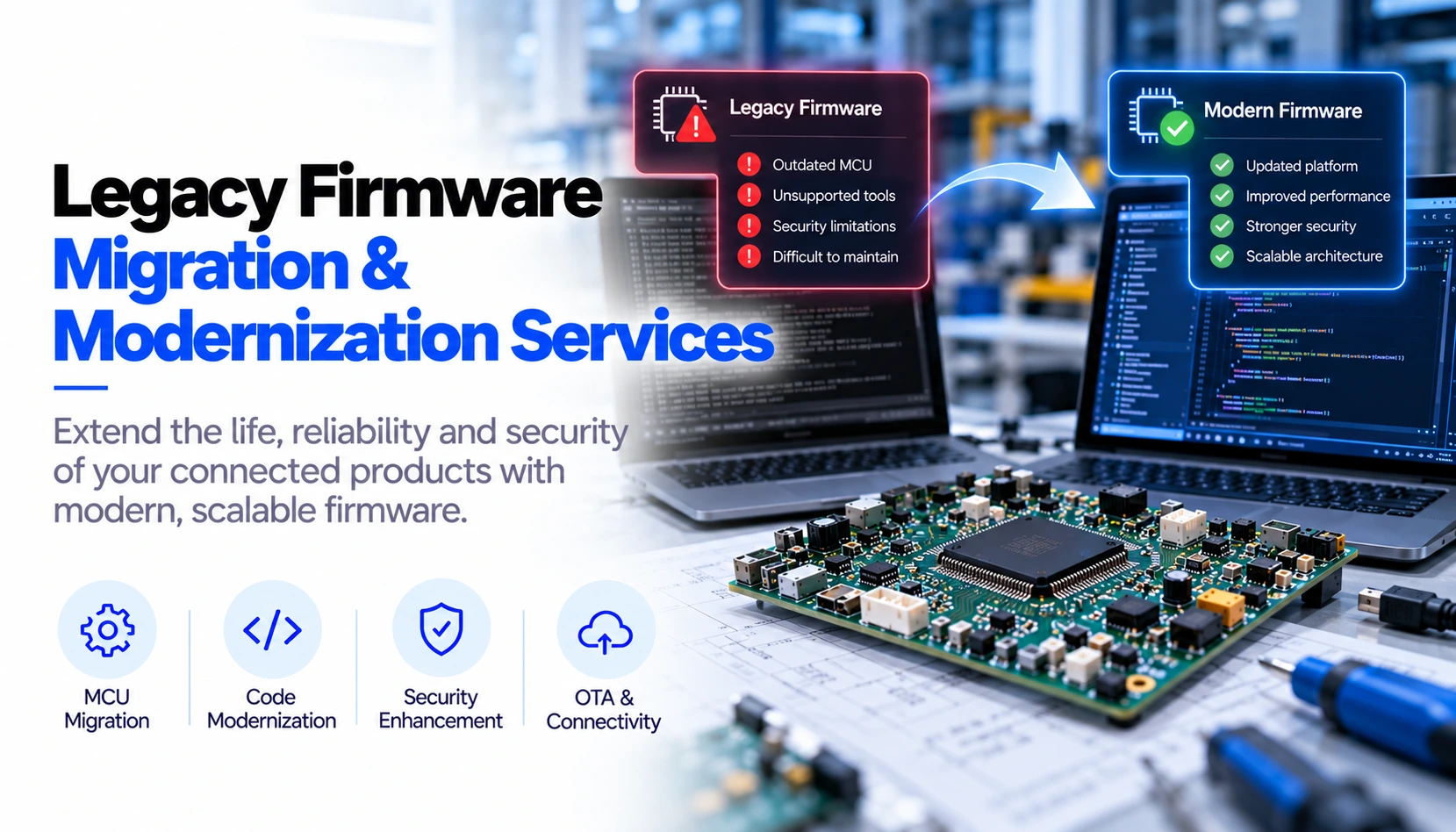
Why Legacy Firmware Modernization Matters
Just because firmware is older doesn't mean it's bad. Many legacy products were created for their time, aligned with the hardware, laws, connection possibilities, and the needs of customers at that time. The challenge is that many things have changed since then.
A legacy firmware platform may face one or more of these issues:
The original MCU, wireless module, memory chip, or sensor is no longer available. The code depends on unsupported IDEs, compilers, SDKs, or libraries. There is little documentation, and only a few engineers understand the system. Security updates, encryption, secure boot, or signed firmware updates are missing. The product cannot support new mobile operating systems, cloud APIs, or IoT protocols. Firmware changes introduce regressions because there is no automated test strategy. Power consumption, connection reliability, or field diagnostics do not meet current expectations. A product needs new features, but its existing architecture cannot safely accommodate them.
Modifications to the firmware preserves an organization's current investment in a product while providing a good technical base for new releases. When considering firmware updates, it is often more economical compared to redesigning the whole device, especially when the product's basic logic has been tested already.
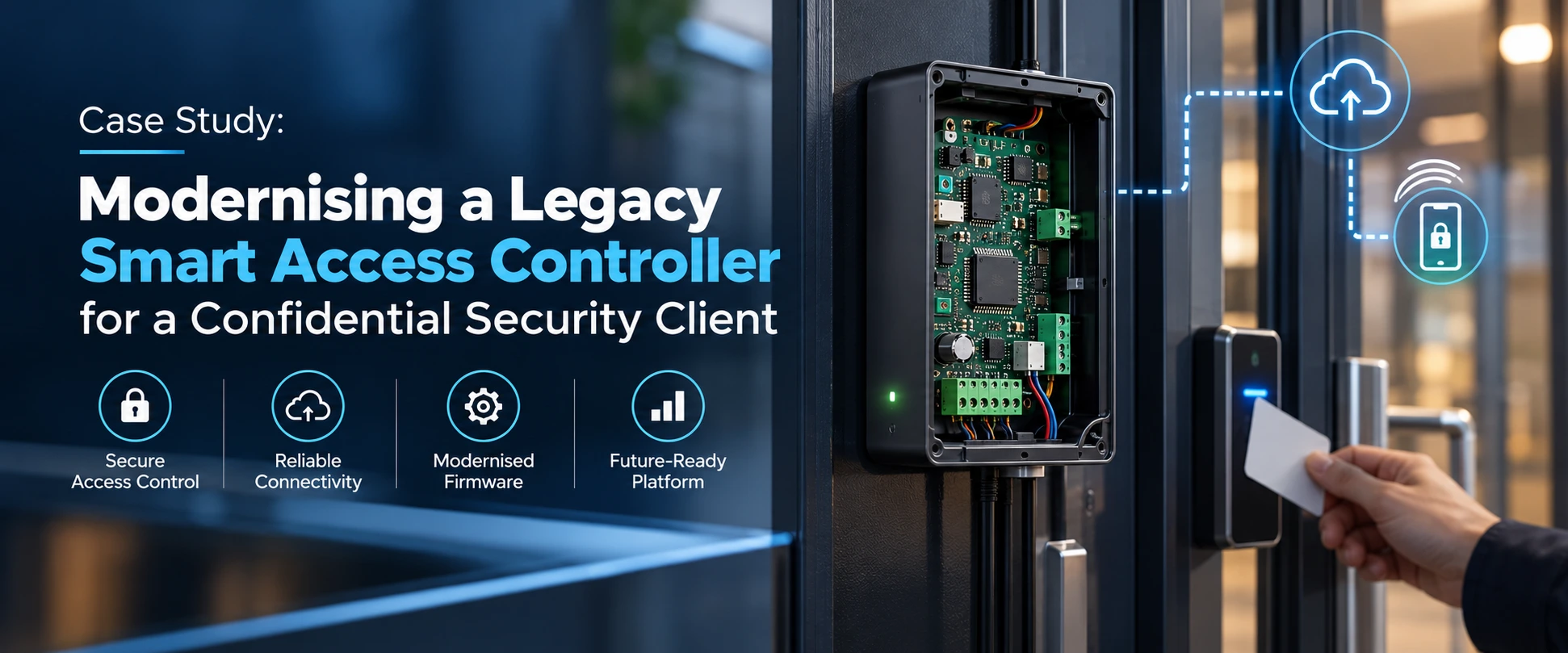
Case Study: Modernising a Legacy Smart Access Controller for a Confidential Security Client
The Challenge: A Proven Product Limited by Ageing Firmware
Adequate Infosoft worked with a confidential smart security and access-control client whose installed product base depended on a legacy embedded controller. The product managed electronic locking functions, access credentials, local input/output signals, gateway communication, and remote control events.
The firmware currently in use has undergone numerous changes over the years. While the code is functional, it has become challenging to modify it.
The design of the original solution was based on event-driven design principles involving tight coupling of application logic with drivers, communication, and device state organization. Hence, changes made in one component influenced the other, complicating the testing of new releases.
Finally, the client was also interested in facilitating potential future requirements for connected devices including improved performance of remote operations, more reliable gateway communication, improved insight into events, and a defined path for future firmware upgrades.
The limited availability of some electronic components posed another challenge for firmware development, because it should operate on a new MCU platform.
The Engineering Approach
The first step of our work was to conduct Firmware and hardware discovery. We looked at the boot sequence of the system, lock control, processes that depend on the timing, flow of credentials, communication packets, fault conditions, and logic of recovering from power loss.
We also analyzed the interface between firmware, embedded controller, cloud server, and the mobile application.
Instead of trying to write down the entire operation of the system at once, we broke down firmware into some layers of it: drivers, communication services, device control logic, persistent settings, and application process.
As a result, this simplified the way of testing code and provided our client with a clear background for the future adjustments to the product.
The modernization included a structured task-based architecture, safer state management, improved logging, and defined interfaces for wireless and gateway communication.
We introduced a firmware update strategy designed to verify the firmware image before activation and preserve a recovery option if an update failed.
The events of devices were made uniform so that connected systems could keep track of actions taken remotely, of local lock operations, of changes to credentials, and of fault conditions.
The engineers confirmed main user journeys like that of unlocking devices remotely, of locking devices from a distance, of performing scheduled operations, of reconnection of the gateway, and of comeback from cut power supply or communication.
Result: A Safer Platform for Product Growth
The outcome was a firmware platform that was easy to maintain and kept important features of existing devices in place while making future releases easier to implement and verify.
The customer achieved a better separation of hardware-related functions and business rules, reducing the efforts necessary for deploying new functionalities.
The promising architecture also enhanced testing traceability. Engineers no longer had to work with a huge dependent codebase to analyze flaws connected with communication, device control, or application workflow.
Most importantly, the project created a path for controlled device updates and future hardware migration without abandoning the value of the established product.
Client name and commercially sensitive implementation details are withheld under confidentiality obligations.
Relevant Product Delivery Experience
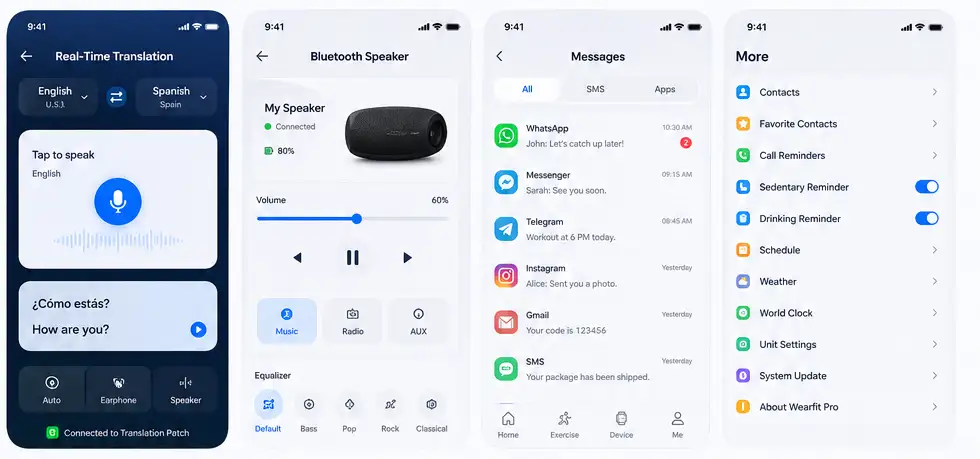
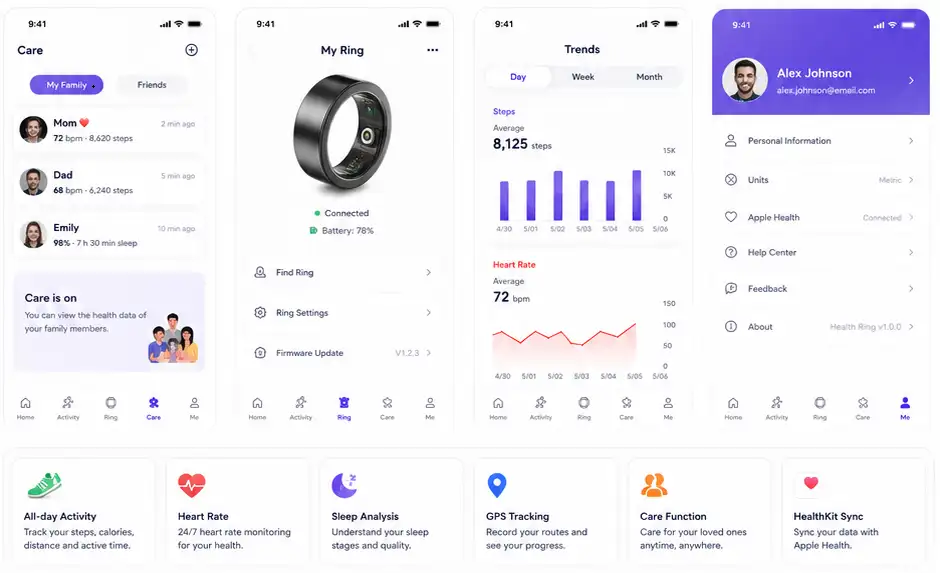
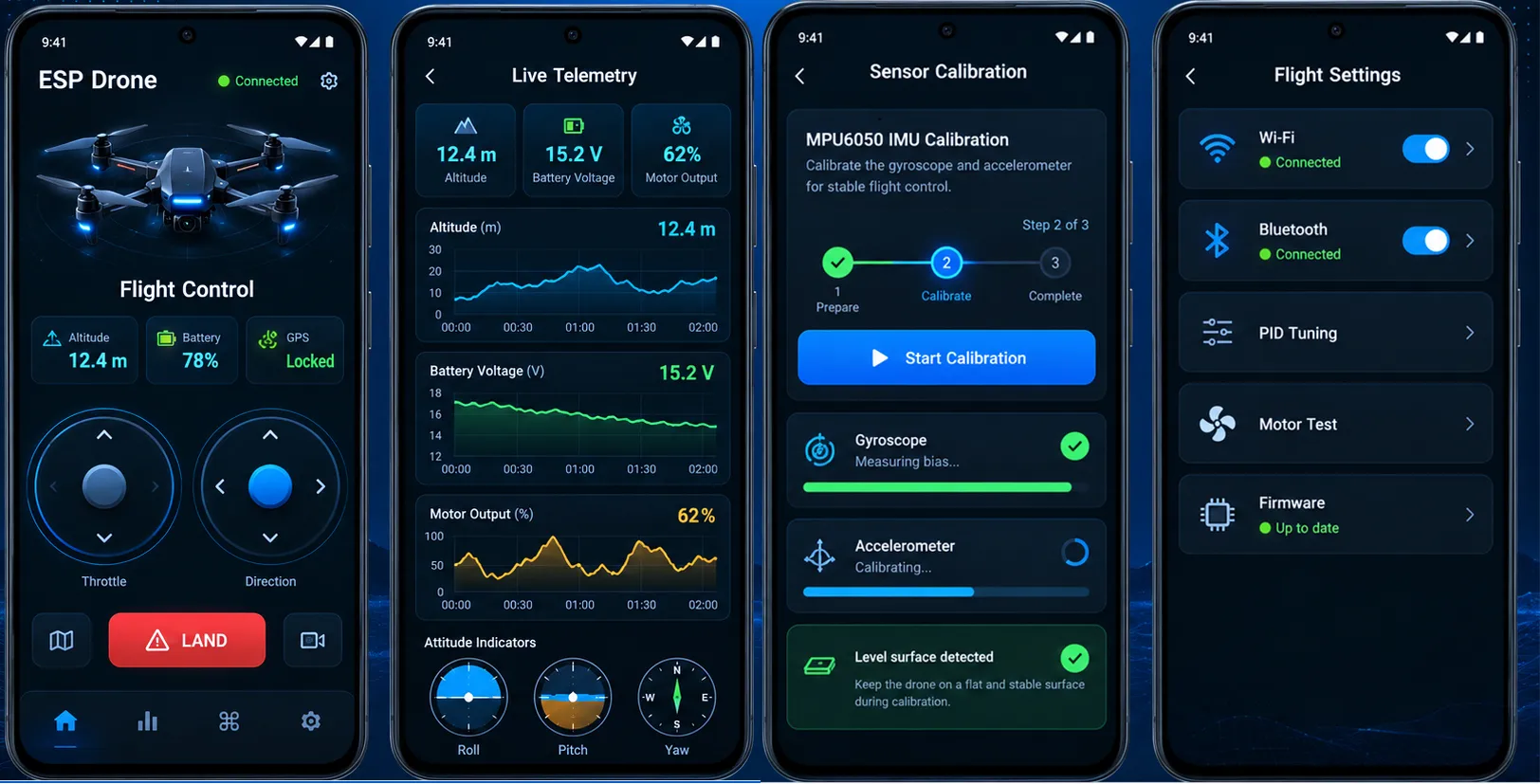
Our firmware modernization capability is supported by hands-on experience delivering connected-device, mobile, cloud, and embedded product solutions. Relevant project experience includes:
Our Legacy Firmware Migration Services
Firmware Code Audit and Reverse Engineering
Effective migrations begin with a comprehensive review of the existing systems such as source code, manufacturing processes, schematics, PCB designs, components, interfaces and issues.
In case some documentation is missing, we recreate significant design features, examine boot process, peripherals, timing, interrupts, memory, protocols and calibration logic.
This discovery stage helps to develop a practical upgrading strategy that retains necessary features while simplifying or replacing obsolete components.
MCU and Hardware Platform Migration
Component obsolescence often leads to firmware migration. Our firm is capable of transitioning systems working with 8-bit, 16-bit, and 32-bit microcontrollers including ARM Cortex-M processors and modern wireless systems-on-chip.
Hardware modifications require more than straightforward software porting because clock circuits, ADCs, power modes, flash storage, bootloader functions, interrupts, timers, DMA, and drivers may function differently.
We verify the differences and implement necessary modifications in printed circuit boards in advance. We also assist our customers in choosing replacement systems taking into consideration the availability, memory, power consumption, vendor support, connectivity features, pricing, and certification requirements.
Bare-Metal to RTOS Migration
Numerous thriving devices usually start off with simple, bare-metal firmware but high needs can change things dramatically.
New features such as cloud connectivity and BLE could lead to timing problems. To bring firmware up to date, we can use FreeRTOS, Zephyr RTOS, or light but effective task architectures when possible.
Crafting an easy-to-maintain architecture requires engineers to take into account timing, RAM and flash visibility, interrupts and power consumption, as well as future needs.
Connectivity and Protocol Modernization
Accordance with the probabilities associated with their initial design, connected gadgets are likely to persist longer than expected.
Added to the mix are the various possibilities available for further enhancing their functionality such as improving BLE connection, Wi-Fi provisioning, MQTT communication, REST API integration, cellular compatibility or connection and gateway communication, as well as making them compatible with another mobile app.
We modernize device connectivity while protecting the user experience and installed base. This may include:
BLE protocol migration and secure pairing Wi-Fi provisioning and reconnection logic MQTT, HTTP, WebSocket, Modbus, CAN, UART, SPI, and I2C integration Cloud API integration and device authentication Gateway-based device communication Device telemetry, event reporting, and remote diagnostics Mobile app compatibility for iOS and Android
For products already deployed in the field, backward compatibility is a major design concern. We plan migration paths that allow old and new firmware versions to coexist when necessary.
Security, Secure Boot, and OTA Updates
Legacy firmware often lacks the protections expected from modern connected products. A firmware modernization project is an opportunity to introduce security at the device level rather than treating it as an afterthought.
Some of the embedded security measures we help employ are signed firmware images, secure boot, encrypted storage, secure credential usage, cloud communication authentication, setting production keys, rollback protection, and secure OTA updates.
We also design update processes for real-world conditions. Devices may lose power, have unreliable connectivity, or use limited flash memory. A robust OTA implementation must protect the device from incomplete or corrupt updates and provide a safe recovery path.
Test Automation, Validation, and Documentation
Firmware that is contemporary ought to be less difficult to validate than its predecessor systems. We devise a method for testing which can encompass unit testing, hardware-in-the-loop testing, system integration testing, protocol simulation, regression testing, and field testing plans.
We also provide practical handover documentation: architecture diagrams, build instructions, source-code structure, interface specifications, release notes, manufacturing flashing procedures, and support guidance. This reduces future dependency on a single engineer or vendor.
Our Firmware Modernization Process
Initially, we start with the discovery and feasibility stage. At this point, the existing firmware and hardware, product requirements, problem areas and life cycle of components are analyzed.
Subsequently, there is a preparatory stage for the architecture and methods of implementation creation.
The definition of the components to be maintained, recoded, or replaced the outlining of the way of testing the device; the methods to be used to ensure the compatibility are described at this step.
Development is carried out in small, verifiable stages. Core hardware functions are first brought up on the new platform, followed by communications, application logic, cloud integration, security features, and OTA capability. Each stage is tested against measurable acceptance criteria.
Finally, we support pilot deployment, production readiness, and post-release monitoring. This phased method avoids the risk of a "big bang" rewrite and gives stakeholders visibility throughout the migration.
Why Choose Adequate Infosoft for Firmware Modernization?
Adequate Infosoft combs together embedded firmware, IoT connectivity, cloud integration, mobile development, and product engineering abilities in one team.
We adopt a systematic approach to work and emphasize on documenting, testing in real life issues, and making certain that the developed product remains operational after the initial success with porting.
If your product is affected by obsolete components, unsupported development tools, recurring field defects, missing OTA updates, weak security, or a difficult-to-maintain firmware codebase, we can help you define a safe modernization path.
Contact Adequate Infosoft to discuss your legacy firmware migration, MCU upgrade, RTOS modernization, connected-device security, or OTA firmware update requirements.