














 Mean Stack Development
 Vue JS Development
 Javascript Development
 React JS Development
 Angular JS Development
 Next JS development
 Java Development
 Python Development
 Django Development
 Cherrypy Development
 C# Development
 ASP.NET Development
 NodeJS Development
 Laravel Development
 CodeIgniter Development
 Zend Development
 Ruby on Rails Development
 CakePHP Development
 PHP Website Development
 Symfony Development
 Drupal Development
 Joomla Development
 Wordpress Development
 .NET Nuke Development
 Kentico
 Umbraco
 .NET MAUI Development
 Xamarin Application Development
 iOS Application Development
 Android Application Development
 Android Wear App Development
 Ionic Development
 iBeacon Application Development
 Universal Windows Platform (UWP)
 Kotlin Application Development
 Swift Application Development
 Flutter Application Development
 PWA Application Development
 Flutter Health Tech & Wearable App Development Company
 React Native Health Tech Wearable App Development
 Offshore Software Development
 Custom Application Development
 Front-End Development
 Full Stack Development
 AI & Machine Learning
 Custom CRM Solutions
 Flask Software Development
 Electron JS Development
 ChatGPT Development
 Telemedicine App Development
 Build Smart Telemedicine Platform
 Beauty & Salon App Solutions
 Hire Workato Experts
 Magento Development
 Magento 2.0 Development
 Magento Enterprise
 Shopping Cart Development
 Prestashop Development
 Shopify Development
 Open Cart Development
 WooCommerce Development
 BigCommerce Development
 NopCommerce Development
 Virto Commerce Development
 AspDotNetStorefront Development
 .NET Application Development
 Microsoft Dynamics CRM
 VB .NET Development
 Sharepoint Migration
 ASP.NET Core Development
 ASP.NET MVC Development
 AJAX Development
 Agile Development
 Microsoft Bot
 Microsoft Blazor
 Microsoft Azure Cognitive
 HTML 5
 UI/UX Design
 Graphic Design
 Adobe Photoshop
 XML Application Development
 Cloud Computing Solutions
 Azure Cloud App Development
 AWS Development
 Google Cloud Development
 Certified AWS IoT Services Developers
 DevOps Consulting & Development
 Kubernetes Consulting & Services
 SQL Programming Development
 MySQL Development
 MongoDB Development
 Big Data
 Robotic Process Automation
 Social Media Marketing
 Search Engine Optimization
 QA Testing
 Software Testing
 Software Security
 Maintenance And Support
 I.T. Consulting Services
 Business Intelligence
 YII Development
 Data Analysis
 Alexa Skills Development
 On Demand App for Mobile repairing services
 On Demand App for Car Service Booking
 On Demand App for Cleaning Services
 On Demand App for Pharmacy
 On Demand Dedicated Developers
 On Demand Lawyer App Development






 Nuki Smart Lock
 Salto Smart Lock
 TTlock Smart Lock
 NFC App Development
 Custom IOT Enabled Smart Lock
 Smart Locker Solutions
 Hospital Smart Lock Systems
 Hotel Smart Lock Systems
 Smart Home & Office Locks
 Smart Access for Schools & Colleges
 Unloc Smart Lock Integration
 Yale & August Smart Lock Integration
 Populife Smart Lock Integration
 Smart Lock Hardware Development
 Dairy IoT Solutions
 Agri IoT & AI Solutions
 Weather & Climate Solutions
 Water & Waste Management Solutions
 RaspBerry Pi
 Firmware Software Development
 ESP 32 Software Development
 Embedded Development
 Internet of Things
 Smart IoT Development
 IoT Sensor Integration & Development Solutions
 Smart IoT System Development for HVAC
 Tuya IoT App Development
 Particle IoT SDK
 IoT Development with AI
 Smart Pet GPS Tracker
 Dairy GPS Tracking Solutions
 GPS Fleet Management Software
 Car Rental & Subscription Solutions
 Car Buy & Sell Marketplace Development
 AI-Powered Car Wash App Development
 PCB Design & Fabrication
 IoT AC Automation
 AI–IoT Painting Solutions
 IoT Wearable Hardware & App Development
 HVAC Automation & AI Control Systems
 Smart Home IoT Engineering
 AI Embedded Systems
 AI Hardware Design Service
 Advanced IoT Hardware & Firmware Development
 Device Driver Development Services
 NXP i.MX RT Firmware & Hardware Services
 Microchip PIC & AVR Development
 Hire IoT Architects
 IoT Cloud & Infrastructure Solutions
 Infineon XMC / AURIX Development Services
 Matter & Thread IoT Services
 Native IoT Mobile App Development (BLE & Wi-Fi)
 Snapdragon IoT Firmware Development
 Renesas RA/RX Firmware Services
 Silicon Labs EFR32 Development Services
 Smart Wearable App Development
 Smart IoT Meters
 Smart Healthcare Wearable App Development
 Health Care Monitoring System
 Fitness Tracking App Development
 Smart Home Automation Apps
 nRF PCB Design
 ESP32 PCB Design
 Embedded Wearables Engineers
 Rental Property Management System
 Building Management System
 Smart Lighting Development
 Infineon Semiconductor Firmware Development Services
 Custom Camera Development: Hardware, Firmware & PCB Prototyping
 Smart Security Camera SDK
 Nordic Semiconductor SDK
 Infineon SDK
 Arduino SDK
 NFC Lock Integration
 Kerong Lock Integration
 IoT & AI Solutions for Manufacturing
 Smart Inventory & Logistics Solution
 Food & Beverage Industry Solutions
 Smart Hospitality Solutions
 Smart Property Management
 Custom Smart Home IOT SDK
 Smart IoT & AI in Healthcare
 AI-Powered Security Solutions
 Smart Home Safety & AI
 Veterinary Clinic Management (AI)
 Pet Care System (AI & IoT)
 Pet Training & Adoption (AI)
 Healthcare IoT Development
 Event Management Software
 Money Remittance App
 Money Lending App Development
 Utility and Bill Payment App
 IoT Mobile App Development (Flutter & React Native)
 AI & IoT Retail Solutions
 Smart EV App Development
 Smart Solar IoT & AI Solutions
 IoT-Based Energy Systems
 Smart Energy & Utilities Solutions
 6G Solutions
 IoT Security Solutions
 AI-Powered Lottery App Development
 AI-Sports Fitness Club Management
 Travel
 Real Estate
 Medical & Healthcare
 e-Learning
 Consumer Products
 Finance
 Automobile
 Media & Entertainment
 Billing Software
 Enterprise Resource Planning (ERP)
 Augumented & Virtual Reality
 Point of Sale(POS) Development
 Learning Management System
 EV Charging Solutions
 About Us
 Partners & Certifications
 Quality Assurance
 Our Clients & Testimonials
 Development Process
 Our Products
 Social Responsibility
 Work Ethics
 Vision & Mission
 Awards
 Live Project Demos
 Contact Us
 Case Studies
 Portfolio
 Blog
Blog
Hearable & Bluetooth LE Audio Product Development Services
Adequate Infosoft develops connected audio wearables from architecture through production preparation.
The services we provide offer compact electronics such as microphones and speakers, Bluetooth LE Audio firmware, LC3 and Auracast procedures, applications, secured OTA, power optimization, and testing and transfer to production.
Bluetooth LE audio is different from Classic Audio, as it is not simply a version of Classic Audio that employs a low energy radio. Bluetooth LE audio introduces the concept of LE Isochronous Channels, LC3, new profiles and the broadcast and connectivity structure, which needs to accommodate stack, timing, codec, DSP, RF, acoustic, battery, and platform support integration.
Let's Work Together!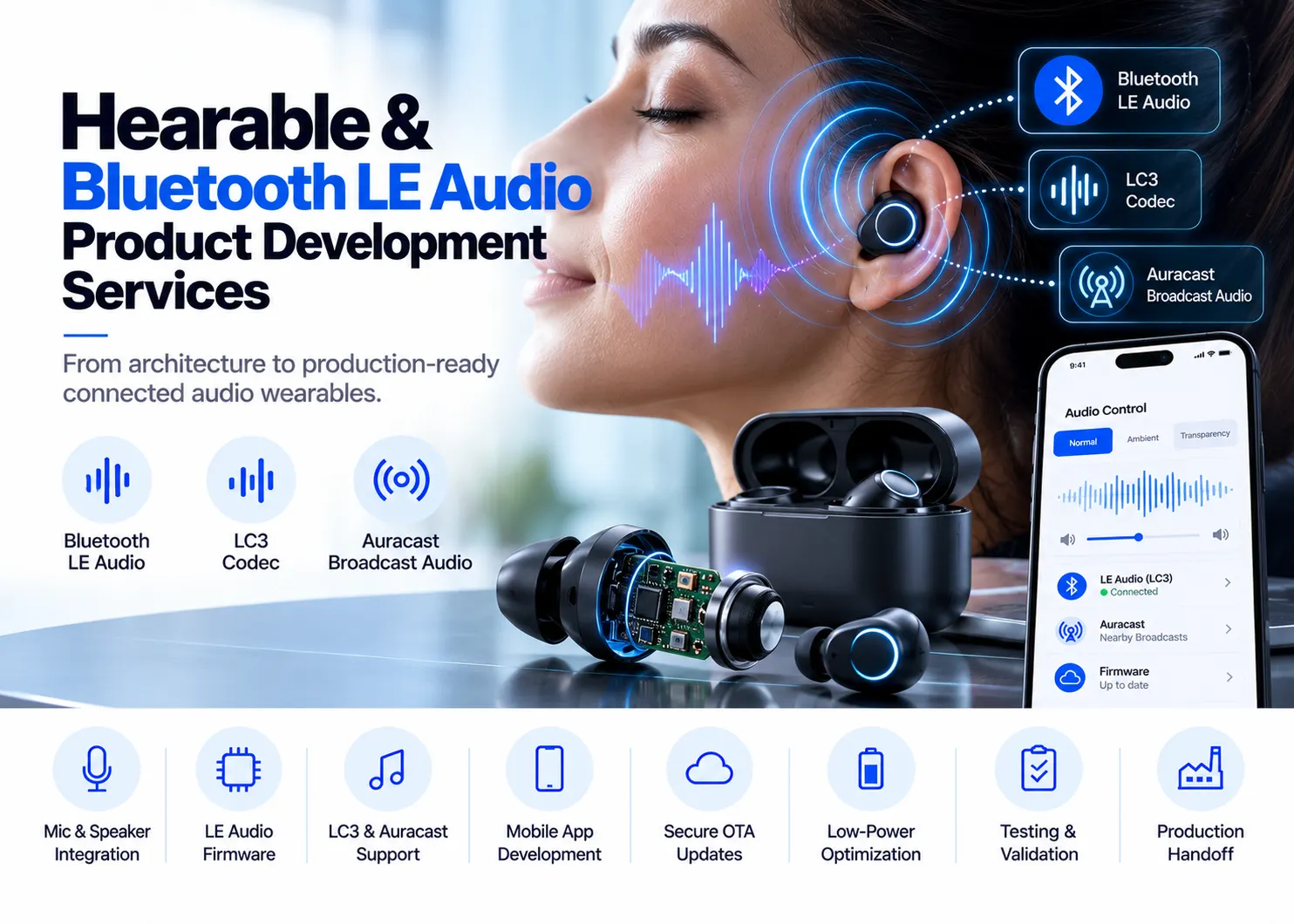
What Is a Hearable or Bluetooth LE Audio Product?
A hearable is a technology that offers listening, communication, sensing, or assisting in one device, such as earbuds, headsets, assistive receivers, or hearing aids.
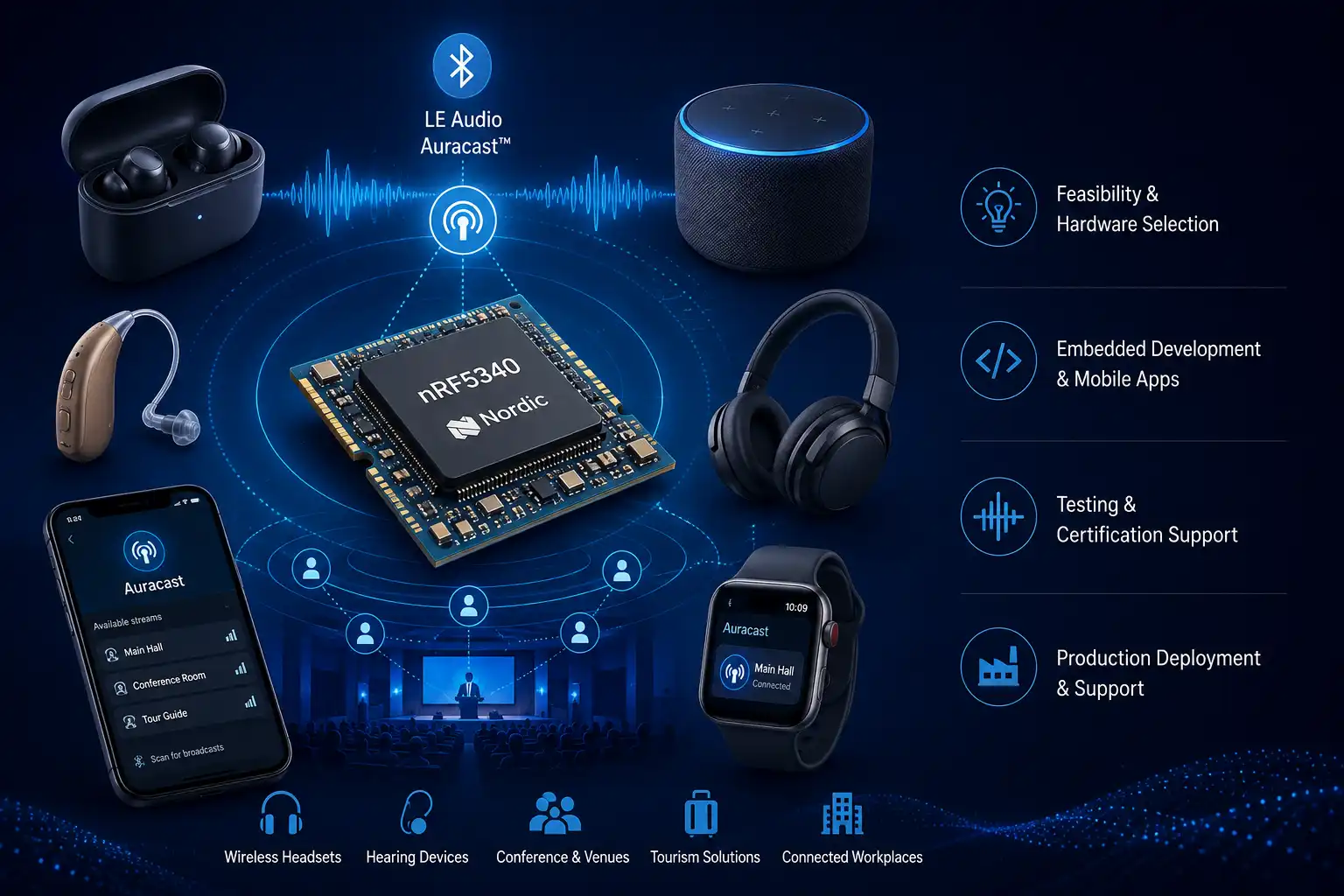
LE Audio enables audio transmission technology via Bluetooth Low Energy. Bluetooth LE Audio includes Isochronous Channels, which provide a time-sensitive delivery, LC3 allowing a flexible codec configuration, and additional profiles enabling discovery, streaming, and control. The Auracast feature allows the transmitter to deliver audio to different compatible receivers.
Not every Bluetooth 5.x device supports LE Audio or Auracast, as compatibility depends upon controller type, stack support availability, available services, role of the device, used operating system and compatibility verification process.
Hearable Products We Develop
The engineering team goes beyond just the work in:
True wireless stereo earbuds and their cases; Mono or stereo headsets for communication and collaboration; Auracast transmitters and receivers. Assistive-listening and hearing-access products; Voice-controlled pendants or badges and translation devices; Sports hearables with motion or biosensors; Industrial communication and audio-alert devices; Prototypes that combine local audio processing and phone/cloud services.
In the case of hearing or medical devices, developing a Bluetooth profile alone does not prove clinical effectiveness, hearing safety or regulatory approval.
The market of use, acoustic limitations, risk classification, and verification of the targeted medical use should be taken into account.
Explore Our Relevant Hearable and Bluetooth LE Audio Case Studies
We have expertise with connected audio devices including Bluetooth LE Audio, Auracast audio systems, wearable audio products, embedded software, and application development.
The above projects are a showcase of our capabilities as makers of connected audio products, covering the entire scope from embedded technology to applications end-user.
Bluetooth LE Audio Architecture and Product Roles
Connected unicast audio
Connected unicast LE Audio allows audio streaming for voice calls as well as playback of audio media. A device may serve as a source, a sink, or both. For true wireless products, left and right devices, synchronizing their operations, have to coordinate presentation delay control, volume setting, mics and call management system.
At the time of preparing the firmware, both roles and profiles have been established. Configurable components include various profiles that ensure audio capabilities and streaming control, volume management, mics, as well as the connected coordinates.
Auracast broadcast audio
Auracast can be used to enable suitable receivers to locate and participate in the broadcasts of public announcements, shared TVs, multilingual broadcasts, assistive listening, among others. The broadcasts can either be public or protected.
The development process includes aspects like metadata, advertisement of broadcast groups and streams, synchronization, subgroup, protected broadcasts codes, and choice of receivers. Testing of the operation of the phone assistant has to be performed on the relevant devices.
LE Audio and Classic Audio coexistence
Some products still require Classic Audio for older peers. Dual-mode support affects memory, qualification, reconnection and UI complexity. A compatibility matrix covers systems, roles, codecs, calls, media, broadcasts and fallbacks.
End-to-End Hearable Product Engineering
Hardware, audio and compact PCB design
Hearables integrate RF technology, sound technology, sensors, charging technology and batteries within a small enclosure. The system on chip, codec or DSP, MEMS microphones, amplifiers, drivers, PMIC and optional sensors are selected. Each design aspect including microphone placement, venting, grounding, clocks and antenna clearance are developed collaboratively.
Our wearable PCB design and prototyping services support rigid-flex layout, antenna tuning, current measurement, design-for-test and enclosure prototypes. Seals, plastics and the wearer affect acoustics and RF, so assembled products require measurement.
LE Audio firmware and LC3 integration
Firmware handles roles, GATT services, capabilities, isochronous streams, LC3, clocks, buffering, controls, bonding, case communication, diagnostics and updates.
Our wearable firmware development team builds modular RTOS architectures and device SDKs.
The Codec parameters are a blend of sample rate, duration timing, numbers of channels, bitrate, latency, audio quality, and airtime. A buffer absorbs timing variance and doesn't add on unnecessary delays. Loss concealment and restoration are employed to avoid clicks, drift, and restarts.
Audio DSP and on-device intelligence
Processing comprises tasks such as controlling volume, performing EQ functions, using beam-forming technology, decreasing noise disturbance, canceling echoes, managing wind interference, detecting voice activity, making sidetone adjustments and setting output limits.
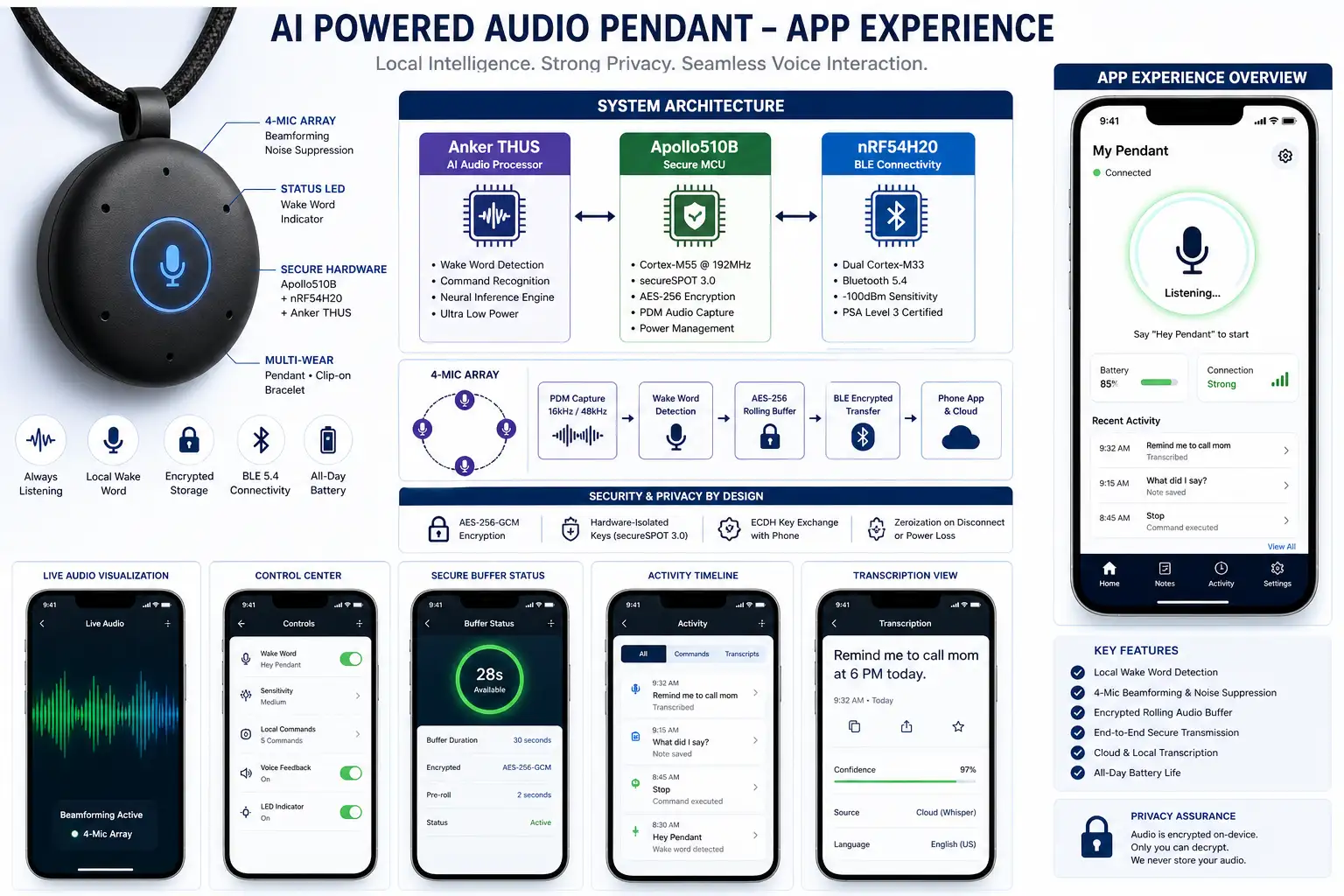
Local AI can identify sounds by detecting wake words or disturbing noise while not transferring the raw audio data constantly.
Algorithms are used only when there are proper reference samples, objective assessment methods and controlled listening conditions. Quiet-room testing is not sufficient for determining the efficiency of a device in noisy environments such as busy streets, windy areas and places with reverberation.
Maximizing battery performance and charging
The working timeframe is determined by the codec in use, processing volume, radio, microphones, load on DSP, volume, battery shelves, and retransmissions. Media, calls, idle time, reception, pairing, and weak link recovery are all measured.
In the case of TWS devices, battery monitoring, protection, charging policy, and connection detection are imperative. The importance of thermal operation and failure processes is crucial and is even of greater importance than the evaluation of battery nominal capacity.
Mobile app, desktop and cloud integration
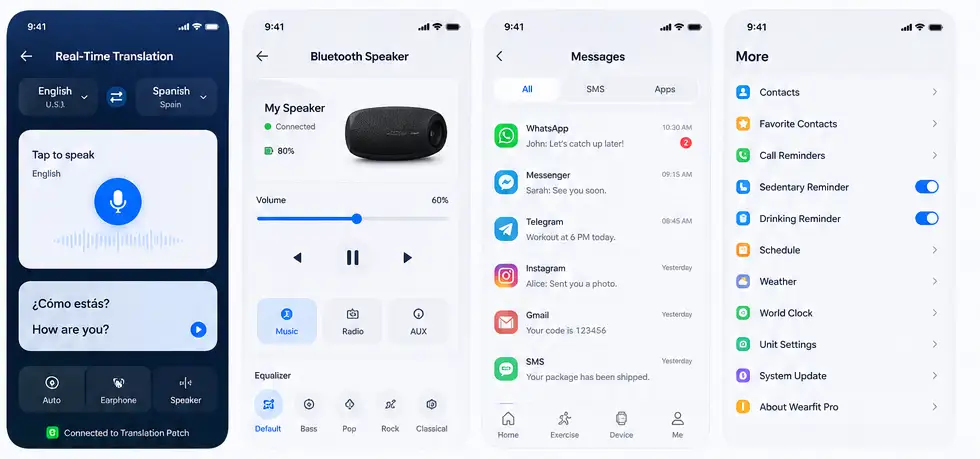
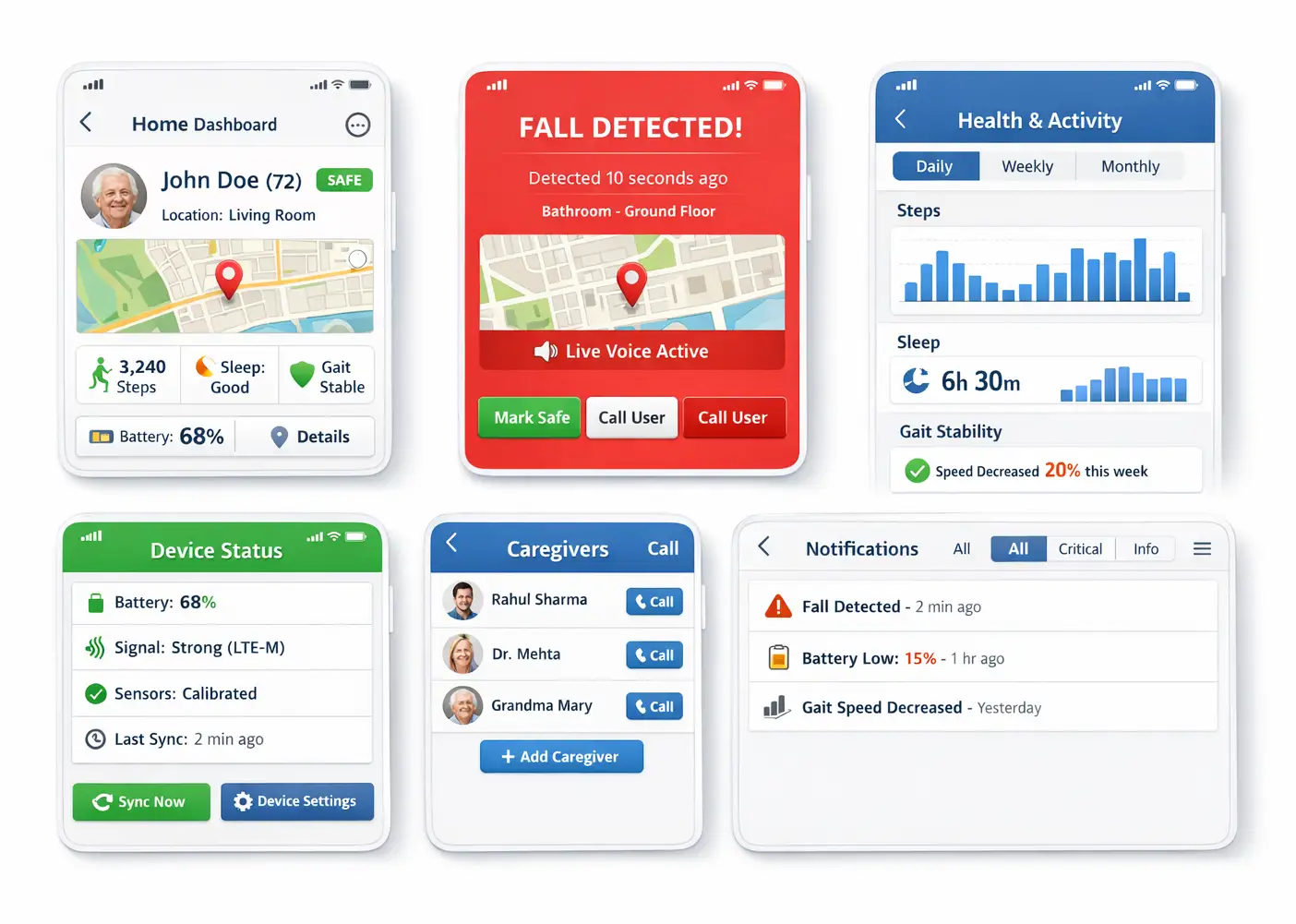
Companion apps handle onboarding, equalizers, controls, fit checks, updates, broadcast assistance and diagnostics.
Our smart wearable app development services cover native and cross-platform applications, Bluetooth and cloud APIs.
Cloud features may include registration, firmware campaigns, consent, diagnostics and opt-in analytics. Audio collection requires an explicit purpose, minimization, retention and deletion policy.
Security, Privacy and OTA Updates
Conversations, commands and identities can be revealed via hearables. We have created authenticated pairing, secure credentials, secure boot, signed firmware, rollback policy and debugging processes.
The voice products are capable of keeping the wake word detection local as well as pass the audio data only when an event happens.
OTA must ensure image verification, survive interruptions and provide controlled rollout. The version policy must prevent incompatible earbuds and cases. Security claims require threat modeling and testing while encryption terminology has no audit.
Testing, Interoperability and Qualification Readiness
Testing covers frequency response, distortion, noise, latency, synchronization, packet loss, microphones, RF, coexistence, current, charging, thermal behavior and durability. Automation exercises pairing, calls, media, broadcasts, recovery and OTA failure.
Interoperability uses a defined matrix of phones, computers, OS releases and peer products. Bluetooth qualification, radio approvals, battery transport and hearing-related standards depend on design and markets. Formal decisions belong to qualification bodies and laboratories.
Develop Your Bluetooth LE Audio Product
Adequate Infosoft has the necessary expertise in transforming the basic concept of hearables into a fully integrated design that involves audio hardware, embedded software, wireless connectivity, applications and product advancements.
To move ahead with the architecture of the proposed product, you must identify the target phones, the role of the product, its acoustic specifications, the environments wherein it can be used, battery specifications as well as its launch markets.
Our Development Process
Discovery
Define users, audio roles, platforms, latency, quality, runtime, privacy and market requirements.
Architecture
Select SoC, codec/DSP, transducers, profiles, topology, battery and test strategy.
Proof of concept
Validate streams, LC3 configuration, acoustics, RF, power and target-device compatibility.
Integrated prototype
Develop electronics, firmware, enclosure, app, charging and update workflows.
EVT and DVT
Verify audio, RF, power, interoperability, security, durability and fault recovery.
Production preparation
Support DFM/DFT, fixtures, programming, provisioning, pilot builds, qualification and release control.
Frequently Asked Questions
Classic Audio normally uses platforms like HFP and A2DP. In contrast, LE Audio utilizes new profile architecture, LE Isochronous Channels, and LC3 technology. It opens the way for broadcast audio implementation via Auracast, so possibly LE Audio should or could even be used as part of dual technology.
No. The controller, host stack, profiles, codec, product configuration and peer platform must support the required features. Version labels alone are insufficient.
We can build and develop the blueprint for broadcasting, receiving devices and assistive technologies using an appropriate platform. After that, we can make sure that the devices get discovered, synchronized and transmit protected audio content. The end product should meet the branding and certification process established by Bluetooth SIG.
LC3 enables useful quality at efficient bitrates, but finished-product runtime depends on the complete system. We measure codec, radio, DSP, microphone, amplifier and idle states on the intended hardware.
LE Audio incorporates a set of mandatory specifications, as well as Auracast technology, which may correspond to specific applications of assistive listening systems. However, working with hearing devices requires implementation of acoustic safety regulations and standards, which have nothing to do with Bluetooth technology.
Editorial Sources