















 Mean Stack Development
 Vue JS Development
 Javascript Development
 React JS Development
 Angular JS Development
 Next JS development
 Java Development
 Python Development
 Django Development
 Cherrypy Development
 C# Development
 ASP.NET Development
 NodeJS Development
 Laravel Development
 CodeIgniter Development
 Zend Development
 Ruby on Rails Development
 CakePHP Development
 PHP Website Development
 Symfony Development
 Drupal Development
 Joomla Development
 Wordpress Development
 .NET Nuke Development
 Kentico
 Umbraco
 .NET MAUI Development
 Xamarin Application Development
 iOS Application Development
 Android Application Development
 Android Wear App Development
 Ionic Development
 iBeacon Application Development
 Universal Windows Platform (UWP)
 Kotlin Application Development
 Swift Application Development
 Flutter Application Development
 PWA Application Development
 Flutter Health Tech & Wearable App Development Company
 React Native Health Tech Wearable App Development
 Offshore Software Development
 Custom Application Development
 Front-End Development
 Full Stack Development
 AI & Machine Learning
 Custom CRM Solutions
 Flask Software Development
 Electron JS Development
 ChatGPT Development
 Telemedicine App Development
 Build Smart Telemedicine Platform
 Beauty & Salon App Solutions
 Hire Workato Experts
 Magento Development
 Magento 2.0 Development
 Magento Enterprise
 Shopping Cart Development
 Prestashop Development
 Shopify Development
 Open Cart Development
 WooCommerce Development
 BigCommerce Development
 NopCommerce Development
 Virto Commerce Development
 AspDotNetStorefront Development
 .NET Application Development
 Microsoft Dynamics CRM
 VB .NET Development
 Sharepoint Migration
 ASP.NET Core Development
 ASP.NET MVC Development
 AJAX Development
 Agile Development
 Microsoft Bot
 Microsoft Blazor
 Microsoft Azure Cognitive
 HTML 5
 UI/UX Design
 Graphic Design
 Adobe Photoshop
 XML Application Development
 Cloud Computing Solutions
 Azure Cloud App Development
 AWS Development
 Google Cloud Development
 Certified AWS IoT Services Developers
 DevOps Consulting & Development
 Kubernetes Consulting & Services
 SQL Programming Development
 MySQL Development
 MongoDB Development
 Big Data
 Robotic Process Automation
 Social Media Marketing
 Search Engine Optimization
 QA Testing
 Software Testing
 Software Security
 Maintenance And Support
 I.T. Consulting Services
 Business Intelligence
 YII Development
 Data Analysis
 Alexa Skills Development
 On Demand App for Mobile repairing services
 On Demand App for Car Service Booking
 On Demand App for Cleaning Services
 On Demand App for Pharmacy
 On Demand Dedicated Developers
 On Demand Lawyer App Development








 Nuki Smart Lock
 Salto Smart Lock
 TTlock Smart Lock
 NFC App Development
 Custom IOT Enabled Smart Lock
 Smart Locker Solutions
 Hospital Smart Lock Systems
 Hotel Smart Lock Systems
 Smart Home & Office Locks
 Smart Access for Schools & Colleges
 Unloc Smart Lock Integration
 Yale & August Smart Lock Integration
 Populife Smart Lock Integration
 Smart Lock Hardware Development
 Dairy IoT Solutions
 Agri IoT & AI Solutions
 Weather & Climate Solutions
 Water & Waste Management Solutions
 RaspBerry Pi
 Firmware Software Development
 ESP 32 Software Development
 Embedded Development
 Internet of Things
 Smart IoT Development
 IoT Sensor Integration & Development Solutions
 Smart IoT System Development for HVAC
 Tuya IoT App Development
 Particle IoT SDK
 IoT Development with AI
 Smart Pet GPS Tracker
 Dairy GPS Tracking Solutions
 GPS Fleet Management Software
 Car Rental & Subscription Solutions
 Car Buy & Sell Marketplace Development
 AI-Powered Car Wash App Development
 PCB Design & Fabrication
 IoT AC Automation
 AI–IoT Painting Solutions
 IoT Wearable Hardware & App Development
 HVAC Automation & AI Control Systems
 Smart Home IoT Engineering
 AI Embedded Systems
 AI Hardware Design Service
 Advanced IoT Hardware & Firmware Development
 Device Driver Development Services
 NXP i.MX RT Firmware & Hardware Services
 Microchip PIC & AVR Development
 Hire IoT Architects
 IoT Cloud & Infrastructure Solutions
 Infineon XMC / AURIX Development Services
 Matter & Thread IoT Services
 Native IoT Mobile App Development (BLE & Wi-Fi)
 Snapdragon IoT Firmware Development
 Renesas RA/RX Firmware Services
 Silicon Labs EFR32 Development Services
 Smart Wearable App Development
 Smart IoT Meters
 Smart Healthcare Wearable App Development
 Health Care Monitoring System
 Fitness Tracking App Development
 Smart Home Automation Apps
 nRF PCB Design
 ESP32 PCB Design
 Embedded Wearables Engineers
 Rental Property Management System
 Building Management System
 Smart Lighting Development
 Infineon Semiconductor Firmware Development Services
 Custom Camera Development: Hardware, Firmware & PCB Prototyping
 Smart Security Camera SDK
 Nordic Semiconductor SDK
 Infineon SDK
 Arduino SDK
 NFC Lock Integration
 Kerong Lock Integration
 IoT & AI Solutions for Manufacturing
 Smart Inventory & Logistics Solution
 Food & Beverage Industry Solutions
 Smart Hospitality Solutions
 Smart Property Management
 Custom Smart Home IOT SDK
 Smart IoT & AI in Healthcare
 AI-Powered Security Solutions
 Smart Home Safety & AI
 Veterinary Clinic Management (AI)
 Pet Care System (AI & IoT)
 Pet Training & Adoption (AI)
 Healthcare IoT Development
 Event Management Software
 Money Remittance App
 Money Lending App Development
 Utility and Bill Payment App
 IoT Mobile App Development (Flutter & React Native)
 AI & IoT Retail Solutions
 Smart EV App Development
 Smart Solar IoT & AI Solutions
 IoT-Based Energy Systems
 Smart Energy & Utilities Solutions
 6G Solutions
 IoT Security Solutions
 AI-Powered Lottery App Development
 AI-Sports Fitness Club Management
 Travel
 Real Estate
 Medical & Healthcare
 e-Learning
 Consumer Products
 Finance
 Automobile
 Media & Entertainment
 Billing Software
 Enterprise Resource Planning (ERP)
 Augumented & Virtual Reality
 Point of Sale(POS) Development
 Learning Management System
 EV Charging Solutions
 About Us
 Partners & Certifications
 Quality Assurance
 Our Clients & Testimonials
 Development Process
 Our Products
 Social Responsibility
 Work Ethics
 Vision & Mission
 Awards
 Live Project Demos
 Contact Us
 Case Studies
 Portfolio
 Blog
Blog
Ambiq Apollo4 Blue Fitness Watch Development with Activity Tracking and Custom Display UI
A successful fitness watch must feel effortless to wear, read and use. Behind that experience is a demanding embedded engineering challenge: accurate motion sensing, a responsive custom display interface, Bluetooth Low Energy (BLE) synchronization, battery-aware firmware and reliable production hardware.
Adequate Infosoft develops custom fitness watches and wearable devices using the Ambiq Apollo4 Blue platform for brands, startups and product teams that need a polished, power-efficient connected product.
Our work spans wearable PCB design support, embedded firmware, motion algorithms, display drivers, watch-face UI, BLE connectivity, companion-app integration, cloud APIs and validation.
Apollo4 Blue is appropriately ideal for graphics-heavy wearable devices. The device integrates an Arm Cortex-M4 processor with low-energy Bluetooth LE technology, low-power RAM and advanced display/graphic facilities required in compact battery-driven devices.
It is capable of high-resolution displays of up to 454 × 454 pixels, layered graphics, and frame buffer compression; therefore, a smartwatch can provide a top-notch visual experience without treating any screen refresh as a power-intensive process.
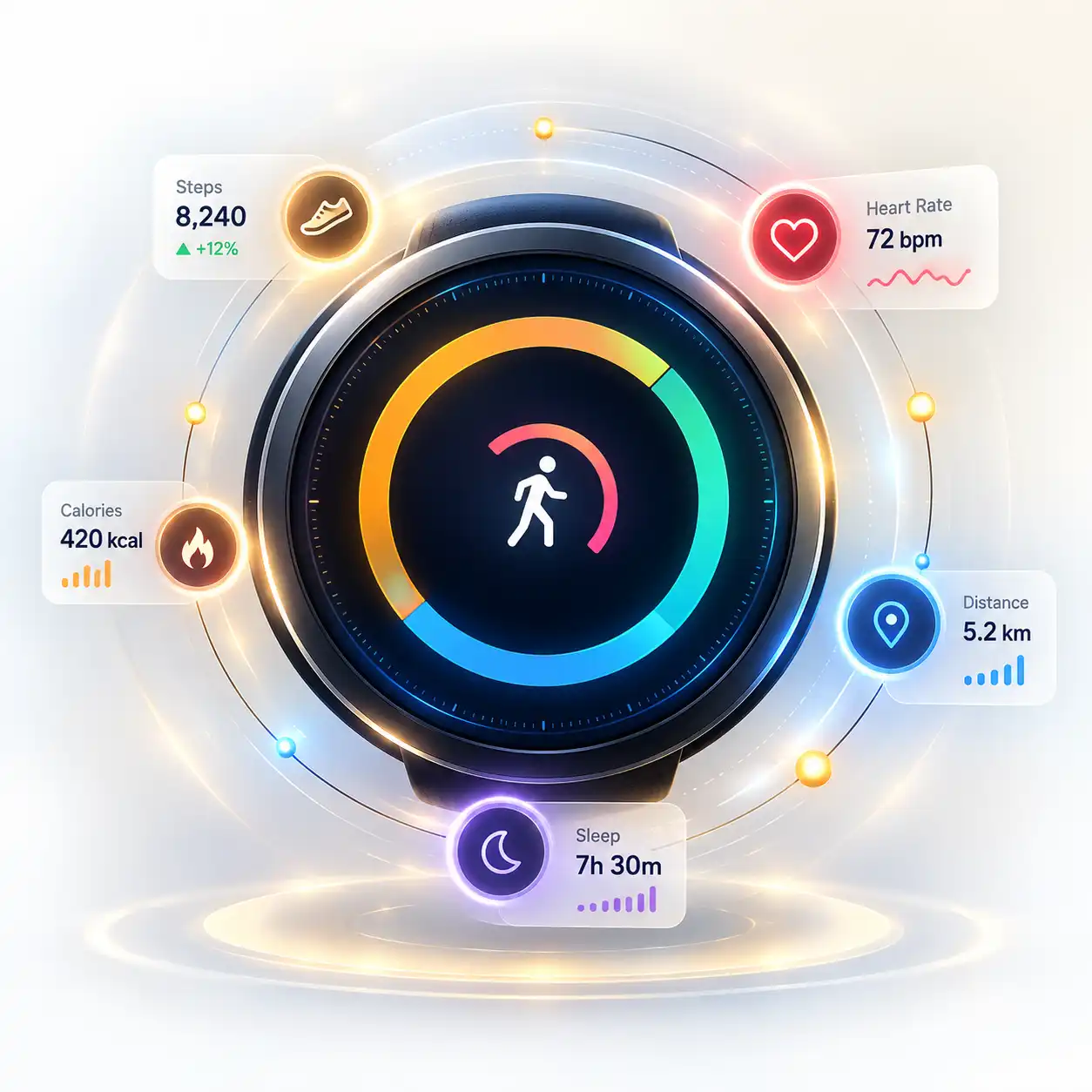
Ambiq Apollo4 Blue Fitness Watch: Project Overview
The development of a unique wearable device that aids individuals in keeping track of their daily activities, tracking their progress towards movement, determining workout status, and receiving alert messages is described in this fitness watch case study.
The product concept included:
- Wrist-worn fitness watch with a round colour display
- 3-axis or 6-axis IMU-based movement sensing
- Step, active-time and activity-summary tracking
- Custom watch faces and configurable widgets
- Gesture-based wake-up and screen navigation
- BLE synchronization with an Android and iOS companion application
- Local storage for activity records when the phone is unavailable
- Battery-conscious firmware architecture
- Device settings, firmware-update readiness and diagnostic logging
The aim was not simply to put a step counter into a watch. The aim was to create a coherent wearable experience in which sensors, UI, wireless communication and power management behaved as one product.
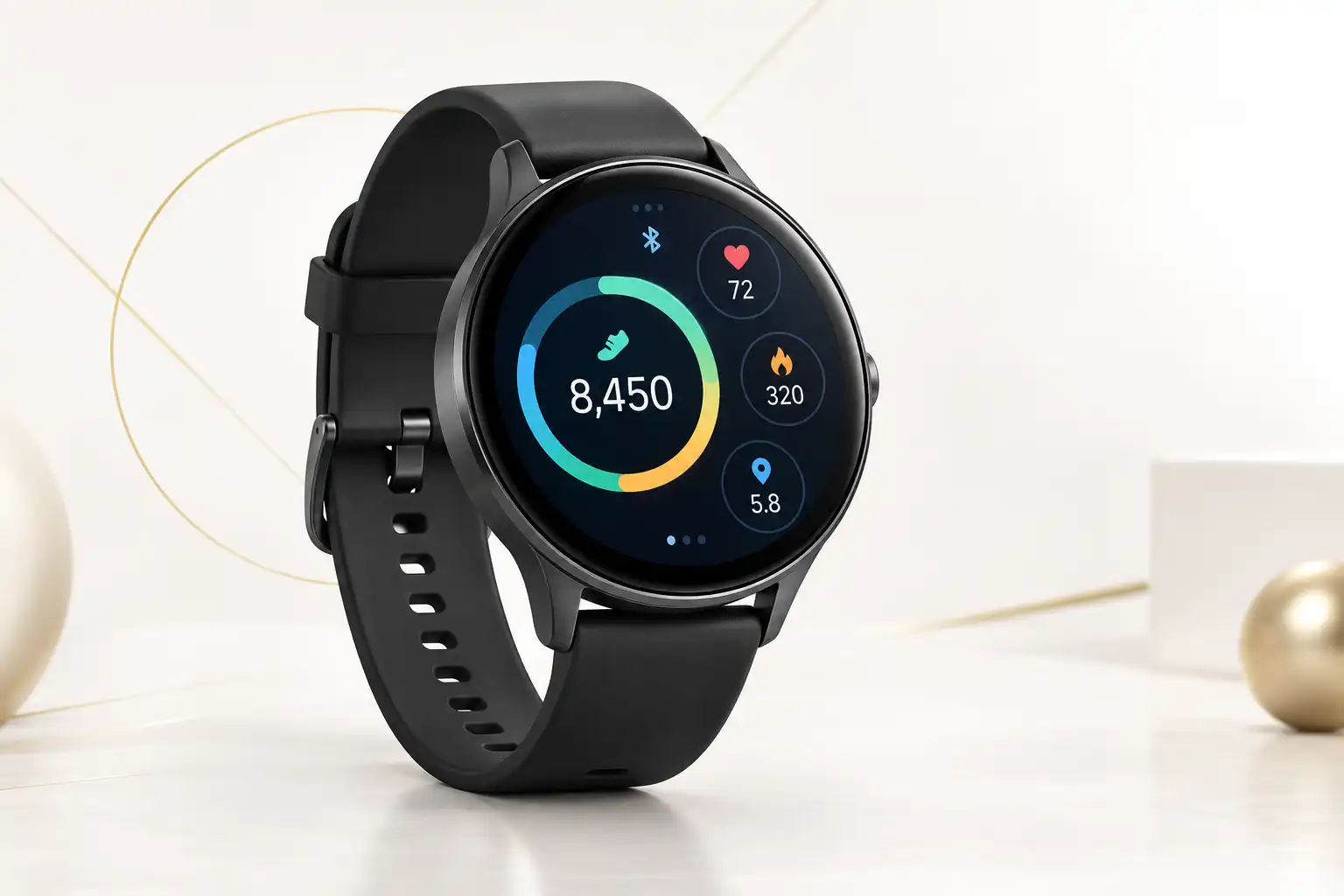
Fitness wristwatches operate in an unpredictable environment, which is far different from the controlled laboratory. A user can walk, speak, type, lift, drive or exercise while the wrist is constantly moving.
Motion data is usually noisy and orientation is constantly changing, moreover, the design proposals of a wrist watch that look great are often turning to slow motion and/or intensive use of the battery if the firmware is inadequately designed.
The Apollo4 Blue-based design needed to balance four competing priorities:
- Accurate and useful activity information – Users expect the watch to avoid obvious false steps while still recognising real movement.
- Fast and attractive display interaction – The watch should wake quickly, animate smoothly where appropriate and keep text readable in different usage conditions.
- Reliable mobile synchronization – Activity data should sync predictably without forcing the user to reconnect or reopen the app repeatedly.
- Long practical battery life – The device must spend most of its time in low-power states while remaining responsive to motion, touch or button events.
Our approach was to define these as system-level requirements from the beginning, rather than treating the sensor, UI and BLE implementation as separate tasks.
The wearable firmware was organised in independent but coordinated services: sensor acquisition, activity processing, display/UI, BLE communication, persistent storage, battery monitoring and device power control.
The IMU has a low-power serial interface and is configured to work with interrupts. The device does not keep polling under all conditions, in contrast to the need to wake up the processor when some activity is detected.
This design helps minimise the amount of unnecessary work done by the processor, which is important for gears that operate for days without being recharged.
The Apollo4 Blue firmware used a state-based power model. In an idle condition, the device retained only the functions required for timekeeping, movement wake-up, button or touch wake-up and BLE scheduling.
When the user raised their wrist or opened a screen, the firmware activated the display pipeline and required peripherals. After a timeout, it returned the system to an appropriate low-power state.
In the case of a commercial product, this architecture is more useful than giving a single value of the battery lifespan.
In reality, the battery performance depends on display brightness, on-screen time, BLE usage, sampling rate, watch face complexity, battery capability, and usage.
The activity-monitoring feature converted initial data received from the accelerometer and gyroscope into real-time information for the user. Before moving to conversion, the software eliminated unnecessary elements; it removed audio noise and gathered information about movements of relevance to walking and exercising.
A typical activity pipeline included:
- IMU initialization and calibration checks
- Configurable sampling and interrupt thresholds
- Motion filtering and gravity compensation
- Step-candidate detection
- Cadence and activity-window analysis
- False-positive reduction for vehicle movement or random hand motion
- Daily counter rollover and local record storage
- BLE-ready activity summaries for the companion app
Step detection was not implemented as a simplistic “one peak equals one step” rule. We used timing windows, amplitude thresholds, direction changes and cadence checks to help distinguish repetitive walking motion from isolated wrist movement. Thresholds were exposed as configuration values so that the algorithm could be tuned using field data from real usage scenarios.
The gadget preserved periodic recaps and carefully chosen time-stamped activity logs on the device. As a result, a user could still track their movements even when the device's phone was unavailable.
During the next secure Bluetooth Low Energy connection, the companion app asked the device to provide only the records which were not yet synchronized. The app confirmed that the process was completed successfully and allowed the device to denote the records as transferred. The described processes help to avoid any cases of mislaid information.
The visual aspect was significant for the quality perception of this watch. Instead of coding each individual screen, we made a reusable user interface framework. The latter took care of the screen transitions, positioning widgets, fonts, icons, and themes.
Core screens included:
- Customisable digital and analogue watch faces
- Daily step count, distance estimate and active minutes
- Activity progress rings or bar indicators
- Workout summary screens
- Battery and Bluetooth connection status
- Notification preview and alert indicators
- Settings for brightness, units, screen timeout and vibration behaviour
Apollo4 Blue's graphics ability results in a highly effective watch user interface due to its support for layer composition and fast functions. However, a good wearable UI cannot simply be based on updating every pixel on each clock.
Instead, we took advantage of partial updates wherever we could. Also, we cached static resources and updated only an area that changed, e.g. numbers of time, step count or progress indicator.
The UI was also designed for wrist-level reading. Important metrics used strong visual hierarchy, large numerals and clear status colours.
We avoided putting too much information on a small screen. Product teams could choose brand colours, iconography, typography and watch-face styles without changing the underlying activity or BLE firmware.
The watch communicated with a companion mobile application using Bluetooth Low Energy. The BLE design defined a clear GATT service structure for device information, live activity status, historical activity records, watch settings and firmware version information.
A connection flow typically included device discovery, pairing or bonded-device recognition, secure data exchange, time synchronization and incremental activity upload.
To improve reliability, activity transfer was designed as a resumable process rather than a single large payload. The mobile application could request records in pages, confirm successful receipt and retry safely after interruption.
The companion application could provide:
- Device onboarding and pairing
- Current activity dashboard
- Daily, weekly and monthly history
- Watch-face and settings configuration
- Firmware version visibility
- Notification preferences
- Battery and connection status
- Optional cloud account synchronization
Privacy should be considered early. Activity data is personal data in many contexts, even when a watch is not marketed as a medical device. Our development process defines what data remains on the watch, what is transferred to the phone, what is sent to cloud services and how a user can remove their device or account data.
The validation process for wearable devices entails much more than simply determining if a screen works and if a Bluetooth connection has been established. Our testing takes into consideration issues like motion conditions, device reconnection, low battery life and repeated charging cycles, as well as potential dry runs and continuation periods.
For this project type, our validation plan includes:
- Sensor calibration and step-count comparison against defined test walks
- False-step testing during desk work, driving and casual wrist movement
- Display stress testing for brightness, refresh and long-running screens
- BLE range, reconnection and interrupted-sync testing
- Local storage rollover and corrupted-record recovery checks
- Battery current measurement in sleep, active UI and synchronization modes
- Firmware reset, watchdog and error-recovery validation
- Production test-point and device-diagnostics planning
We document test conditions and limitations clearly. Consumer fitness metrics can help users understand trends, but they should not be represented as medical measurements unless the product has been developed, verified and regulated for that intended use.
Our Ambiq Apollo4 Blue Fitness Watch Development Services
Adequate Infosoft offers end-to-end Apollo4 Blue wearable development services for fitness bands, sports watches, child trackers, smart rings, health-oriented consumer wearables and custom connected devices.
Wearable Firmware Development
We build modular embedded firmware for Apollo4 Blue devices, including board-support packages, peripheral drivers, RTOS or event-driven architecture, low-power state handling, watchdog recovery, persistent storage and production diagnostics.
Our engineers work with display, touch, buttons, IMUs, haptics, battery gauges, charging circuits and external sensor modules.
Combining Motion, fitness and sensors
Our team works on integrating accelerometers, gyroscopes, magnetometers, temperature sensors, PPG modules and more in the field of wearable sensors.
We create activity logics, step counting algorithms, gesture identification, event recognition and customizable sensor sampling profiles.
Where algorithms rely on user actions or device placement, we aim at calibration and validation based on real testing datasets not just by using plain reference code.
Custom Watch UI and Display Driver Services
We develop display bring-up, MIPI DSI or serial-display integration, graphics pipelines, watch faces, widgets, menus, fonts, animations and low-power update strategies. We can work from Figma designs or support the UI-definition process with practical constraints such as display size, colour depth, memory budget and sunlight readability.
BLE, Mobile App and Cloud Connectivity
We develop BLE GATT services, onboarding flows, secure pairing, data synchronization, mobile APIs and cloud integrations. Our mobile and backend capability helps product teams avoid the common gap between “the watch connects in a demo” and “the complete product works reliably for thousands of users.”
Engineering for Products and Sustainable Assistance
What we offer includes conducting PCB evaluations, selecting components, prototyping firmware, providing EVT/DVT assistance, setting the manufacturing testing criteria, designing OTA updates, technical manuals and support with the programming.
We consider traceable specifications, the updated program and measurable tests at the end accepting the product.
Relevant Adequate Infosoft Wearable Experience
Our wearable portfolio includes an ESP32-S3 adhesive PVDF biosensor prototype that combined flexible sensing material, analogue signal conditioning, a 24-bit ADC, BLE connectivity and reusable electronics architecture.
This work has significance for the technology of fitness watches as it illustrates the necessity of interdisciplinary thinking where electronics, sensors, processing, and connectivity must work hand-in-hand.
We also apply experience from Nordic nRF52840 temperature-sensing wearables, where firmware timing, multiple I²C sensor paths, BLE transfer and low-power operation had to be designed as a complete system.
The MCU and sensor stack may differ from Apollo4 Blue, but the product-engineering discipline remains the same: measure carefully, validate with realistic use cases, preserve battery life and expose clear information to the user.
An awesome Ambiq Apollo4 Blue sports device enables it to be a specialized product instead of a simple activity tracker. With an appropriate firmware system, customized UI and dependable app-syncing capabilities, it may offer a brand a unique activity pattern, identity and a roadmap for future functions.
View Wearable Biosensor Case Study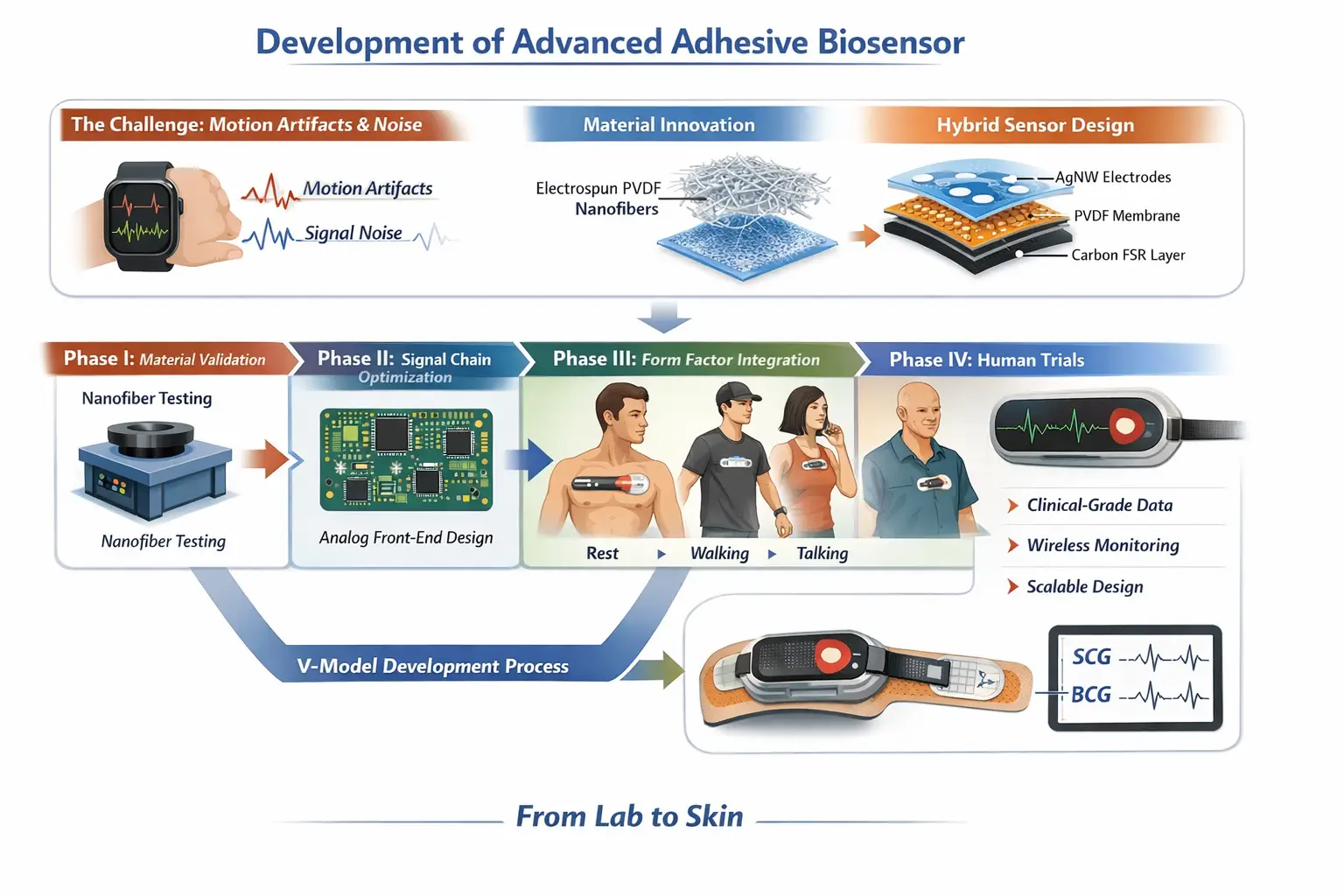
Editorial Resources
Ambiq Micro – Apollo4 Blue SoC
Ambiq Micro – Apollo4 Blue SoC Datasheet
Bluetooth SIG – Bluetooth Low Energy Technology
Adequate Infosoft – ESP32-S3 Adhesive PVDF Biosensor Wearable Case Study