


 Mean Stack Development
 Vue JS Development
 Javascript Development
 React JS Development
 Angular JS Development
 Next JS development
 Java Development
 Python Development
 Django Development
 Cherrypy Development
 C# Development
 ASP.NET Development
 NodeJS Development
 Laravel Development
 CodeIgniter Development
 Zend Development
 Ruby on Rails Development
 CakePHP Development
 PHP Website Development
 Symfony Development
 Drupal Development
 Joomla Development
 Wordpress Development
 .NET Nuke Development
 Kentico
 Umbraco
 .NET MAUI Development
 Xamarin Application Development
 iOS Application Development
 Android Application Development
 Android Wear App Development
 Ionic Development
 iBeacon Application Development
 Universal Windows Platform (UWP)
 Kotlin Application Development
 Swift Application Development
 Flutter Application Development
 PWA Application Development
 Flutter Health Tech & Wearable App Development Company
 React Native Health Tech Wearable App Development
 Offshore Software Development
 Custom Application Development
 Front-End Development
 Full Stack Development
 AI & Machine Learning
 Custom CRM Solutions
 Flask Software Development
 Electron JS Development
 ChatGPT Development
 Veterinary Telemedicine App Development
 Build Smart Telemedicine Platform
 Beauty & Salon App Solutions
 Hire Workato Experts
 Magento Development
 Magento 2.0 Development
 Magento Enterprise
 Shopping Cart Development
 Prestashop Development
 Shopify Development
 Open Cart Development
 WooCommerce Development
 BigCommerce Development
 NopCommerce Development
 Virto Commerce Development
 AspDotNetStorefront Development
 .NET Application Development
 Microsoft Dynamics CRM
 VB .NET Development
 Sharepoint Migration
 ASP.NET Core Development
 ASP.NET MVC Development
 AJAX Development
 Agile Development
 Microsoft Bot
 Microsoft Blazor
 Microsoft Azure Cognitive
 HTML 5
 UI/UX Design
 Graphic Design
 Adobe Photoshop
 XML Application Development
 Cloud Computing Solutions
 Azure Cloud App Development
 AWS Development
 Google Cloud Development
 Certified AWS IoT Services Developers
 DevOps Consulting & Development
 Kubernetes Consulting & Services
 SQL Programming Development
 MySQL Development
 MongoDB Development
 Big Data
 Robotic Process Automation
 Social Media Marketing
 Search Engine Optimization
 QA Testing
 Software Testing
 Software Security
 Maintenance And Support
 I.T. Consulting Services
 Business Intelligence
 YII Development
 Data Analysis
 Alexa Skills Development
 On Demand App for Mobile repairing services
 On Demand App for Car Service Booking
 On Demand App for Cleaning Services
 On Demand App for Pharmacy
 On Demand Dedicated Developers
 On Demand Lawyer App Development








 Nuki Smart Lock
 Salto Smart Lock
 TTlock Smart Lock
 NFC App Development
 Custom IOT Enabled Smart Lock
 Smart Locker Solutions
 Hospital Smart Lock Systems
 Hotel Smart Lock Systems
 Smart Home & Office Locks
 Smart Access for Schools & Colleges
 Unloc Smart Lock Integration
 Yale & August Smart Lock Integration
 Populife Smart Lock Integration
 Smart Lock Hardware Development
 Dairy IoT Solutions
 Agri IoT & AI Solutions
 Weather & Climate Solutions
 Water & Waste Management Solutions
 RaspBerry Pi
 Firmware Software Development
 ESP 32 Software Development
 Embedded Development
 Internet of Things
 Smart IoT Development
 IoT Sensor Integration & Development Solutions
 Smart IoT System Development for HVAC
 Tuya IoT App Development
 Particle IoT SDK
 IoT Development with AI
 Smart Pet GPS Tracker
 Dairy GPS Tracking Solutions
 GPS Fleet Management Software
 Car Rental & Subscription Solutions
 Car Buy & Sell Marketplace Development
 AI-Powered Car Wash App Development
 PCB Design & Fabrication
 IoT AC Automation
 AI–IoT Painting Solutions
 IoT Wearable Hardware & App Development
 HVAC Automation & AI Control Systems
 Smart Home IoT Engineering
 AI Embedded Systems
 AI Hardware Design Service
 Advanced IoT Hardware & Firmware Development
 Device Driver Development Services
 NXP i.MX RT Firmware & Hardware Services
 Microchip PIC & AVR Development
 Hire IoT Architects
 IoT Cloud & Infrastructure Solutions
 Infineon XMC / AURIX Development Services
 Matter & Thread IoT Services
 Native IoT Mobile App Development (BLE & Wi-Fi)
 Snapdragon IoT Firmware Development
 Renesas RA/RX Firmware Services
 Silicon Labs EFR32 Development Services
 Smart Wearable App Development
 Smart IoT Meters
 Smart Healthcare Wearable App Development
 Health Care Monitoring System
 Fitness Tracking App Development
 Smart Home Automation Apps
 nRF PCB Design
 ESP32 PCB Design
 Embedded Wearables Engineers
 Rental Property Management System
 Building Management System
 Smart Lighting Development
 Infineon Semiconductor Firmware Development Services
 Custom Camera Development: Hardware, Firmware & PCB Prototyping
 Smart Security Camera SDK
 Nordic Semiconductor SDK
 Infineon SDK
 Arduino SDK
 NFC Lock Integration
 Kerong Lock Integration
 IoT & AI Solutions for Manufacturing
 Smart Inventory & Logistics Solution
 Food & Beverage Industry Solutions
 Smart Hospitality Solutions
 Smart Property Management
 Custom Smart Home IOT SDK
 Smart IoT & AI in Healthcare
 AI-Powered Security Solutions
 Smart Home Safety & AI
 Veterinary Clinic Management (AI)
 Pet Care System (AI & IoT)
 Pet Training & Adoption (AI)
 Healthcare IoT Development
 Event Management Software
 Money Remittance App
 Money Lending App Development
 Utility and Bill Payment App
 IoT Mobile App Development (Flutter & React Native)
 AI & IoT Retail Solutions
 Smart EV App Development
 Smart Solar IoT & AI Solutions
 IoT-Based Energy Systems
 Smart Energy & Utilities Solutions
 6G Solutions
 IoT Security Solutions
 AI-Powered Lottery App Development
 AI-Sports Fitness Club Management
 Travel
 Real Estate
 Medical & Healthcare
 e-Learning
 Consumer Products
 Finance
 Automobile
 Media & Entertainment
 Billing Software
 Enterprise Resource Planning (ERP)
 Augumented & Virtual Reality
 Point of Sale(POS) Development
 Learning Management System
 EV Charging Solutions
 About Us
 Partners & Certifications
 Quality Assurance
 Our Clients & Testimonials
 Development Process
 Our Products
 Social Responsibility
 Work Ethics
 Vision & Mission
 Awards
 Live Project Demos
 Contact Us
 Case Studies
 Portfolio
 Blog
IoT Kiosk Development, Monitoring & Support Services
Adequate Infosoft can help in IoT kiosk design and deployment, monitoring and integration for companies who want to create intelligent, interactive, and scalable self-service kiosk systems.
We can build a kiosk system that will integrate touchscreen interface, hardware, IoT technology, payment systems, sensors, camera, printer, scanner, cloud platforms, and back end application into one single system.
Kiosks are not only used for providing information or input. IoT kiosks have been made possible with the use of Internet of Things technology that makes them capable of conducting transactions, connecting to cloud platforms, monitoring their hardware status and collecting operational data.
Our team provides solutions for kiosk manufacturing using various technologies such as IoT development, embedded systems, firmware, mobile and web development, cloud computing, API integration, hardware integration, and real-time monitoring.
Let's Work Together!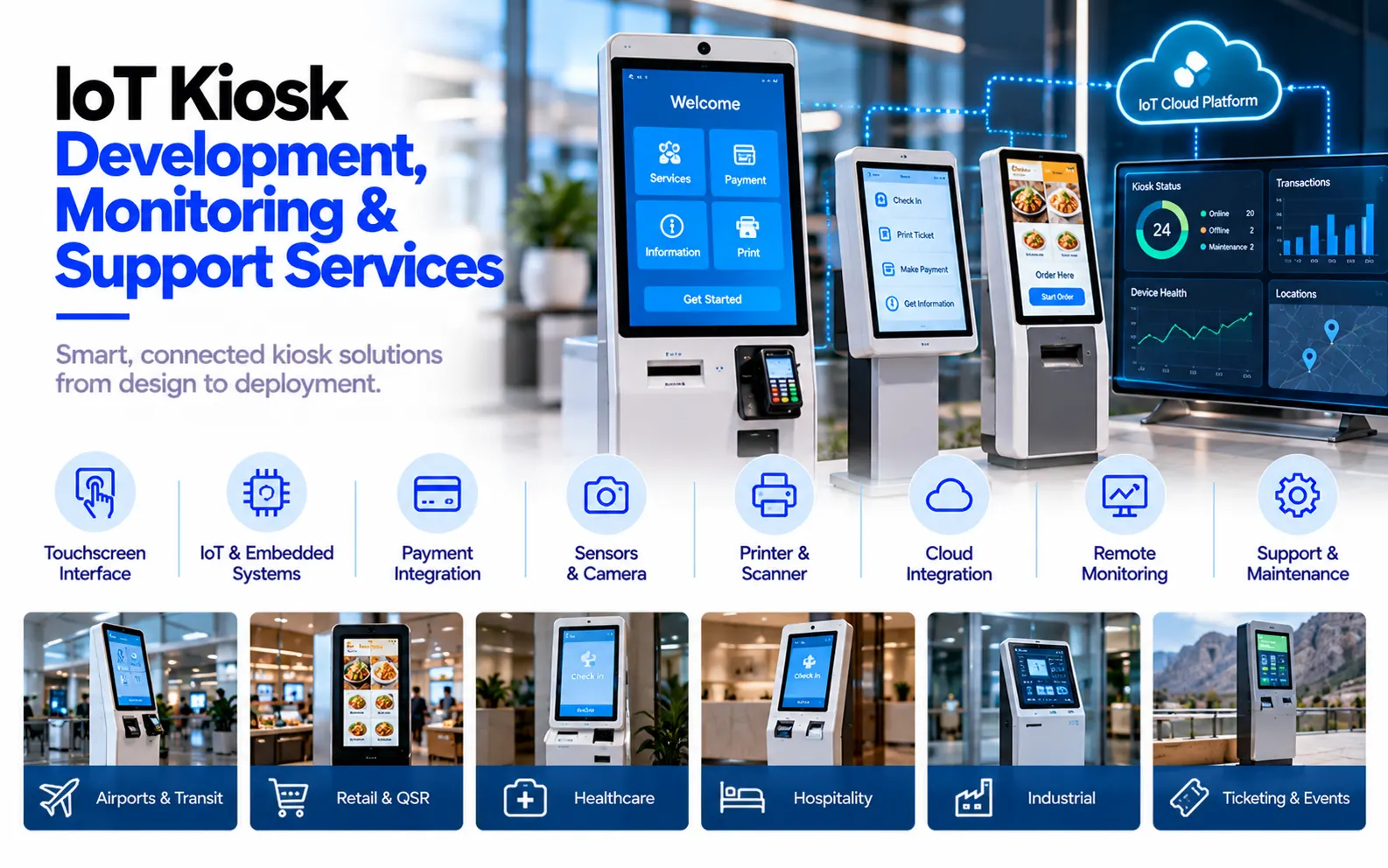
Custom Self-Service Kiosk Development
Self-service solutions make it possible for companies to provide services to customers more efficiently and people-oriented. We produce custom-made kiosk software that ensures the following business processes:
Choose the product
Make an order
Book an appointment
Customer registration
Check-in and check-out
Buy tickets
Process payments
Manage queues
Access information
Print documents
Scan codes
Scan barcodes
The kiosk UI can be customized to meet the needs of the company, user experience laws, accessibility rules, and hardware opportunities.
Our Work: IoT-Enabled Remote Coffee Kiosk Development
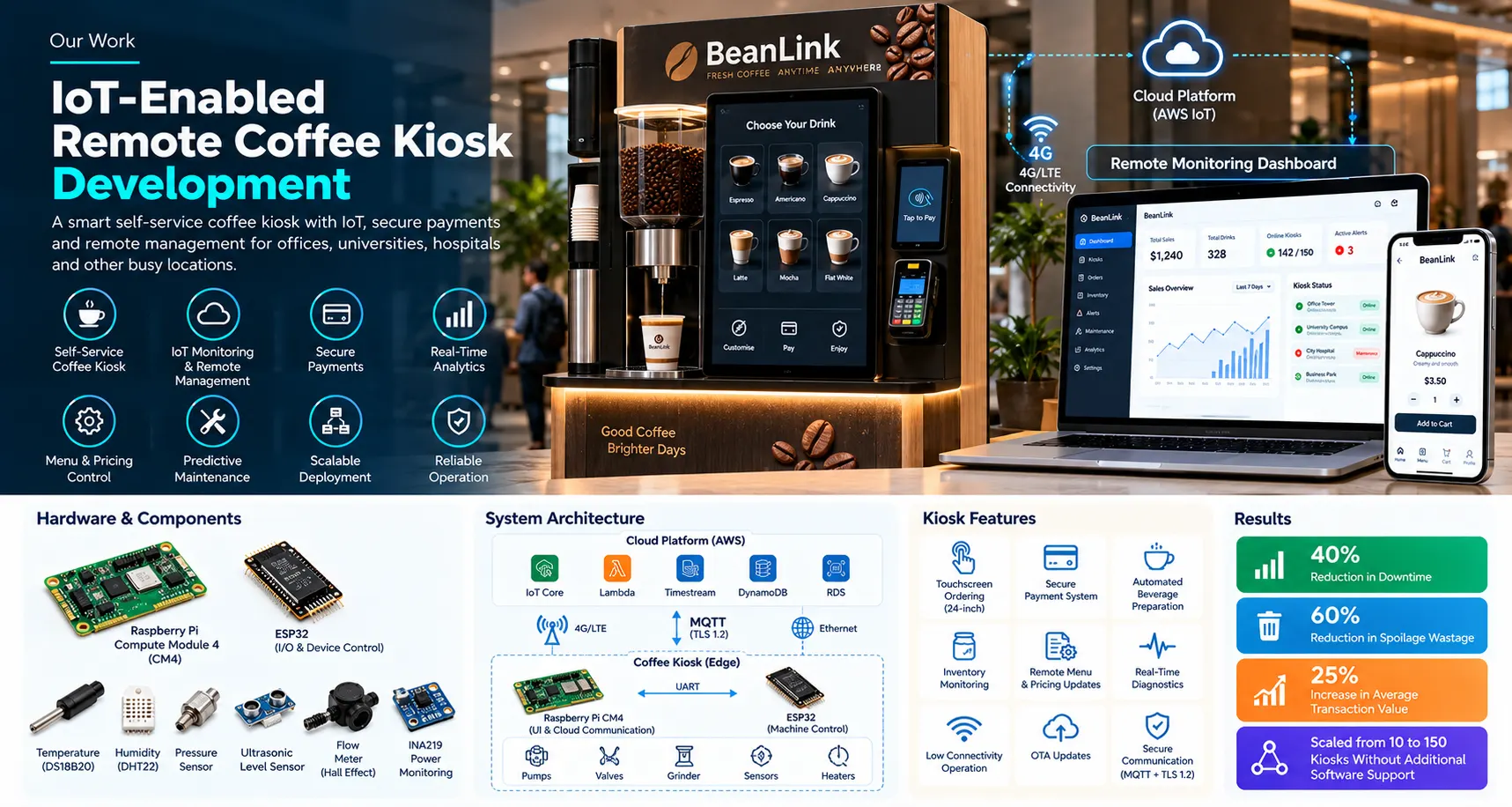
The Brew & Bean BeanLink Self-Service Coffee Kiosk
In order to facilitate expansion into offices, universities, hospitals and other such busy locations, the growing Brew & Bean coffee company has introduced the self-service coffee machine, 'BeanLink'.
It has been developed by Adequate Infosoft and is a state-of-the-art IoT-based self-service coffee kiosk that delivers quality barista coffee, security of payment, operational monitoring and central management without the need of an on-site attendant.
The Challenge
The client required a kiosk which could provide consistently made espresso drinks while keeping track of all the elements, including coffee beans, milk, water, waste products, machine, sales, and consumer preferences on an ongoing basis. The requirement also included functioning efficiently even when there was a poor connectivity environment, and being able to remotely change the menu and prices.
How We Built the Solution
The layered edge-to-cloud architecture was used to create the system. At the kiosk level, a Raspberry Pi Compute Module 4 (CM4) running on a custom-designed carrier board provided touchscreen functionality, connectivity, and cloud communication. The ESP32 was responsible for timing and controlling the operation of pumps, valves, grinders, and other mechanical parts. Commands between the Raspberry Pi and ESP32 were sent using low-latency UART serial communication.
The kiosk used a 24-inch projected-capacitive touchscreen for ordering and a dedicated payment display. Its sensor suite included DS18B20 temperature probes, DHT22 humidity sensor, pressure transducers, ultrasonic level sensors, Hall-effect flow meters, INA219 power monitoring, and magnetic door/tamper sensors. These sensors delivered a complete view of drink quality, inventory, energy consumption, and equipment health.
Cloud Monitoring, Remote Management and Support
In terms of secure communications, the kiosk utilized 4G/LTE as the main WAN connection method, along with Ethernet in the case of wired locations. For data transmission, MQTT on top of TLS 1.2 protocol was employed, including individual device identification and X.509 certificates. Telemetry was updated every five seconds, while events like low milk, pump failures, or order completion were broadcasted to MQTT topics specifically designed for that purpose.
For the cloud part of the project, the following services from AWS were leveraged: AWS IoT Core, AWS IoT Device Shadow, AWS Lambda, Amazon Timestream, Amazon DynamoDB, Amazon RDS for PostgreSQL, and Amazon API Gateway. A React operations dashboard provided the customer with live insights into kiosk status, daily sales, inventory level, alerts, and maintenance needs. The edge application was written in Python and Qt, while ESP32 firmware in C++.
Results
This solution allowed for remote diagnostics, OTA configuration changes, predictive maintenance, and fleet management. Based on pump current and machine telemetry analysis, potential faults could be predicted up to 48 hours in advance.
This implementation brought 40% reduction in downtime, 60% reduction in spoilage wastage, 25% increase in average transaction value, and scaling of kiosk number from 10 to 150 without additional cost in terms of software support.
Case study: remote-coffee-service-iot-smart-kiosk-development
Proven IoT Kiosk, Monitoring and Long-Term Support Experience
Our competence in IoT Kiosk design, remote monitoring, and post-launch assistance can be seen from projects that integrate embedded systems hardware, application software, cloud communication, and management.
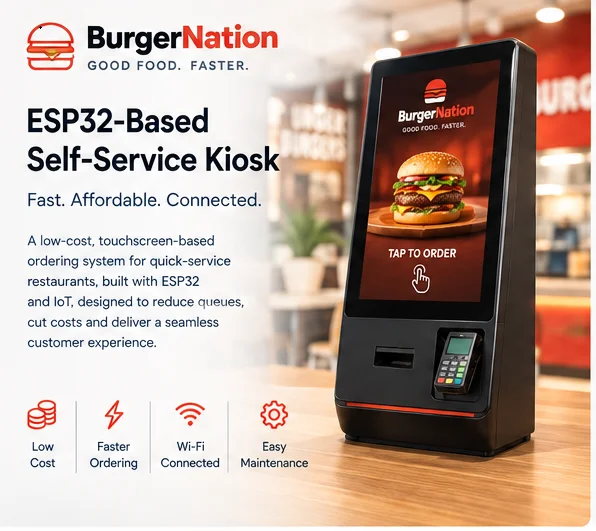
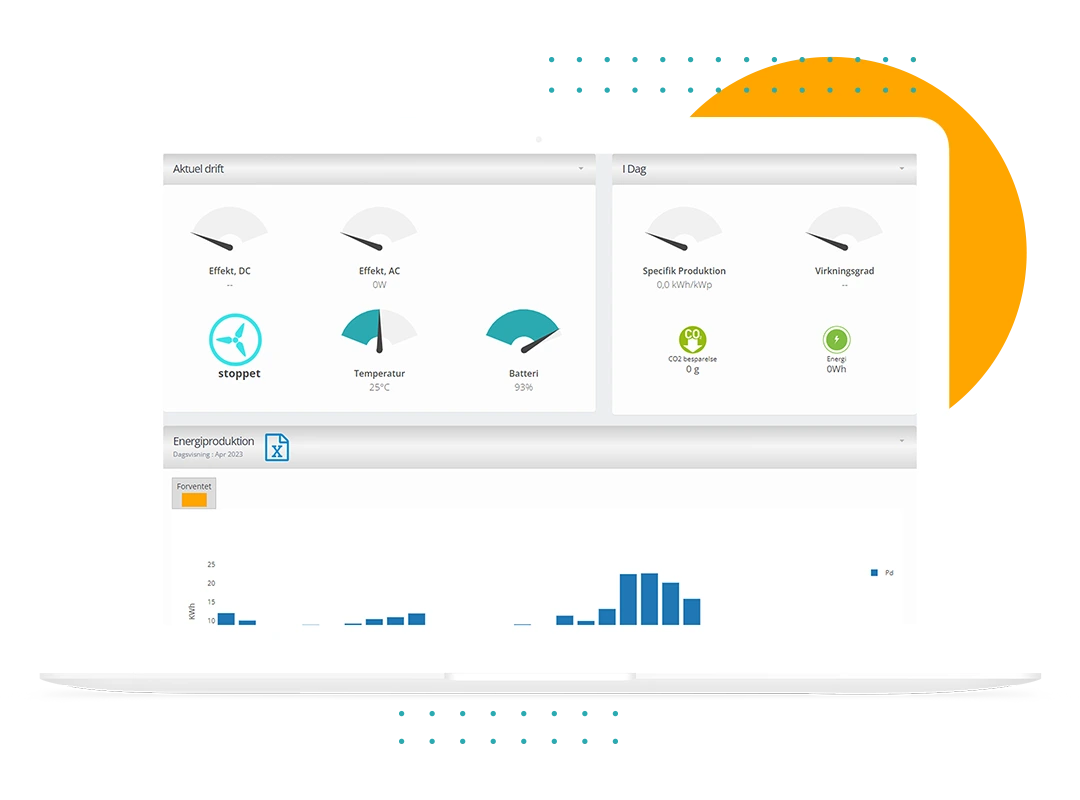
The two case studies, an ESP32 self-service restaurant kiosk and a solar energy monitoring system, are evidence of our capacity to design affordable edge computing devices as well as enterprise systems that will last for many years.
Our IoT Kiosk Development Services
Adequate Infosoft develops customized kiosk platforms based on the business model, hardware configuration, user workflow, and deployment environment.
We can develop the complete kiosk solution or integrate IoT functionality into an existing kiosk platform.
Touchscreen Kiosk Application Development
The touchscreen is often the primary interface between the customer and the kiosk. Our developers create responsive touchscreen applications optimized for kiosk displays and operating environments.
We can develop interfaces with:
Product catalogs Search functionality Category navigation Shopping carts Forms Payment screens Digital menus Booking workflows Customer registration Confirmation screens Multilingual support Accessibility features
The interface can be developed for different screen sizes and orientations, depending on the kiosk hardware.
Integration of IoT Technologies into Hardware
A smart kiosk usually comprises many different devices that must work together efficiently. IoT software develops kiosks that can communicate with:
Touch screens Barcode scanners QR code scanners RFID readers NFC readers Receipt printers Label printers Card readers Payment terminals Cameras Speakers Microphones Sensors Smart door locks Temperature sensors Proximity sensors Digital displays Industrial peripherals
Communication between the kiosk software and the physical devices is established through various interfaces, channels, and protocols.
Payment Kiosk Development
Payment function is crucial for various industries, like retail, ticketing, ordering, parking, hospitality, vending, and other self-serving solutions. We can integrate your kiosks with the latest terminals and payment gateways based on your business needs and location.
Payment function may include:
Card payments NFC payments QR payments Digital wallets Payment terminal integration Transaction confirmation Refund process Payment status handling Transaction log
Payment implementation is according to required payment processor norms for security and compliance.
Smart Retail Kiosk Solutions
The IoT kiosk can streamline and enrich customer experience through interactions and automation. Our smart retail kiosk solutions offer support in:
Product catalog Order placement Product searching Inventory checking Barcode scan Identifying the customer Digital promotion Payment processing Receipt issuing Order receiving Integration with loyalty systems
Kiosk may be connected to different systems like inventory, POS, e-commerce, CRM, and ERP to ensure customers have all necessary product and transaction information.
Restaurant and Food Ordering Kiosks
Self-ordering kiosks can simplify ordering workflows in restaurants, cafes, food courts, and quick-service businesses. We can develop kiosk applications supporting:
Digital menus Product customization Add-ons Cart management Table or order-number selection Payment Order confirmation Kitchen integration Receipt printing Customer notifications
The kiosk can communicate orders directly to a POS or kitchen display system, reducing manual order entry.
Healthcare Kiosk Development
Kiosks can be used by healthcare organizations for smooth registration, check-in, information collection, and other administrative tasks. As per the intended purpose, a healthcare kiosk may include:
Patient registration systems Appointment management systems Identity verification systems Printers Scanners Payment systems Healthcare enterprise applications
Before planning a healthcare kiosk project, various components related to privacy, security, access control, and laws governing regulation must be taken into consideration.
Integration of IoT Technology into Kiosks
With the use of sensors, the kiosks can be made smarter and easier to supervise. Moreover, we can work with various sensors:
Temperature sensors Humidity sensors Door sensors Motion sensors Proximity sensors Light sensors Occupancy sensors Vibration sensors Device-status sensors
The sensors can be connected to a cloud platform which is used for receiving and monitoring sensor data. For instance, an outdoor kiosk can monitor its internal temperature and inform its operational team about any unusual environmental conditions.
Remote IoT Kiosk Monitoring
Managing hundreds or thousands of kiosks across different locations can be challenging without centralized monitoring. Adequate Infosoft develops remote monitoring platforms that allow administrators to monitor kiosk health and operational status through a centralized dashboard.
Monitoring can include:
Online/offline status CPU usage Memory usage Storage usage Temperature Network connectivity Application status Peripheral status Printer status Payment terminal status Sensor status Error logs Device uptime
This helps operations teams identify issues before they significantly affect customers.
Kiosk Fleet Management
For companies that run a network of kiosks, we offer a centralized kiosk fleet management capability. With a kiosk management system, administrators are able to:
Register devices Assign kiosks to locations Monitor device performance Manage configuration Keep device logs Restart application Apply software updates Set device configurations Monitor status of operation Generate reports
Access based on user privileges can be applied within the system, allowing designated users control over the use of specific devices or locations.
Remote Diagnostics and Troubleshooting
Kiosks equipped with IoT technology are capable of sharing diagnostic data with a central system. Our monitoring framework allows us to track:
Application problems Hardware faults Loss of connection Problems with peripherals Issues with payments Alerts from sensors Problems with system resources Unexpected closure of applications
With distance diagnosis, support teams can assess problems remotely rather than immediately sending an engineer on-site.
OTA Software Update and Firmware Update
Managing a large fleet of kiosks entails having a reliable update procedure. Adequate Infosoft can implement trusted update procedures for application software and firmware where the hardware architecture allows. OTA management can provide:
Application updates Configuration updates Firmware updates Version management Deployment scheduling Update status tracking Rollback strategies
Updates can be delivered remotely while minimizing human efforts at individual kiosks.
Cloud-Connected Kiosk Architecture
Our kiosk solutions can connect physical devices to cloud platforms through secure APIs and IoT communication protocols.
A typical architecture may include:
Kiosk Hardware → Edge Application → IoT Communication Layer → Cloud Platform → Admin Dashboard
This architecture enables businesses to collect device telemetry, manage configurations, monitor kiosk health, synchronize business data, and manage remote devices. We can work with technologies such as:
MQTT REST APIs WebSockets HTTPS Webhooks Cloud databases IoT platforms
The architecture is selected according to scalability, reliability, security, and business requirements.
Offline Kiosk Features
Kiosks set up in areas with low connectivity may necessitate offline features. We can develop applications that allow selected activities to be carried out on the kiosk itself and sync data when connectivity becomes available.
If a kiosk is required to run offline, its functions may include:
Provision of local product information Provision of local configurations Queueing and processing of transactions Running of local applications Content caching Conducting local diagnostics Syncing data once the kiosk gets connected
It is important to note that the strange behavior of the kiosk will be dependent on its workflow and transaction requirements.
Kiosk Integration with Enterprise Systems
Adequate Infosoft can integrate kiosks with existing business systems, including:
POS systems
ERP platforms
CRM systems
Inventory systems
Payment platforms
Appointment systems
Ticketing systems
E-commerce platforms
Loyalty systems
Accounting systems
Warehouse-management systems
We develop APIs and integration services that allow kiosk applications to exchange data with existing enterprise infrastructure.
Industries We Serve
Our IoT kiosk development services can support:
Retail
Restaurants
Hospitality
Healthcare
Transportation
Banking and financial services
Entertainment
Education
Manufacturing
Government services
Smart buildings
Shopping malls
Airports
Logistics
Parking and ticketing
Each solution can be customized according to the operational and technical requirements of the industry.
End-to-End IoT Kiosk Development
Adequate Infosoft supports the complete kiosk development lifecycle.
Requirements Assessment
At this stage, we determine the kiosk's purpose, audience, hardware requirements, connectivity options, business processes, and environment of operation.
System Design
Our specialists work on hardware and software architecture, IoT integration, cloud and database systems, API, and monitoring architecture.
User Interface Development
We design user-friendly touchscreen interfaces that facilitate quick and easy access.
Hardware Integration
We work to integrate scanners, printers, payment terminals, sensors, displays, cameras, etc.
Related to IoT and Cloud Solution Development
We take care of things like connectivity, device telemetry, remote management and monitoring and cloud sync.
Testing
We test the application functionality as well as hardware communications, connectivity, performance, security, and real-world kiosk scenarios.
Deployment and Support
We help with deployment and ensure remote monitoring and updates.
Build and Manage Smarter Connected Kiosks
Businesses can utilize kiosks equipped with IoT technologies to carry out automated interactions with their customers, making business processes easier, gathering information on the operations of devices in real time, and controlling the devices remotely.
We provide comprehensive IoT kiosk development, integration, monitoring, and support services. We assist businesses in constructing connected kiosks using touchscreen applications, embedded software, hardware cooperation, IoT connectivity, cloud services, APIs, analytics, and security technologies.
Additionally, we offer remote device management, fleet management, over-the-air updates, troubleshooting, and continuous maintenance services to ensure that kiosks are reliable, safe, and fully operational.